
Supreme Court case about transgender medical treatment for minors could affect Florida
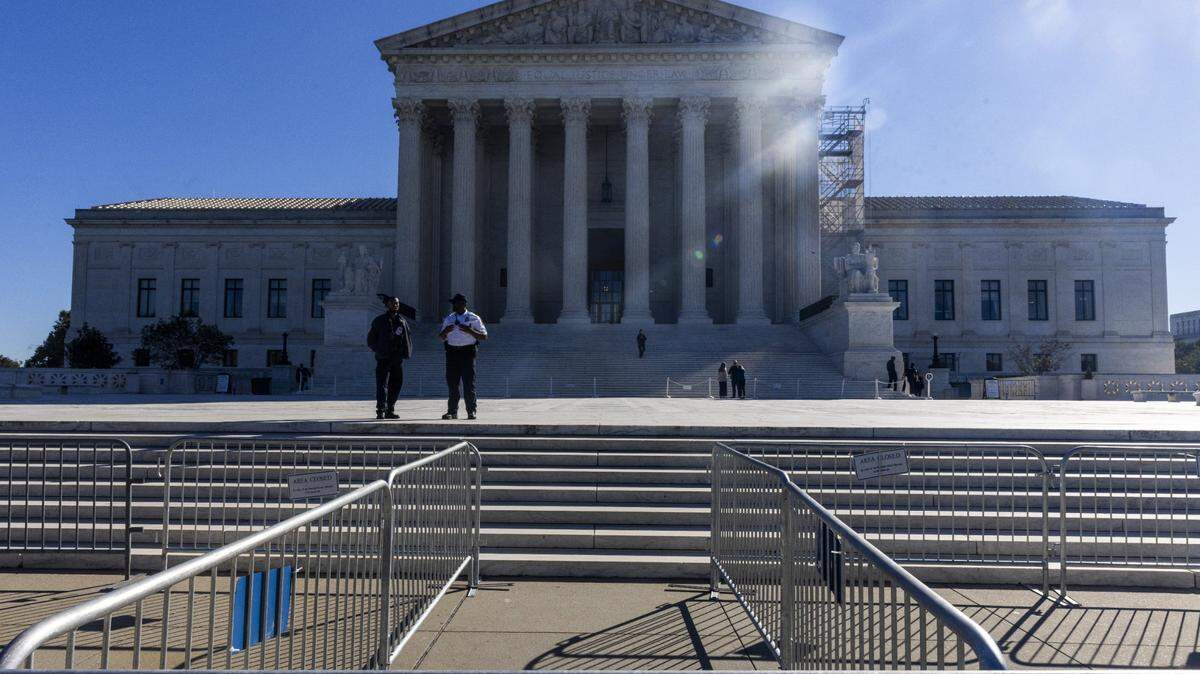
The future of transgender care for Florida children could be in the hands of the U.S. Supreme Court.
Earlier this year, a Florida federal judge ruled that restricting medical treatments for transgender children was unconstitutional.
That decision invalidated much of a 2023 law backed by Gov. Ron DeSantis, which prohibited children with gender dysphoria from accessing treatments like puberty blockers and hormone therapy. Gender dysphoria is when a person experiences distress because there is an inconsistency between their sex at birth and their gender identity.
On Wednesday, the U.S. Supreme Court heard arguments over a similar Tennessee law. The court will likely decide if Tennessee’s law violates the equal protection guarantee in the U.S. Constitution.
Here’s what to know about what the case could mean for Florida.
What is the Supreme Court case about?
The case centers on a Tennessee law passed in 2023 that bans healthcare providers from providing medical treatment that could enable a minor “to identify with, or live as, a purported identity inconsistent with the minor’s sex.”
The court has the chance to decide whether that law violates the equal protection clause in the 14th Amendment and whether Tennessee’s law is sex discrimination.
The Tennessee law was just one of many similar bills passed by state legislatures over the past few years, including in Florida, targeting the medical treatment of transgender children.
How could the court rule?
The court isn’t likely to rule until the summer. The question before it is whether the Tennessee law violates the Constitution. It will also likely evaluate whether laws targeting transgender medical treatments warrant more intense review by the courts, or less strict review.
That decision could affect future legal battles over other transgender issues moving forward.
“The court is going to be setting the standard by which a law that targets transgender people is analyzed,” said Jennifer Levi, senior director of transgender and queer rights at GLBTQ Legal Advocates & Defenders.
“Other states are all looking to see what is the message coming from the Supreme Court about how and in what ways states can single out this vulnerable group and treat it more harshly,” Levi said.
What could the case mean for Florida’s law?
Almost immediately after the federal judge struck Florida’s law down, the state appealed to the Court of Appeals for the 11th Judicial Circuit.
Legal observers on both sides of Florida’s fight say that the U.S. Supreme Court decision could have a serious impact on the Florida appeal. Mat Staver, the founder of the conservative group Liberty Counsel, said he wouldn’t be surprised if the 11th circuit held its case to see what the U.S. Supreme Court says first.
But Cynthia Weaver, the Human Rights Campaign’s senior director of litigation, said the court’s decision wouldn’t automatically resolve all of the questions in Florida’s case.
For example, plaintiffs challenging Florida’s ban said anti-transgender animus motivated legislators in creating the law, which the federal judge agreed with. Even if the Supreme Court decides that bans on gender-affirming care for minors are constitutional, Florida and LGBTQ+ advocates may still have to fight out the animus argument.
What are justices considering?
During oral arguments on Wednesday, some of the conservative justices on the U.S. Supreme Court expressed skepticism about the safety and efficacy of medical treatments for gender dysphoric children, and seemed to lean in favor of keeping Tennessee’s ban.
Justice Samuel Alito challenged the idea that there was “overwhelming evidence” that the benefits of medical treatment outweigh the risks. He pointed to European studies that challenge that notion. Chief Justice John Roberts also brought up the studies out of Europe.
The American Academy of Pediatrics and other major medical organizations support medical interventions for gender dysphoria when developmentally appropriate. Florida has also argued that medical treatments like puberty blockers can be harmful. In making that argument, Florida’s health agency put out a report that veered from its standard protocols.
Justice Brett Kavanaugh also questioned if laws banning transgender athletes competing in women’s and girl’s sports could be constitutional, though that question is not in front of the court.
The liberal justices, on the other hand, expressed skepticism over the Tennessee solicitor general’s arguments in support of the ban. The solicitor general argued that the state’s ban draws a line based on medical purpose, not on the basis of sex discrimination.
Only one justice, Neil Gorsuch, did not ask any questions during arguments.
This story was originally published December 4, 2024 at 3:36 PM.