
Miami Republicans Díaz-Balart, Salazar and Giménez win another term in Congress
A trio of Cuban American Republicans representing Miami-Dade and Florida Keys districts in Congress was reelected Tuesday, consolidating the GOP’s grip on local races.
Voters sent incumbent U.S. Reps. María Elvira Salazar, Mario Díaz-Balart and Carlos Giménez to Washington for another term in the House. They represent heavily Hispanic districts that have elected Republicans since 2020 — much longer in Díaz-Balart’s District 26 stronghold — as part of a rightward shift among Hispanics and voters across Florida.
“It’s a dramatic win from top to bottom,” a triumphant Díaz-Balart told the Miami Herald. “It’s humbling and encouraging. Florida has rejected the far left policies.”
The three candidates faced less-known, less-funded candidates, as the Democratic Party generally abstained from spending resources in Florida, no longer considered a swing state, and local races not seen as competitive.
In an effort to unseat Salazar, a former Hispanic television anchor, the Democratic Congressional Campaign Committee targeted the race in District 27, an area that is 74% Hispanic that stretches from Downtown Miami and Little Havana to Key Biscayne, Coral Gables, Kendall and Cutler Bay, which the party believed was mildly competitive.
Still, she significantly outraised her opponent and, along with her two Miami colleagues, had over 90% chance of winning ahead of Tuesday night, according to a prediction model built by The Hill. Díaz-Balart, whose district includes heavily Cuban American Republican areas like Hialeah, was 99% likely to win, the model predicted.
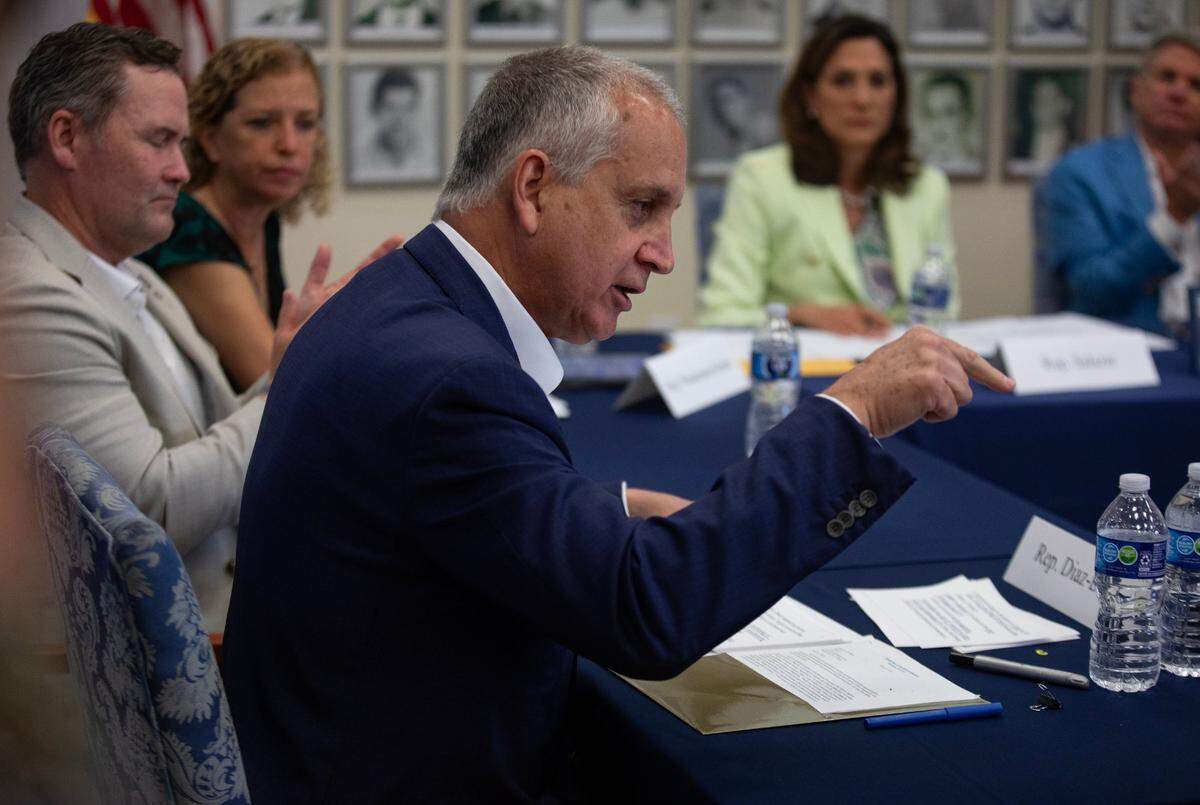
Shortly after closing the polls at 7:00 p.m., AP called the races for the three GOP candidates.
Salazar defeated Lucía Báez-Geller, a Democrat who’s a member of Miami-Dade’s school board and an outspoken advocate for LGBTQ rights.
Díaz-Balart, whose district also includes Overtown, Wynwood and Doral in Miami-Dade and Everglades City, Immokalee and some other areas in Collier County, cruised to his 12th term in office, beating Democrat Wynwood lawyer Joey Atkins.
Giménez, a former Miami-Dade mayor currently representing District 28, which includes West Kendall, Homestead, Florida City and the Keys, also beat his opponent Phil Ehr, a U.S. Navy veteran.
“2024 IS THE YEAR OF THE REPUBLICAN LATINO,” said Giménez on X after the Republican Party won decisive races in Miami-Dade.
Fear of socialism, a winning theme in Miami
Salazar ran a campaign focusing on the economy and the spectrum of socialism, two main themes for the GOP during this cycle, which have found a good reception among many Cuban American Republicans.
“We are not talking about two people; we are deciding between two ideologies: progress, freedom, democracy, or oppression, socialism and big government,” she said in a video she published Tuesday on social media.
At her victory party at Sergio’s restaurant on Coral Way, Salazar said she would work to improve the economy and fix immigration problems.
“We have to vote with President Trump. Let’s hope he gets to the White House,” she said.
Báez-Geller, who had campaigned for better education, access to reproductive rights and expanding environmental protections, said she was proud of the campaign she and her team ran.
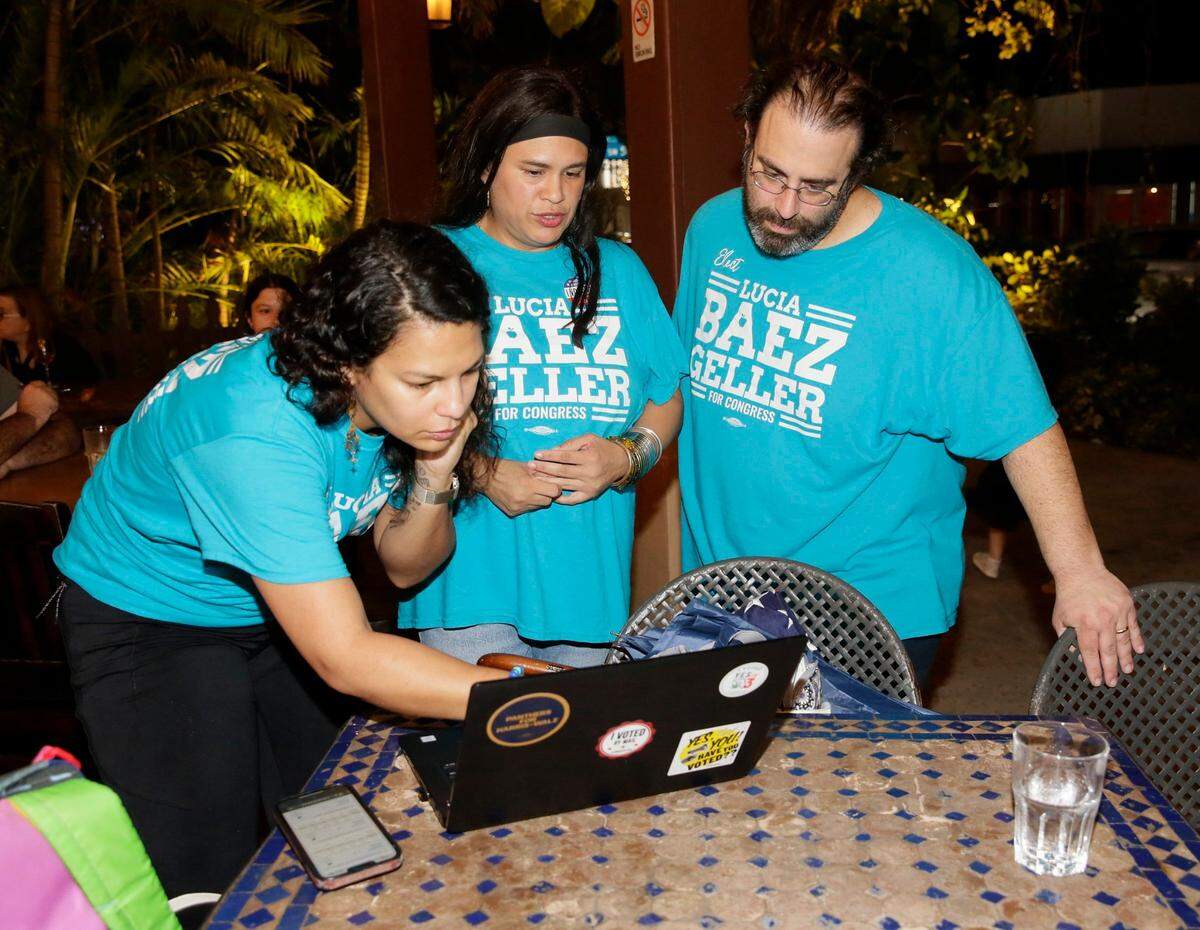
“Thank you to my family, my team, and my supporters for believing in me and our fight to deliver for the middle class, protect our freedoms, and make sure there is a Miami-Dade for years to come,” she said in a message published on X. “While we might not have won this race, the fight is far from over — Miami-Dade, I am still committed to you and to fighting for future generations.”
The Florida Democratic Party chair Nikki Fried praised Báez-Geller for a “hard-fought, grassroots campaign.”
“Over the past four years, Lucia has served on the frontlines of [Gov. Ron DeSantis’] made-up culture wars, fighting to protect students from extremism,” she said. “We are grateful for her service, which fundamentally changed the trajectory of the Miami-Dade County School Board. The Florida Democratic Party will continue to hold María Elvira Salazar accountable and return to contest CD-27 in 2026.”
None of the races were closed. With 98% of the vote counted, Salazar had a 20 percentage points lead over her rival, while Díaz-Balart and Giménez had won by even wider margins.
To the sounds of applause at the iconic Little Havana Versailles restaurant, Giménez and his team declared early victory for GOP candidates in Miami Dade County after 7 p.m.
“All are doing really, really well; most of us are over 10 points,” he says to applause before 7:30 pm as the room applauded. Joining him was Supervisor of Elections candidate Alina Garcia.
“All is well for our candidates,” he said before the final results.
At the election watch party at Versailles, Díaz-Balart said the resounding victories were a sign of voters’ “dramatic rejection” of what he described as the Democratic Party’s “far-left” policies.
“The American people have rejected the lies, the American people have rejected the falsehoods, the policies... and open borders,” he said, adding he expected Republican victories in Miami-Dade County and a Trump presidency.
Cuban American Republicans have comfortably dominated Miami-Dade’s political stage in recent years. In the last decade, Democrats have been able to flip districts 27 and 28 at times, but since 2020, Republicans have gained those seats back and kept them.
Giménez and Salazar were first elected in 2020, while Díaz-Balart has been in office since 2003, facing little to no opposition in several reelection campaigns.
Salazar, the chair of the Western Hemisphere Affairs subcommittee; Díaz-Balart, who presides a subcommittee deciding on the State Department budget, and Giménez, the transportation and maritime security subcommittee chairman, have become a fixture in local community events denouncing the governments of Cuba, Venezuela and Nicaragua. They usually publish videos on social media that react to news in Latin America, another way in which they seek to connect with Hispanic voters in Miami-Dade.
They ranked high on party loyalty, according to voteview.com, a tracker of congressional voting records. They received “A+” ratings from Susan B. Anthony Pro-Life America, an organization tracking voting on bills supporting restrictions on abortions. However, they are rated as more moderate conservatives in terms of ideology by voteview.com and the Heritage Foundation.
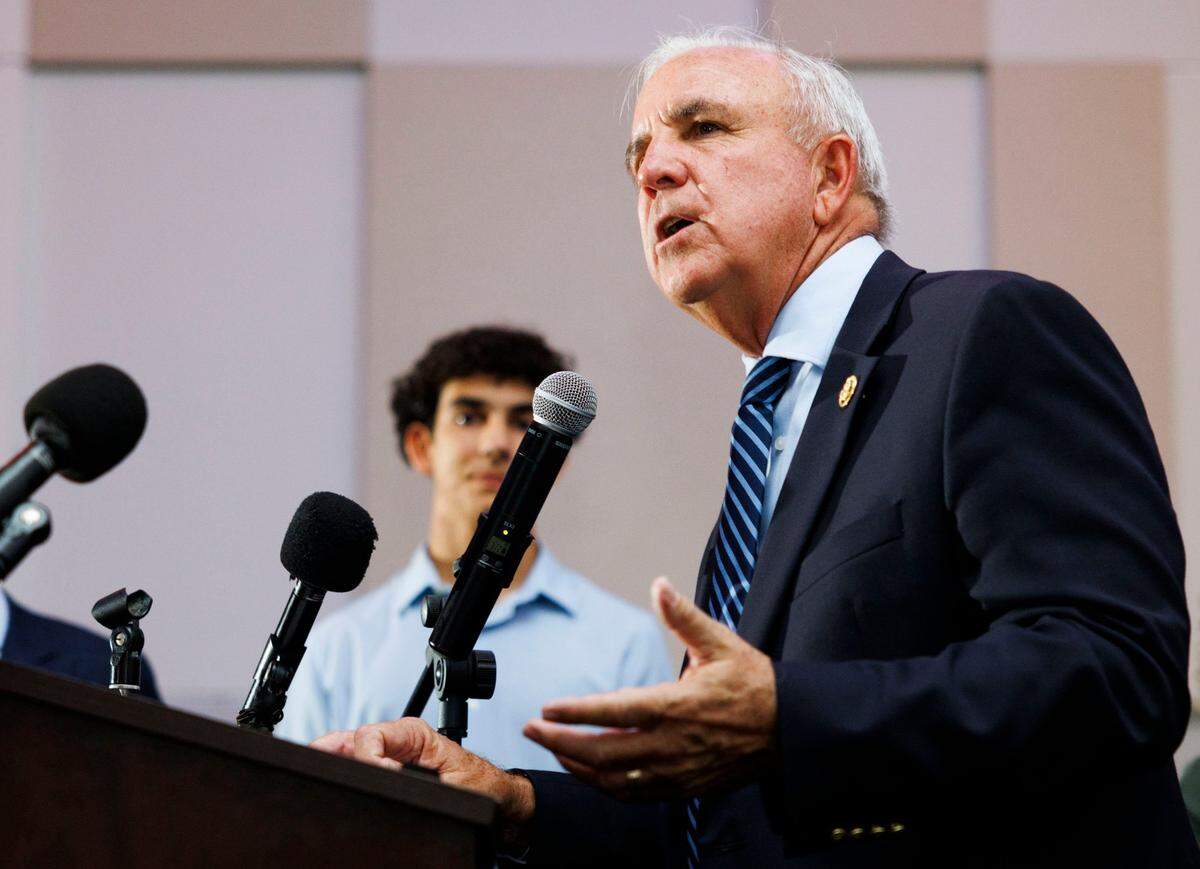
Salazar and Giménez, who represent more diverse communities that have voted for Democrats in the past, have advocated for issues that resonate locally, such as immigration reform or environment protection measures in the Florida Keys and Biscayne Bay. Díaz-Balart has also secured funds for Everglades restoration and Miami-Dade county resilience projects.
On the campaign trail, Salazar sparked criticism for claiming she helped to secure funds through Biden administration initiatives, which she actually had voted against.
The three members of Congress have been vocal supporters of former president Donald Trump, who endorsed them for this election. Díaz-Balart and Giménez voted to support Trump’s efforts to overturn the results of the 2020 presidential election in Pennsylvania and Arizona. Salazar was recovering from COVID-19 at the time and did not vote.
Salazar, the more moderate of the three, was among the few Republicans who voted to create a commission to investigate the U.S. Capitol attack on Jan. 6, 2021, and to raise the federal age to buy assault-style rifles from 18 to 21.
Miami Herald reporter Jacqueline Charles contributed.
This story was originally published November 5, 2024 at 7:43 PM.