His YouTube audience made him a key Trump surrogate. Can it make him Miami-Dade mayor?
It’s the Friday afternoon before early voting begins, and Alexander Otaola is sitting in an armchair in his studio in Homestead, working his way into a nearly three-hour monologue on the creep of communism in the Americas, turmoil in Venezuela and Miami-Dade Mayor Daniella Levine Cava, his main target in this month’s primary election.
With production lights reflecting off his glasses, the acerbic, 45-year-old YouTube personality calls the county’s Democratic mayor a “socialist, communist leftist” who plans to radicalize the county. He blames her for persistent problems at Miami International Airport. Staring into a camera, he implores his viewers — who helped the video rack up more than 100,000 views over the weekend — to reject an administration he says is part of a failed communist revolution.
“The record of this mayor, who leans leftist — do you really want to gamble on that?” he asks rhetorically, in Spanish. Banners stripped across the bottom of the screen direct viewers to donate money to his mayoral campaign.”Do you want to keep ignoring what needs to be done?”
Four years after emerging as one of the most important — and, critics say, “dangerous” — voices pushing South Florida’s conservative-leaning Hispanic voters further to the right, the Cuban-American influencer is betting that his enthusiastic base of online support will translate to the ballot box during the Aug. 20 primary election for county mayor.
He has never held elected office, has no experience running a government, and prefers to conduct interviews in Spanish, sometimes using an interpreter. His promise to root out communism from South Florida has little to do with the day-to-day duties of the job he’s seeking to run Miami-Dade County’s nearly $13 billion government. But he has proven that he can move masses, and he has an asset no other candidate can come close to matching: a megaphone in the form of a YouTube channel with 375,000 subscribers.
“I have no ties to anyone, I’m entering politics with no biases, and I’ve raised over $300,000 in my campaign thanks to my show’s audience,” Otaola told el Nuevo Herald recently in an interview.
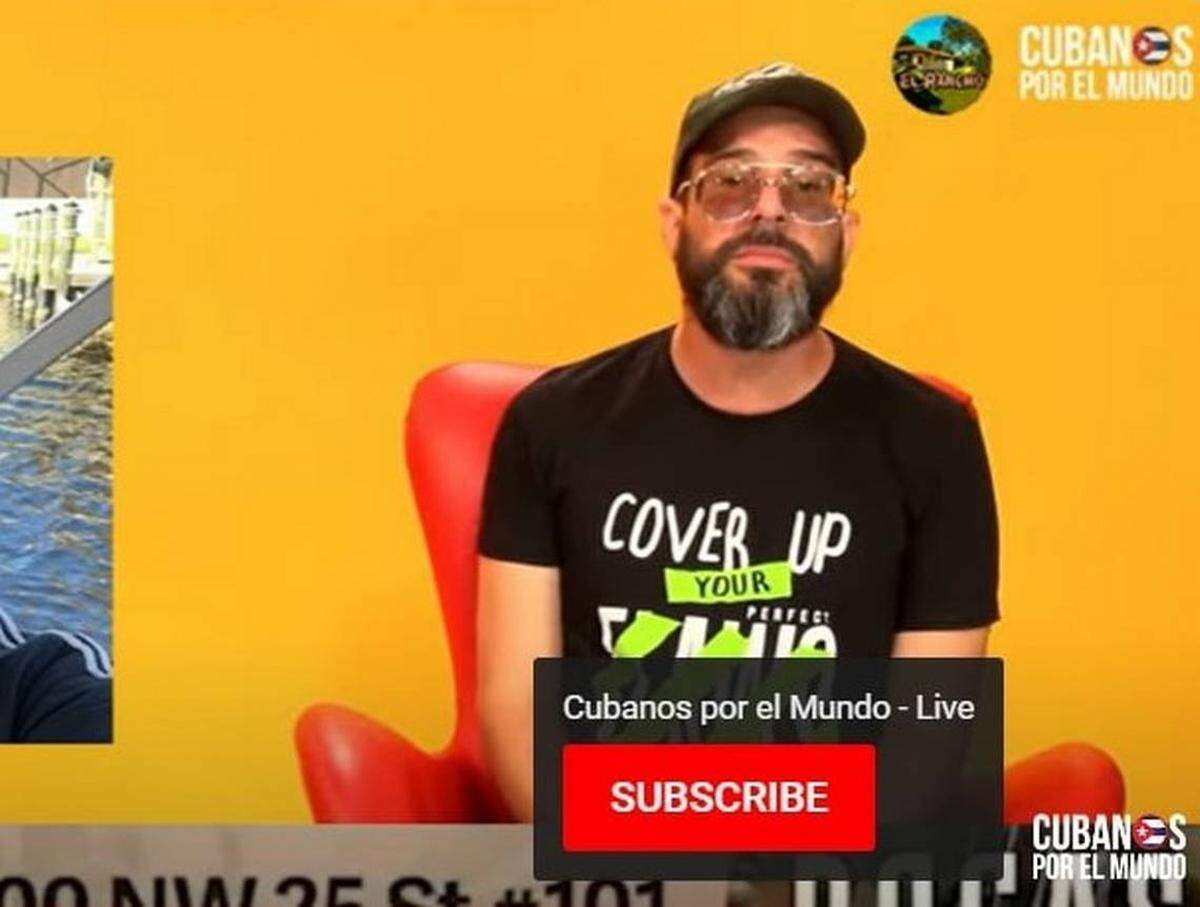
Born in Camagüey, Cuba, Otaola’s campaign message sounds like the daily, three-hour program he hosts every afternoon — “Hola! Ota-Ola!” — in which he toggles between dark sarcasm, sophomoric humor and political commentary, much of it about the dangers of leftism. His hopes lean transparently on his Cubanos por el Mundo - Live YouTube channel, helping him spread his message while relying almost entirely on campaign contributions of $25 or less.
Polls, while sparingly available, raise questions about whether he can muster enough support from the region’s nearly 1.5 million voters to earn a spot in a November runoff election, which will only be held if Levine Cava fails to earn at least half the vote on Aug. 20.
Levine Cava’s team says she’s on track to win outright later this month. An internal poll from July obtained by the Herald found the mayor notching nearly 56% of the vote, while Otaola had just 7% support, according to the survey.
And yet, other candidates on the ballot are paying him to advertise on his program, which he has used in recent years to organize political rallies and massive car caravans for Donald Trump. The former president thought enough of Otaola’s following that he granted the influencer an interview just a few weeks before the 2020 election, with Congressman Mario Diaz-Balart translating.
“I am not running for mayor to be popular,” Otaola told the Herald. “I’m already popular.”
Capitalizing on Miami’s exile community
Otaola’s rise from YouTuber to Miami-Dade mayoral candidate has been meteoric. He began his career in Cuba, training in the arts and working as an actor, and then spent a decade in Miami television with Univision and Mega TV before launching his YouTube programming.
Otaola’s Cubanos por el Mundo - “Live” channel — one of several accounts, each with hundreds of thousands of subscribers — has become a major platform for discussing both national and regional politics, and now serves as the cornerstone of his mayoral campaign. His audience varies widely. His show attracts listeners from young adults to seniors, though it’s unclear how many live in Miami-Dade County.
Otaola’s campaign promises include 13 proposals, ranging from declaring Miami-Dade a “communism-free zone” to legalizing recreational marijuana — many of which may be beyond the scope of a county mayor’s authority. He also proposes establishing commissions to investigate businesses with ties to Venezuelan, Nicaraguan, and Cuban dictatorships.
“It’s well-known that money is laundered for these regimes from Miami,” Otaola told the Herald. “There are front men, heirs, and even relatives of high-ranking officials from these dictatorships who run businesses here.”
His message hinges on the belief that the international left is attempting to destabilize and discredit the American system. He repeats the falsehood that the 2020 election was rigged, citing “irregularities” that he believes the courts ignored, though he acknowledges that President Joe Biden is the legitimate president. Otaola, who says he left Cuba in 2003 and last visited the island in 2015, shortly before launching his YouTube channels, is always accompanied by his bodyguard, claiming threats from communist groups as the reason for his heightened security.
“I have received multiple death threats from the Cuban dictatorship,” he said.
Otaola’s critics — and there are many — see him as a red-baiting fear-monger capitalizing on the anxieties of Miami’s exile community. In an interview, Ana Sofia Pelaez, founder of Miami Freedom Project, a non-profit that attempts to encourage civic engagement, criticized Otaola’s campaign proposals as “dog whistles” and conspiracy theories that serve his own political interests.
“The mayor of this community can’t have an erratic message, the budget of Miami-Dade is bigger than the budget of some states,” she said, adding that the mayor, whether Republican or Democrat, must address affordable housing and support families, among other issues. “The mayor of Miami-Dade has to implement real solutions.”
In 2020, WLRN commentator Tim Padgett called him a “racist demagogue.” Last year, political consultant Sasha Tirador sued Otaola for slander, saying he’d accused her of being tied to Cuba’s communist regime. A private investigator she hired, Joe Carrillo, filed a restraining order this year against Otaola after he says he was surrounded by Otaola’s armed security and then lambasted on his social platforms when he tried to deliver a cease-and-desist letter at the influencer’s home. That petition led to the confiscation of four firearms.
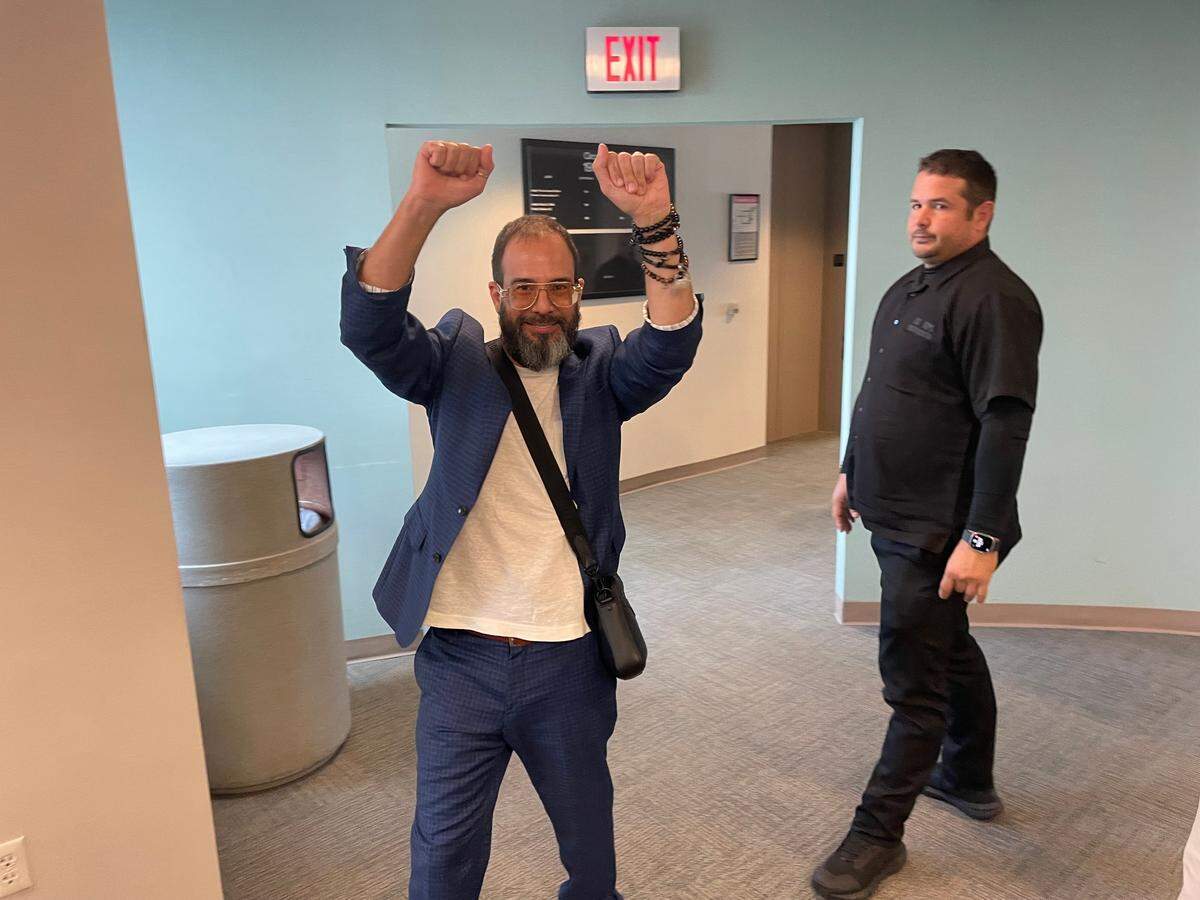
READ More: Otaola cleared in stalking case. Judge says no evidence of threats by mayor candidate
“I don’t necessarily fear he is going to do something to me,” Carrillo testified in court in April. “I fear someone out there is going to believe him and do something to me.”
A judge dismissed the case, saying there was no evidence that Otaola made any threats.
Levine Cava and her allies dismissed Otaola’s attacks on the mayor as “lies and misinformation.” Christian Ulvert, a Democratic consultant and senior adviser to Levine Cava’s campaign, said that Otaola’s rhetoric describing Levine Cava as a socialist is “deeply insulting and offensive,” particularly for those who fled authoritarian governments in Latin America.
“She has been an unapologetic voice and leader for our community — whether Cubans, Nicaraguans, Venezuelans or Colombians, as she has heard the stories of the deep rooted pain we all feel and what so many fled,” Ulvert said in a statement. “Mr. Otaola would be better served listening to our community rather than lecturing with such hateful and false narratives.”
In a separate statement, Levine Cava defended her record in office, insisting that she’s governed in a nonpartisan manner and has bipartisan support across the county.
“While my opponents have been focused on falsely attacking my record and trying to divide our community, I have been squarely focused on taking on our critical challenges with real solutions,” she said.
“LGBTQ agenda undermine family values”
Otaola’s campaign is testing the boundaries of his homegrown media network’s reach. He earned national attention in 2020, when outlets from Mother Jones to VICE News raced to understand how a 2012 Obama voter could become Trump’s most visible Spanish-language influencer in South Florida.
He has been financially successful, according to his financial disclosure, reporting that he has $450,000 in a bank account to go along with the $800,000 home he owns on four acres in Homestead.
“The traditional press has lost credibility by becoming biased,” said Otaola, who has been accused of purveying disinformation on his program. “Disinformation is when I get messages claiming that [Vice President] Kamala Harris is the alternative to all of Trump’s supposed racism.”
But will his significant online following translate from the internet to the ballot box?
Last month, at a political event with Otaola and several sheriff’s candidates at El Tropico restaurant in Doral, Isel Rodríguez, a 55-year-old Kendall resident, said Otaola’s fans “encouraged him to run for Miami-Dade mayor because he is an outsider with significant influence.”
Rodríguez acknowledged that Otaola’s show is often satirical and that some of his statements may not be serious, but said it has made a substantial impact on her life. The feeling extends to her aunt, Maria Luisa Rodríguez Portieles, 87, who traveled last week from Austin, Texas, to see Otaola, who also hails from Camagüey, Cuba.
“He has been advocating for the airport, which is in disrepair, and has been critical of the failing education system, particularly how children are being sexualized,” said Isel Rodríguez.
Even though Otaola is the only openly gay candidate for Miami-Dade mayor, he criticizes the approach the LGBTQ community takes in advocating for their rights. He argues that certain actions, which he views as emblematic of the LGBTQ agenda, undermine family values and contribute to the sexualization of children — positions that align with some Republican viewpoints.
“I do not support the LGBTQ+ agenda,” Otaola stated in the Herald interview. “I do not identify with the sexualization of children or the erosion of family values.”
Otaola believes that the LGBTQ community, rather than fostering inclusion, has become increasingly segregated. “Exclusive gay bars and dedicated events or parades for the gay community do not promote integration; they perpetuate segregation.”
RELATED CONTENT: Can the former mayor of Surfside run Miami-Dade County? He’s waging a long shot bid
‘Focus is on the grassroots’
Otaola told the Herald that, where establishment Republicans have abandoned him, his supporters will carry him. He doesn’t tout any political endorsements for Miami-Dade mayor, despite actively participating in events with various politicians. He dismisses a question about whether he is competing for votes with Manny Cid, the Republican mayor of Miami Lakes Mayor, saying it’s the other way around.
“It seems the Republicans would rather divide their own vote than see me become mayor of Miami-Dade County,” he said.
His campaign has also brought in Roger Stone, paying $12,000 to the South Florida-based political operative who has advised Trump off and on. Stone has explained his decision to support Otaola by citing his admiration for Otaola’s “courage to stand against the imposition of woke progressive politics.” A testimonial attributed to Stone on the website of Otaola’s political committee – called “Miami-Dade Communist Free Zone” — refers to the candidate as “possibly the most influential Latino influencer in Miami-Dade and increasingly in South Florida.”
When Otaola announced his candidacy in April 2023, Stone helped him assemble his campaign team and navigate the intricacies of running a campaign, Otaola says. Stone is expected to meet with Otaola on Aug. 20 before the candidate votes, a campaign spokesperson said.
If Otaola can earn enough votes to at least come in second, and keep Levine Cava from receiving more than 50% of the vote, he’ll set up a head-to-head matchup on Nov. 5, when voters will also be voting on a new president. Shlomo Danzinger, Carlos Garín, Miguel Quintero and Eddy Rojas are also on the ballot.
For now, at least, Trump isn’t likely to weigh in on the Miami-Dade mayor’s race, multiple sources said, though they cautioned that could change if the election heads to a runoff in November. A spokesperson for Trump’s campaign did not respond to the Herald’s request for comment on Otaola’s candidacy or a possible endorsement.
When asked about a potential endorsement from Trump, Otaola said he is neither seeking nor interested in it.
“My support for President Trump and the momentum from his campaign will naturally carry over to me, even without his formal endorsement,” Otaola said. “My focus is on the grassroots supporters who donate $20 or $5 to my campaign. That’s where I’m channeling all my energy — toward those who share a different vision for Miami-Dade.”
This article has been updated to include additional information about Otaola’s multiple YouTube channels.
This story was originally published August 7, 2024 at 5:05 PM.