
Trump says abortion should be left to states but doesn’t say how he’ll vote in Florida
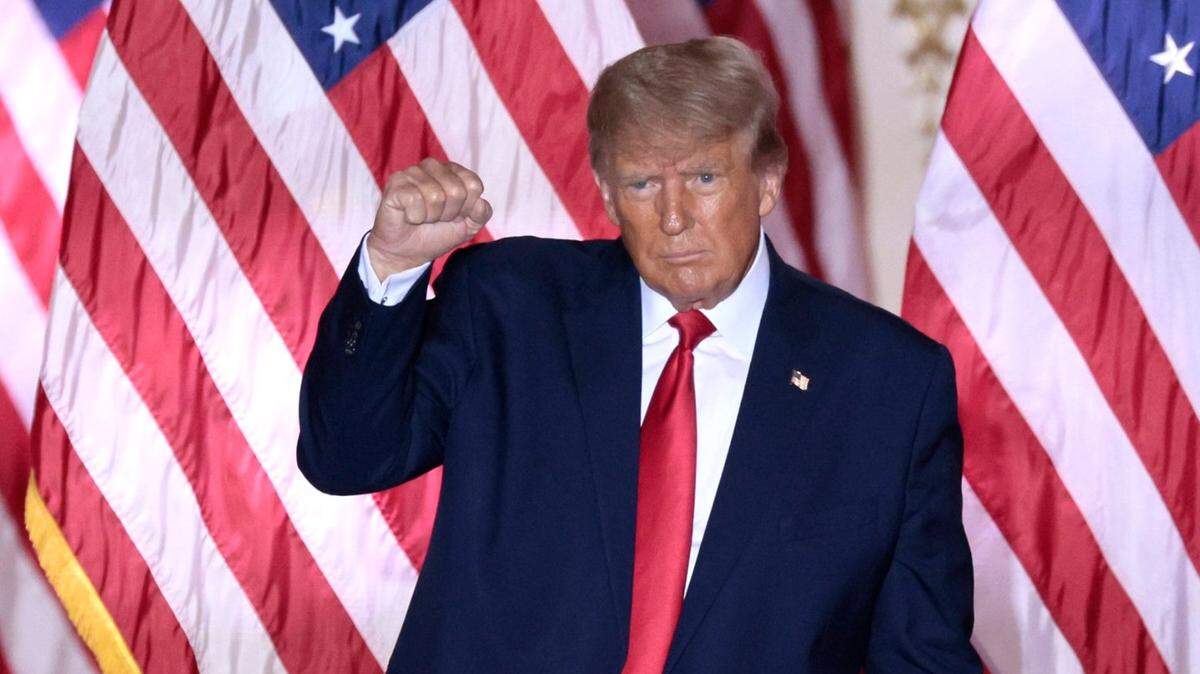
Former President Donald Trump on Monday made good on a promise to say more this week on abortion, but declined to say whether he’ll back a proposed constitutional amendment in Florida that would protect abortion rights up to the point of fetal viability, even as he insisted that individual states — not the federal government — should govern access to the procedure.
Trump’s remarks in a video statement came a week after the Florida Supreme Court handed down two key decisions on abortion rights: one paving the way for a six-week ban on the procedure to take effect, and the other allowing a proposed constitutional amendment safeguarding abortion access up to the point of fetal viability to appear on the November ballot.
Pressed for his position on abortion in his home state, Trump promised to release more details. Instead, Trump addressed the issue of abortion rights more broadly. He said that states should be left to decide the issue, and declined to back a federal ban on the procedure that opponents of abortion rights have long sought.
“From a legal standpoint, the states will determine by vote or legislation or perhaps both, and whatever they decide must be the law of the land, and, in this case, the law of the state,” said Trump, who has taken credit for helping overturn the landmark precedent on abortion rights established by Roe v. Wade.
“Many states will be different. Many will have a different number of weeks or some will have more conservative” stances, he noted. ”At the end of the day, this is all about the will of the people.”
In his video statement on Monday, Trump also stressed that he supported access to fertility treatments, like in vitro fertilization, or IVF, after the Alabama Supreme Court ruled earlier this year that frozen embryos are children. The Alabama state legislature passed a measure protecting access to IVF after the court decision caused widespread political backlash.
Trump’s announcement served as an acknowledgement of how politically fraught the issue of abortion rights has been for Republicans since the U.S. Supreme Court overturned Roe v. Wade nearly two years ago. He has chastised members of his own party for going too far to restrict abortion access, and even blamed the GOP’s lackluster performance in the 2022 midterm elections on abortion hardliners within his party.
Democrats are hoping to capitalize on abortion restrictions in Florida and elsewhere in this year’s elections by casting Trump and other Republicans as extremists on the issue. After the Florida Supreme Court ruled last week that the state’s six-week abortion ban could go into effect, President Joe Biden’s reelection campaign, which has been reluctant to invest in Florida this year, announced that it sees a path to victory in the state.
With Trump clarifying his belief that abortion rights should be decided by the states, Democrats are likely to link him to some of the strictest abortion laws in the country.
Biden pounced on Trump’s comments on Monday, saying that the former president bears the blame for the state-level abortion restrictions that have cropped up since Roe v. Wade was overturned. He also said that the remarks offered no real assurance that Trump would reject a national abortion ban if elected to the White House in November.
“Let there be no illusion,” Biden said. “If Donald Trump is elected and the MAGA Republicans in Congress put a national abortion ban on the Resolute Desk, Trump will sign it into law.”
Trump on Monday, however, sought to turn the tables on Democrats by claiming that they are willing to go too far to preserve abortion rights. He accused Democrats of seeking to legalize abortion up until – and even after – birth, echoing rhetoric that other Republicans have used to criticize the Florida ballot initiative to safeguard access to the procedure.
“It must be remembered that the Democrats are the radical ones on this position, because they support abortion up to, and even beyond, the ninth month [of pregnancy],” he said. “The concept of having an abortion in the later months and even execution after birth…is unacceptable, and almost everyone agrees with that.”
Florida Gov. Ron DeSantis, who has come out against the proposed amendment, said last week that the ballot measure is “very, very extreme,” and predicted that Florida voters would reject it in November. The measure will need to win at least 60% of the vote to pass.
Proponents of the Florida abortion measure say that the proposed amendment would not legalize abortion up until birth, noting that “viability” is generally understood to be around 24 weeks of pregnancy. The proposal would also allow for a woman to have an abortion when it’s determined to be medically necessary to protect the patient’s health, but the procedure is rarely conducted after 21 weeks of pregnancy, according to KFF, a non-profit, non-partisan healthcare policy organization.
“Claims of abortions occurring ‘moments before birth’ or even ‘after birth’ are false. These scenarios do not occur, nor are they legal in the United States,” KFF states in a policy paper on late-term abortions.
This story was originally published April 8, 2024 at 10:57 AM.