
Miami debate offers DeSantis chance to change trajectory on anniversary of big ’22 win
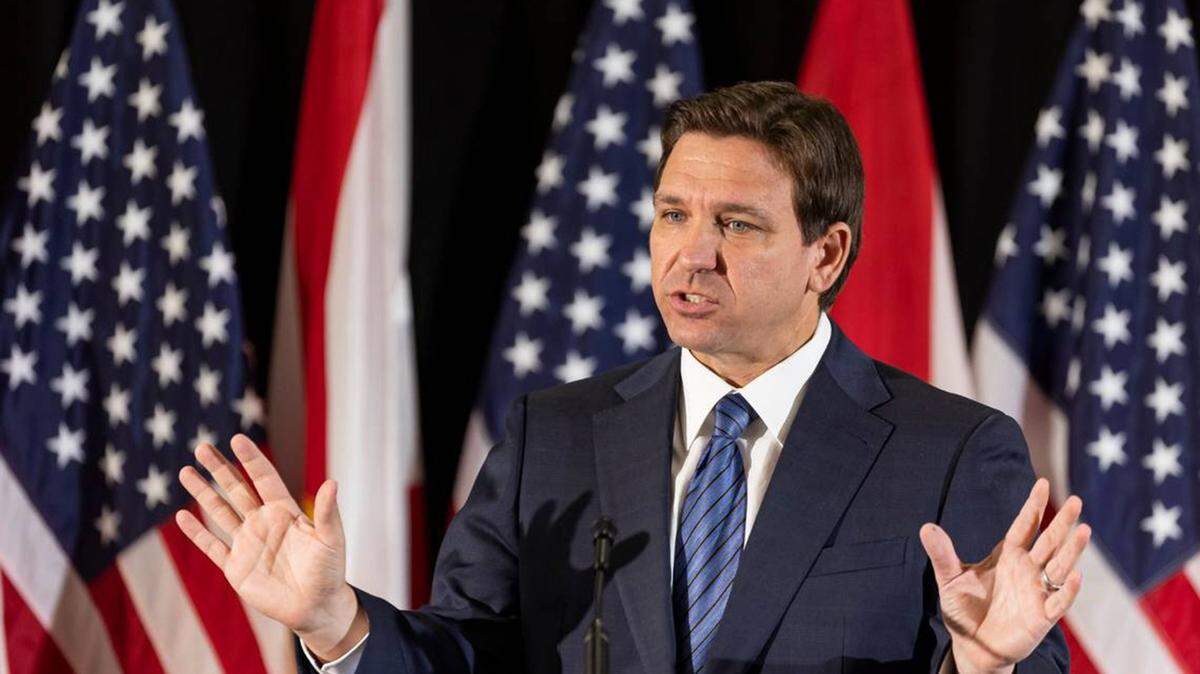
Exactly 12 months ago, on Nov. 8, 2022, DeSantis’ prospects as a politician launched into a different stratosphere when he won a second term in the Florida governor’s mansion by more than 19 percentage points.
For many Republicans, the results in swing-state Florida were proof enough that DeSantis was more than just a popular incumbent, he was White House material — an opinion reflected in polling that showed him within reach of former President Donald Trump.
Fast-forward a year, though, and DeSantis is about to hit the debate stage in Miami without Trump, who is so far ahead of the field in national polls that he’s choosing instead to hold a rally across town — while sticking to his argument that DeSantis and all his other challengers should drop out and get behind him.
For some Republicans, DeSantis’ political arc is the product of various missteps and missed opportunities. For others, it’s a lesson in the risks of taking on Trump for the support of a Republican Party that remains firmly in his grasp.
“His position in the Republican ecosystem rose and fell with Trump’s favor,” said Rick Wilson, a former GOP strategist and a co-founder of the anti-Trump group, The Lincoln Project. “It’s great when you’re on the drug of Trump, but the moment it gets cut off, your life changes badly and quickly.”
Here’s a look at some of the key factors that have influenced DeSantis’ rise and fall, and at whether he can regain his footing.
Waiting too long
Though DeSantis’ interest in a White House run was widely known prior to his reelection, he didn’t announce his presidential campaign formally until May, waiting until the end of Florida’s state legislative session. Waiting allowed him to use Florida policy to bolster his resume going into election season — but it also let Trump’s team take advantage of the situation.
During the buffer period before DeSantis formally announced his bid for presidency, he was targeted by Trump’s team on numerous fronts. Not only did a Trump-aligned super PAC accuse DeSantis of running a shadow campaign and pursue legal action, Trump’s team deployed an onslaught of negative attacks against DeSantis — attacks that for a time went largely unchecked.
While DeSantis waited to launch, Trump also locked up endorsements from a majority of Florida’s members of Congress, a fact he emphasized earlier this year while DeSantis was meeting with lawmakers in Washington.
Troubled Launch
When DeSantis did finally launch his campaign, the takeoff was turbulent.
The Florida governor decided to make his announcement with Elon Musk on the social media platform X with a previous tool on the app called Spaces. At the time of the event, around half a million people tuned into the audio livestream, which overwhelmed the servers and caused the announcement to be glitchy and filled with awkward silences.
Public polls from the time suggest that DeSantis’ campaign kickoff didn’t do much to buoy his prospects against Trump. He often registered 30% support or more in public polls early in the year, but began to fade over the summer.
Trump Indictments
One of the biggest factors influencing the Republican presidential primary has been completely out of DeSantis’ control: the criminal indictments levied against the former president.
Public polls show that Trump’s standing among Republican primary voters shot up — and DeSantis’ down — following the first of four historic indictments brought against Trump. The indictments have weighed heavily on Trump’s finances. But in the months since he became the first former U.S. president to be charged with a crime, Trump’s trajectory has been on the rise, and DeSantis has been on the decline.
Burning through money
It wasn’t long into DeSantis’ campaign that the warning signs began to pile up. Despite outraising his Republican rivals in his first six weeks on the trail, he burned through the money quickly thanks to a bloated campaign staff, a penchant for traveling by private jet and high consulting fees.
The fast spending rate raised alarm bells within the governor’s campaign. Top Republican donors and fundraisers questioned how long his operation could maintain itself and pressured campaign officials to take swift action.
The response was shrewd: DeSantis laid off roughly a third of his staff – which at its height had reached nearly 100 people – and swapped out his campaign manager Generra Peck with a trusted yet inexperienced aide from his governor’s office James Uthmeier.
The result was a streamlined operation that relied more heavily on the pro-DeSantis super PAC Never Back Down, which began a campaign-style bus tour series that frequently featured appearances by the governor and helped ease the burden on DeSantis’ formal campaign apparatus.
The effort to cut costs, however, proved difficult for the campaign. In the third quarter of the year, which spanned from July 1 through Sept. 30, DeSantis’ team spent just about as much as it raised. And while he still has $12.3 million left in the bank, according to his most recent federal filings, only about $5 million of that can be used in the Republican primary.
Increasing the financial pressure is the fact that most of the money DeSantis has raised during his campaign has come from donors who are barred from contributing any more to him in the primary, because of federal limits that cap the amount at $3,300 per person.
Can he turn it around?
With just over two months to go before voting begins in the 2024 Republican nominating contest, there’s a growing urgency for DeSantis’ team to turn things around.
The Florida governor and his allies have bet virtually everything on a solid finish in the Iowa caucuses, believing that a strong showing there will help catapult him to subsequent wins in other key states, like New Hampshire and South Carolina. On Monday, Iowa Gov. Kim Reynolds threw her support behind DeSantis’ campaign, an unusual move for a sitting Iowa governor but one that was aggressively sought by DeSantis.
DeSantis also hit the airwaves in the Hawkeye State last week, kicking off an advertising campaign earlier than previously planned. His campaign attributed that decision to a “strong fundraising pace in the fourth quarter.”
Even so, DeSantis’ political prospects appear uncertain. Polling shows him trailing Trump by double-digit margins in Iowa, and one recent survey from the Des Moines Register found him tied with Haley for second place. In New Hampshire and South Carolina, the second and third states to vote, respectively, recent polls have shown DeSantis running in third place in the primary.
That hasn’t stopped DeSantis’ team from arguing that the primary remains a two-man race between him and Trump. In a Nov. 6 campaign memo, DeSantis’ top campaign officials acknowledged that they had undergone an “incredibly tumultuous summer,” but has since “rebounded.”
The memo also argues that DeSantis is the “sole alternative” to Trump and is well-equipped to seize on what they hope will be a strong performance in the Iowa caucus.
“This has always been and remains a two-person race in Iowa between Trump and DeSantis,” the memo reads. “No other candidate has the broad message appeal, political reach, and organizational capability to climb to the levels needed to realistically challenge Trump.”
And his allies say that it’s time for the candidates and their supporters to rally behind one clear alternative to the former president.
“This is a race that is going to be decided by these candidates’ willingness to consolidate around a single individual,” said Jason Osborne, New Hampshire state House majority leader, who has endorsed DeSantis. “And if they get together and decide which one of them will be the guy or gal, then they’ll win. And if they don’t then, Trump will win. That’s always how it’s going to be.”
Others are skeptical that DeSantis can turn things around, given Trump’s massive edge in virtually every state.
“Unfortunately, Donald Trump is leading all of them in just about every state by somewhere between 30 and 50 points,” Wilson, the Lincoln Project co-founder, said. “I don’t see how [DeSantis] makes a breakthrough with the resources he has, with the time he has.”
This story was originally published November 8, 2023 at 5:30 AM.