
DeSantis acknowledges Trump’s 2020 defeat, but stands by election security concerns
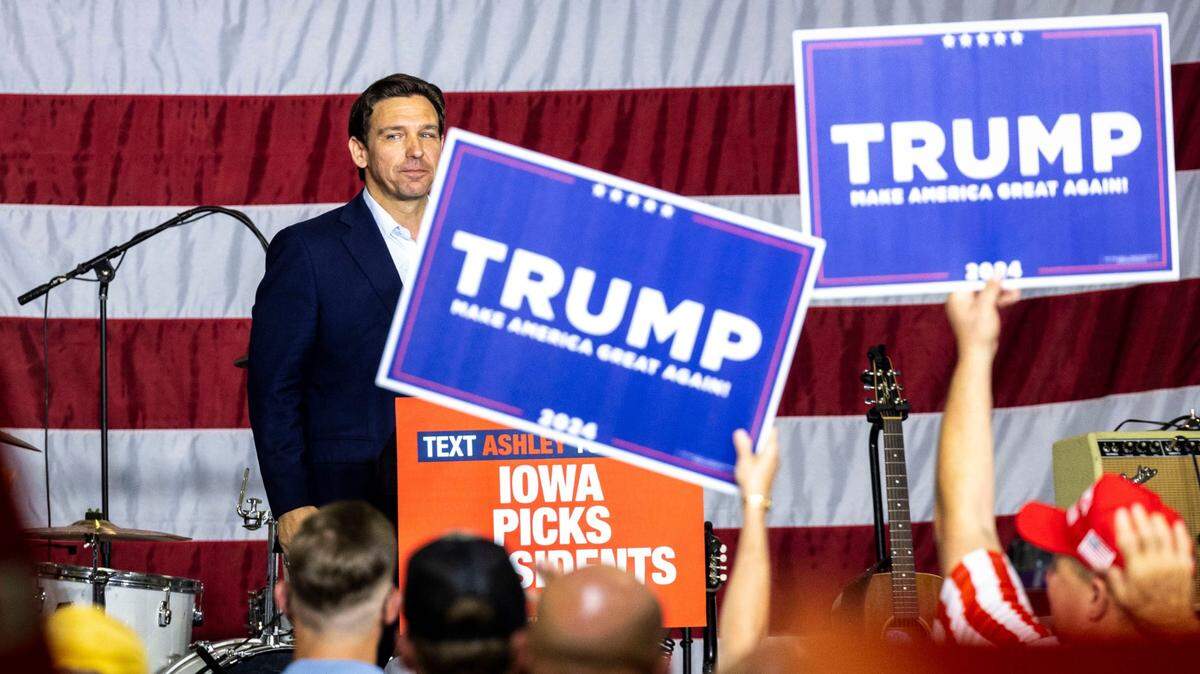
Florida Gov. Ron DeSantis may have put to rest questions about whether he believes that former President Donald Trump lost reelection in 2020. When it comes to the overall security of that election, however, his answer isn’t as clear.
Pressed during an interview with NBC News on whether he believes Trump lost the 2020 election to President Joe Biden, DeSantis bluntly acknowledged that the former president had been defeated and that Biden was the rightfully elected president. His remarks ended a nearly three-year period in which the Florida governor refused to take a clear stand on Trump’s claims that the election was rigged.
But he also outlined what he described as a series of flaws and shortcomings in the election, ranging from the prevalence of mail-in ballots and other alternative voting methods during the COVID-19 pandemic, the existence of so-called “ballot harvesting” practices and alleged efforts by tech companies like Facebook to “censor” unflattering stories about Biden’s son Hunter.
“When they changed the rules for COVID, I think that was wrong. I think some of those changes were unconstitutional. When they do mass mail ballots, I think that’s wrong. I think ballot harvesting is wrong,” DeSantis said.
While he waved off one of the most egregious accusations about the 2020 election – that voting machines had been tampered with – DeSantis’ remarks underscored the fine line the governor is hoping to walk as he looks to make up a stubbornly wide polling gap with Trump in the race for the 2024 Republican presidential nomination.
The governor held out for years from openly and unequivocally saying that Trump lost his reelection bid. But the pressure to acknowledge that loss has ramped up in the days since Trump was indicted on federal charges related to his efforts to hold onto power following the November 2020 election.
Republican strategists and donors have urged DeSantis and other GOP candidates for months to take a more aggressive approach toward Trump and his claim that the 2020 presidential election was stolen from him, but doing so could come at the expense of isolating at least some conservative voters who believe that Trump was robbed of reelection two-and-a-half years ago.
“He’s trying to find a way to differentiate himself from Trump but still pacify the Republican base. And consequently he’s going to tick off everybody,” Ford O’Connell, a GOP strategist and former surrogate for Trump’s 2020 campaign, said. “It’s one thing to say he lost. It’s another thing to then go on about all the ways the election wasn’t up to snuff.”
There is no evidence of widespread fraud or malfeasance in the 2020 presidential election. Yet the idea that the election was riddled with problems has become common among GOP voters. A Monmouth University poll released in June found that more than two-thirds of Republican voters believe that Biden’s victory in 2020 was the result of fraud, while only 21% said that he won the election “fair and square.”
As governor, DeSantis has signed off on policies that at least nod at Republicans’ concerns about election fraud.
He signed into law a suite of new voting rules last year that banned ballot harvesting, placed restrictions on early-voting tools like ballot drop boxes and toughened requirements for requesting mail ballots. That legislation also established one of the first state agencies specifically dedicated to investigating and prosecuting voter fraud and election crimes.
But both DeSantis and Florida’s elections office have taken actions that he has criticized in other states.
For instance, though he has criticized widespread mail voting, more than 10 million mail ballots went out in Florida in 2020. The governor also used an executive order during the pandemic to help count the deluge of mail votes by suspending a portion of state law that applies to the canvassing of those ballots.
“I remember after, a lot of the media was saying, ‘This is the most secure election in history,’ ” he added in his NBC interview. “How could it be the most secure with those millions of mail ballots going out?”
He has also encouraged Republicans to take advantage of vote-by-mail and early voting, and engage in “ballot harvesting,” a practice he claims has helped Democrats put their thumb on the scale in elections in states where it’s permitted.
In response to the Miami Herald’s request for comment, a spokesperson for DeSantis’ presidential campaign highlighted the governor’s remarks to reporters in Iowa over the weekend, in which he said that while he would prefer to ban ballot harvesting, Republicans should participate in the practice so long as it remains legal.
“As the candidate for 2024, we will have the organizations in place in each state that we need to, to be able to utilize all of these rules to our advantage,” he said. “We are not going to whine about it. We’re not going to fight with one hand tied behind our back. We are going to go in and we are not going to give the other side an inch when it comes to this.”
Central to DeSantis’ argument is that the various election-related measures intended to make voting safer and more accessible during the coronavirus pandemic in 2020 were put in place haphazardly. In his interview with NBC News, DeSantis blamed Trump for laying the groundwork for his own 2020 loss, pointing to federal aid money sent to states during the pandemic. Some of that money was intended to help states with election administration.
Alex Conant, a Republican strategist and former adviser to Sen. Marco Rubio’s 2016 White House campaign, said that DeSantis’ comments are only likely to muddle his message on election security.
“Being nuanced in presidential politics usually just ends up confusing people,” Conant said. “Voters expect presidential candidates to make decisions and take clear positions, since that’s what presidents do.”