
Help wanted: Democratic campaigns cite labor shortages as Election Day approaches
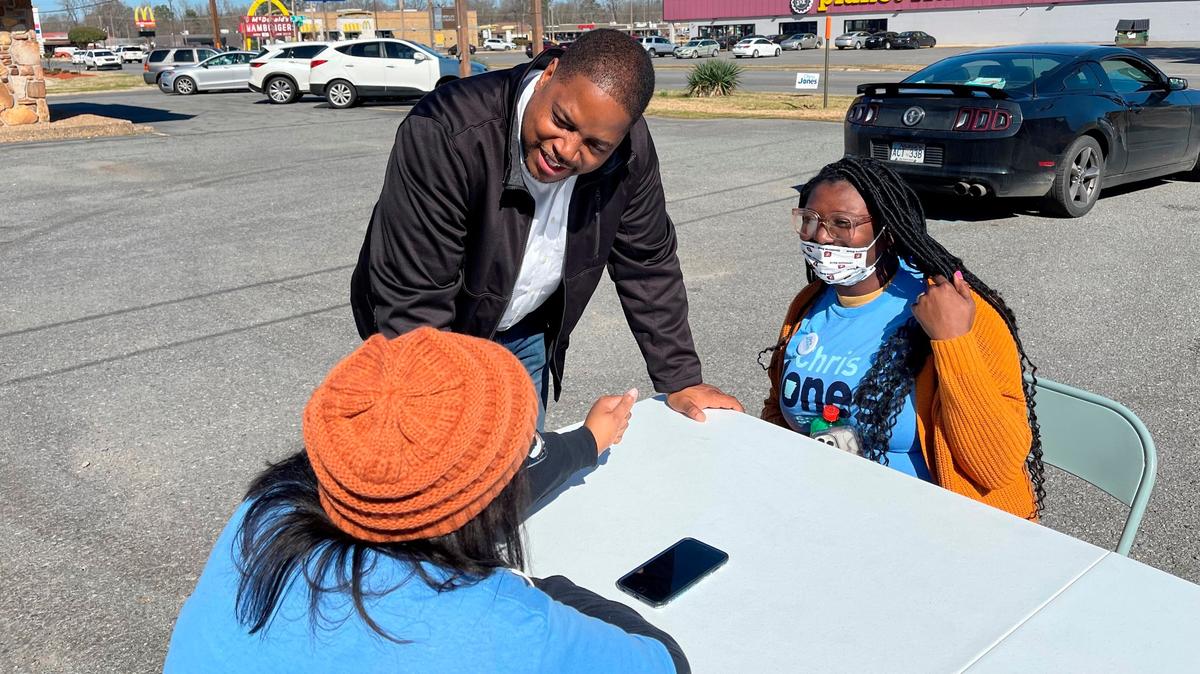
Democratic candidates nationwide are struggling mightily to hire enough qualified people to run their campaigns, according to interviews with party political operatives, a staff shortage many of them say is the worst — and most frustrating — in recent memory.
In an election year when Democrats are already grappling with high inflation and an enthused Republican Party, the hiring troubles amount to a behind-the-scenes headache when the party can least afford it.
“As chair, it’s definitely the worst I’ve seen it,” said Jane Kleeb, chair of the Nebraska Democratic Party, adding that the shortage was a subject of conversation among Democratic Party chairs at a recent gathering.
“It is bad this cycle,” she said. “There is no question about it.”
In interviews with more than two dozen party operatives, including many directly responsible for hiring, the Democrats say the problem has affected both senior and entry-level staffers and most every facet of a campaign, including finance, field teams that reach out to voters, and communications.
But they say that although the major political operations in Washington — including the House and Senate Democrats’ political arms and the Democratic National Committee — are mostly fine, the problem is especially acute for candidates running outside of major metro areas and in races that receive relatively less attention.
“It’s a squeeze,” said Rebecca Pearcey, who served as political director for Democratic presidential candidate Elizabeth Warren in 2020. “There are only so many people crazy enough to do this ... for a living.”
It’s not a problem confined to just the Democrats: Republicans say they too have had some difficulty staffing up this election cycle, though some of them say it’s not been any harder this year than it has in recent elections. The scale of their problem, however, does not appear to match the scale of the problem facing Democrats.
At the heart of the hiring challenge, say Democrats, is a problem of too many available jobs — driven by the explosive growth of campaign-related jobs in the larger Democratic political ecosystem, including at the White House — and too few people to fill them — exacerbated by a tight labor market that has affected all sectors of the economy.
But Democrats say the party’s legion of staffers, young and old alike, are also suffering from a widespread case of burnout, deeply affected by the tumultuous years of former President Donald Trump’s candidacy and a coronavirus pandemic that made campaign life last election cycle a misery for many.
“People are exhausted, just drained,” said Niccara Campbell, political director for the Congressional Black Caucus PAC, who called hiring this election cycle “extremely” challenging. “You’re on a campaign, you don’t sleep, you’re eating crappy food, and you’re not moving around. So you can leave, get out of politics completely, which a lot of people have done.”
The problem is so widespread this cycle that Democrats worry it could last past November, affecting future elections.
“Even folks who are well-read on politics operate under this assumption that staffing is something that the party takes care of. That once you are out there as a nominated candidate, you have the labor force you need to run that campaign effectively and win,” said Lauren Baer, a former Florida congressional candidate who now runs Arena, a group that helps train Democratic staffers. “And that simply isn’t the case.”
No references, no problem
To Kleeb, the 2022 cycle is the hardest she had seen since after 2004, when she says a defeat to former Republican President George W. Bush left the party faithful demoralized. Pearcey said it’s the worst she’s seen since 2010, the last time Democrats had to try to staff campaigns while also controlling the White House.
The difficulty of holding the executive branch — which includes hundreds of political staffers spread across a variety of departments and agencies in addition to the White House itself — while also finding enough senior-level people to run campaigns was a common refrain among Democrats, some of whom said it’s traditionally been a challenge in the aftermath of winning a presidential race.
“It’s a reach to put someone in charge of the field organization with one cycle of experience, when the more qualified candidate is a congressional liaison at the [Department of Energy],” Pearcey said. “You can’t fault them for wanting to take the leap and come to Washington and do the cool job. But it does make hiring tougher.”
The opportunities for those Democrats who land a plum job in the White House, however, are of little comfort for national party operatives who spend much of their day trying to pair potential staffers with campaigns.
Democrats say email listservs that include a hundred or more potential staffers, ones that teemed with applicants two years ago, are now silent when sent a new job opening. Openings on high-profile campaigns that would once have attracted a flurry of resumes are now lucky to receive a single unsolicited application, they say, and state House races — never the easiest type of campaign to staff in the first place — now regularly lose out on potential staffers to better-funded progressive independent groups.
One veteran Democrat who works directly with federal and state campaigns to hire staffers recalled an important federal House candidate that had to offer an important job to nearly a half-dozen people before anyone accepted, what she has heard has become a regular occurrence on campaigns across the country. It has gotten to the point, this strategist added, that they no longer even check references when she sees an ostensibly viable resume, and instead recommends the campaign she’s advising immediately hire the person because they have probably already received offers from another six candidates.
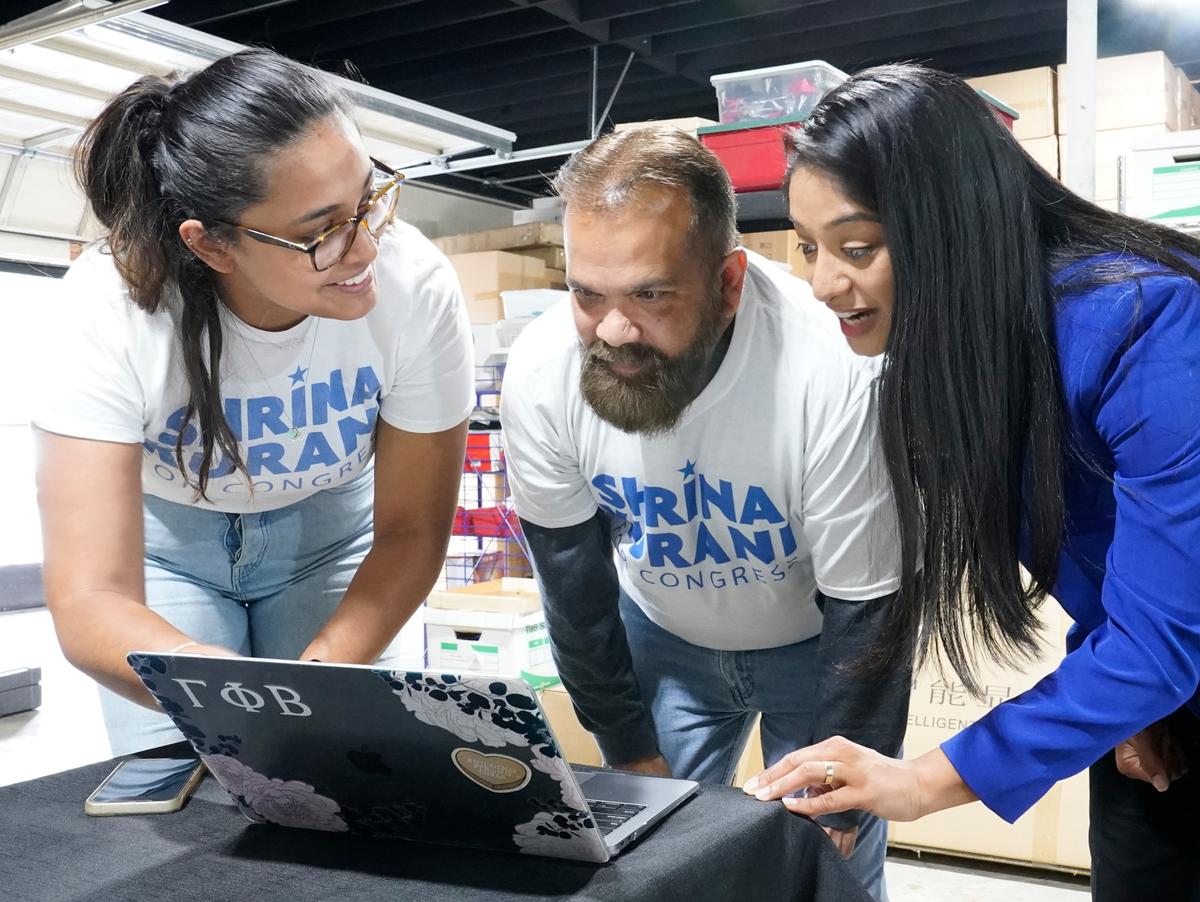
Even when campaigns do hire, the job does not always work out. One former staffer for the Democratic Congressional Campaign Committee recalled a campaign hiring a call-time manager, only to soon after let the person go because they refused to relocate to the district. Meanwhile, the campaign manager for Nan Whaley, who earlier this year won the Democratic gubernatorial primary in Ohio, quit when the general election began to become a pastry chef in Paris.
Even many campaigns that don’t have many job openings will have senior-level operatives who would normally hold middle-management or even entry-level jobs, if the party had more available people to hire.
“A lot of folks that maybe in previous cycles we would have looked at and said, ‘Oh, maybe you’re not quite ready for this,’ now we say, ‘Oh, you’re ready,’ ” said one veteran Democratic strategist, granted anonymity to speak candidly about internal staffing issues. “It’s a battlefield commission.”
Labor shortage
The strategist added that although he was hopeful many of the younger staffers can and will step up, they were still uneasy about the overall shortage.
“I think we’re going to look at this at the end of the election and say, ‘Oh, that’s the impact,’ ” the strategist said. “We should have seen it coming all along.”
Democrats say the scarcity is also increasing salaries for these staffers, with even some entry-level positions making as much as $50,000 a year, more than double what some strategists recall junior staffers making a decade ago.
“The going rate for campaign staff has certainly gone up. And I don’t think that’s a bad thing,” said Marshall Cohen, political director for the Democratic Governors Association. “And that has not been a new phenomenon this year. I think that’s been going on a while.”
Difficulty finding employees, of course, is a common story in the economy writ large right now, affecting everything from jobs created by President Joe Biden’s infrastructure law to the service industry. The federal unemployment rate in June was 3.6%, one of the lowest rates of the last 20 years.
Among all the reasons Democrats list for the hiring problem this year, most agree the overall state of the economy is problem No. 1.
“Part of this is emblematic of the economy right now,” Cohen said. “In a post-COVID world, the economy is rebounding in a strong way, and the unemployment numbers are low. And if you are looking to hire people in any sector, it’s an employees’ market right now where there are a lot of opportunities and people can be picky.”
The DGA, which helps Democratic governors across the country win elections, anticipated the hiring shortfall, moving in the immediate aftermath of the 2020 election to line up research directors and embed communications staffers with state parties, enough to avoid most (though not all) problems with hiring.
Other Democrats point to the sheer number of jobs now available in the larger Democratic political ecosystem, including an explosion of liberal outside groups and the growing size of Democratic campaigns and the political committees, all of which are suffused with a surge of online fundraising dollars and eager to build out digital teams that barely existed a dozen years ago.
An aide at the Democratic Congressional Campaign Committee, the political arm of House Democrats, said that 10 years ago, the committee had 156 people at its October peak. In May of this year, it had nearly double as many people on payroll, at 305.
Burnout
Campaign life is a grind, political veterans say. The hours are long, the pay is poor, and staffers often have to move away from friends and families, some of whom are now several time zones and a thousand miles away.
But that’s always been true. What’s changed recently is the arrival of something that many Democrats say is playing a bigger role in the current shortage than is commonly understood: the pandemic.
The camaraderie many staffers cultivate working long hours together never happened in 2020, Democrats say, replaced by remote work and endless Zoom calls that left many feeling isolated and uninterested in a return to politics this year.
“Some of the best parts of being on a campaign are having big dinners with all your volunteers, going out with your coworkers after work, sitting in an office together until one in the morning,” said Greta Carnes, national organization director for Democrat Pete Buttigieg’s presidential campaign in 2020. “The pandemic really took all that away. It’s hard to sit behind a computer all day and feel that same camaraderie. It’s really hard to build relationships and organize over Zoom, or sit in your house alone all day making calls.”
Signs of burnout are everywhere, Democrats say. Some veteran staffers say they are exhausted after what was, for them, the thrill of Barack Obama’s presidency and agony of Donald Trump’s. Others say some in the party are nonplussed by the lack of progress during Biden’s presidency, or bracing for a setback in a midterm election this year that is expected to see large GOP gains across the country.
“Those four years of his presidency were so tumultuous and so draining for anyone who truly cares about this country, that once that fight was done, people wanted to figure out a way to probably contribute,” said Justin Myers, executive director of Blue Leadership Collaborative, a group that helps train and elevate men and women of color into senior roles on Democratic campaigns. “But in a way maybe it’s not as exhaustive or not as time-consuming, if you will.”
Myers estimates that he speaks with at least one Democratic operative a week about the severe burnout they’re feeling, most of them in high-level management positions on campaigns.
Myers and Baer, who also trains campaign workers, each say that part of the struggle for campaigns is that many of them are trying to pick staff that are racially representative of the larger Democratic Party, but are doing so at a time when the party has only just begun to adequately invest in identifying and training operatives of color.
“There are thousands of individuals who are clamoring to get in to the world of politics, to get in the room where it happens,” Baer said. “But we need to make an active effort to bring them in and train them and equip them to get the skills they need to be hired and be successful.”
More quietly, some longtime Democrats say they have struggled to persuade many of their younger counterparts to move somewhere new to take a job.
“COVID and the rapid increase in remote work has made people prioritize living in cities with their friends rather than doing unglamorous, boots-on-the-ground campaign work in towns across America,” said a former DCCC aide, who called the hiring challenge this year “unlike anything I’ve seen.” “You have a lifetime to settle down but only so many years to go from campaign to campaign. It’s a shame how many people turned down amazing opportunities because they weren’t willing to hit the road.”