Scott, Rubio vote against bill to fund federal government and provide aid to Ukraine
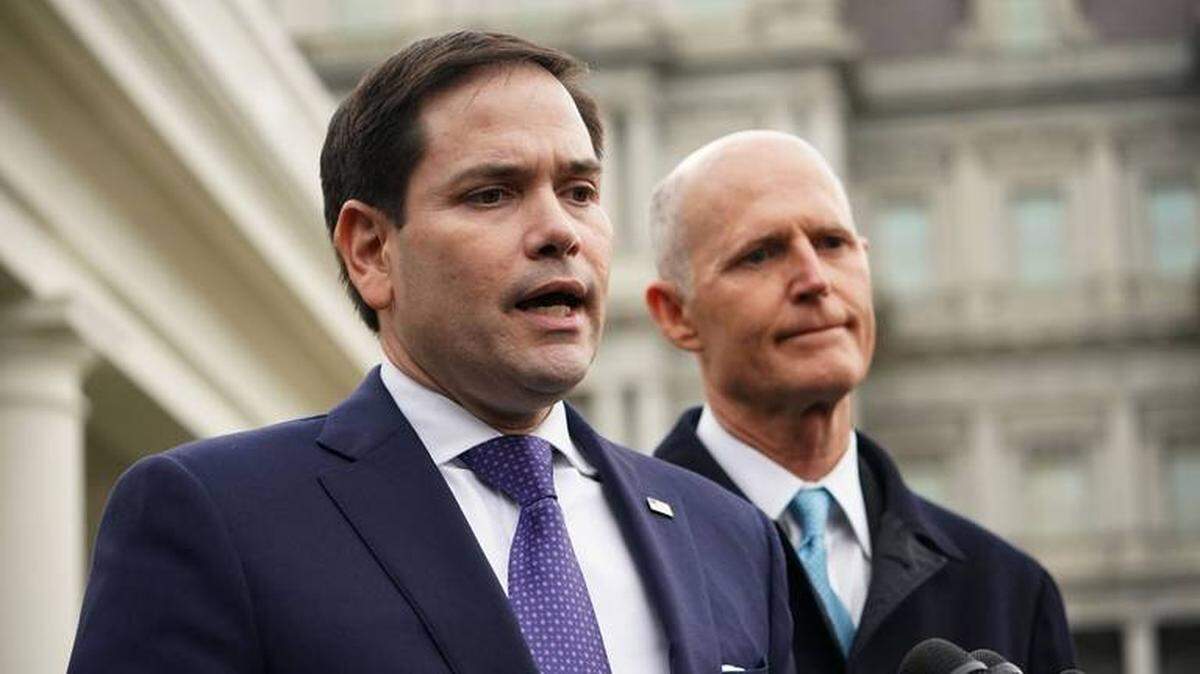
Both of Florida’s senators voted against a bill to fund the federal government through September after Sen. Rick Scott failed in his effort earlier in the day to decouple aid for Ukraine from the larger government spending package.
The Senate voted 68-31 to approve a $1.5 trillion spending plan to fund the federal government for the rest of the current fiscal year, which lasts through September. The package included roughly $14 billion in aid to Ukraine meant to provide assistance to the European nation as it resists an invasion from Russia.
The legislation, which passed the House the previous evening with bipartisan support, was the result of months of negotiation between Democrats and Republicans. It will prevent any threat of a government shutdown until October.
But Scott, the chairman of the National Republican Senatorial Committee, contended that the legislation was full of wasteful spending for lawmakers’ pet projects.
“It makes my blood boil,” Scott, a former Florida governor, said in a statement Thursday evening.
Scott’s vote puts him at odds with other members of Senate Republican leadership, including Senate Minority Leader Mitch McConnell, who supported the bill.
Sen. Marco Rubio, who is up for reelection this year, joined Scott in opposing the bill. He posted a video to Twitter Thursday night explaining his rationale. Rubio said that Congress should have passed aid to Ukraine two weeks ago.
“The Democrats here who run Congress decided to hold this emergency aid hostage, so they can ram through this thousands and thousands of page bill that’s filled with earmarks, that has buried in it green new deal programs, that has a bunch of other woke priorities, including hiring 10,000 IRS agents,” Rubio said. “And that no one’s even had a chance to read this.”
One of the larger environmental projects funded through the bill is in Rubio’s home state. The bill allocates $350 million for Everglades restoration, which comes on top of the $1.1 billion the Biden administration already announced earlier this year through the infrastructure law.
Some Senate Republicans voted in favor
The description of the legislation from the two Florida Republicans differs sharply with the assessment of the Senate Republicans who led negotiations on the bipartisan bill, including retiring Sen. Richard Shelby of Alabama, who pointed to the bill’s silver linings for Republicans at a time when Democrats control Washington.
“This package bolsters our defense budget by $42 billion, with serious investments in modernization and readiness, and increases funding for border security. It also provides critical emergency assistance to our allies in response to Russia’s invasion of Ukraine,” Shelby said. “On the non-defense side, it cuts billions of dollars in wasteful spending proposed in the president’s budget. This is a good package, and I urge the president to sign it with haste.”
In taking a stand against the bill’s spending, Scott and Rubio also had to cast a vote against the bill’s popular provisions, including long-awaited reauthorization of the Violence Against Women Act, which provides resources to combat domestic violence and sexual assault, and the aid to Ukraine.
Rep. Val Demings, an Orlando Democrat running for Rubio’s Senate seat, attacked the senator Friday over these two provisions.
“It’s shameful that Marco Rubio was too weak to support this critical legislation. Instead, he put his party bosses and the special interests first while voting to leave the men and women fighting Putin in Ukraine without the critical aid they need, and voting against funding for domestic violence shelters, housing services and rape prevention programs,” Demings, who supported the bill in the House, said in a campaign statement.
Scott had unsuccessfully sought to decouple aid to Ukraine from the main bill and to force a vote on a standalone Ukraine bill Thursday afternoon, but his motion was blocked by majority Democrats who said it would further slow the process.
“Of course, not everything in this bill is awful. I fully support providing aid to Ukraine. I fought to fast track this aid all week and went to the floor earlier today asking for an immediate vote on it,” Scott said in the statement. “Heartless Chuck Schumer commanded his members to block a vote on this critically important aid so he could hold it hostage.”
Sen. Jon Tester, D-Montana, blasted Scott’s motion as cynical and disingenuous on the Senate floor, noting that the House had already adjourned for the week and that voting on a standalone bill would delay aid until the other chamber returned.
“The House is not in session. To say that we’re going to pass this and presto chango it goes right to the president’s desk, that’s not how the process works, Sen. Scott,” Tester told the Florida Republican.
Tester said the budget bill had “been negotiated over the last year by Democrats and Republicans. And that’s where we’re at today. We need to pass this bill. If you’re concerned about the Ukraine, we need to pass this bill. If you’re concerned about feeding hungry people in this country, we need to pass this bill.”
The White House praised the passage of the bill, which will be signed into law soon by President Joe Biden.
“With these resources, we will be able to deliver historic support for the Ukrainian people as they defend their country and democracy, launch a bold new initiative to drive unprecedented progress in curing cancer and other diseases, and provide additional support to our law enforcement so they can protect our communities,” White House press secretary Jen Psaki said Thursday night.
South Florida Republicans in the House voted yes
The House passed the bill the previous evening by a bipartisan vote of 361-69. South Florida Republican Reps. Mario Diaz-Balart, Maria Elvira Salazar and Carlos Gimenez all joined majority Democrats in supporting the measure.
While Scott and Rubio bristled at the earmark spending included in the bill, Democratic Rep. Debbie Wasserman Schultz touted her own earmarks as a way to deliver for the needs of her district, including $2 million for a workforce training program at Broward College and $3 million to rebuild a community center in Dania Beach among the federal funds for local projects.
“This spending package meets so many South Florida needs, and it will help every American family get ahead, all while addressing the national security and climate changes realities that confront our global-facing state,” Wasserman Schultz said in a statement.
This story was originally published March 11, 2022 at 8:42 AM.