Democrats fighting for ‘every single delegate’ eyeing Puerto Rico’s primary
The murky outlook of the Democratic presidential race is making one thing clear: For the first time in decades, Puerto Rico’s presidential primary is likely to matter.
Lawmakers on the island voted last year to move their primary from June 7 to March 29. And with uncertainty increasing over whether any one candidate will emerge from a crowded field this summer with the delegates needed to secure the party’s nomination at the Democratic National Convention in Milwaukee, Puerto Rico’s 51 pledged delegates give its voters more power than about half of U.S. states to push popular candidates closer to the finish line.
About a month from the primary, activists on the island say Michael Bloomberg and Bernie Sanders appear to be the most aggressive in pursuing Puerto Rico’s spoils.
“The Democratic nomination process this cycle is going to be a battle for every single delegate,” said Alan Clendenin, a Democratic National Committee member from Florida. “Puerto Rico is going to be important because every delegate is going to matter.”
Voters on the island, a U.S. territory that doesn’t get to vote for president in the November general election, only began participating in primaries in 1980. That was the first and arguably last time there was any real drama in Puerto Rico for either party, with then-President Jimmy Carter narrowly fending off a challenge from Ted Kennedy and Ronald Reagan losing to his eventual running mate, George H.W. Bush.
Otherwise, Puerto Rico has been largely irrelevant to Democratic presidential nominations — in recent years, an afterthought to contests decided earlier in the winter and spring. (Republican primaries on Puerto Rico have been held on different dates than Democratic primaries, typically in February and March.)
This year, though, Puerto Rico could find its delegates sought after. It has more pledged delegates than 23 states plus the U.S. Virgin Islands. The island’s lawmakers chose an earlier Democratic primary hoping to return the debt- and disaster-ravaged island to some level of political relevance — and force candidates to address the island’s issues beyond its natural disasters.
And there is an additional reason for the candidates to make their case directly to Puerto Ricans: Campaigns on the island could have a multiplier effect this year, with support in Puerto Rico potentially influencing massive and growing mainland Boricua communities, including in the delegate-rich states of New York and Florida.
“Puerto Rico shouldn’t be viewed in isolation,” said Federico de Jesús, a Washington-based political consultant from Puerto Rico. “Aside from Nevada and Florida, it’s going to be one of the only Latino-majority states or jurisdictions. … This isn’t just important for the primary, but for the Democratic Party in November.”
There is also the possibility this year that no candidate will amass the delegates needed to secure the nomination on a first ballot vote at the Democratic National Convention in July. That makes every contest valuable, including Puerto Rico’s, where delegates are awarded proportionally based on the popular vote to candidates who received at least 15% support statewide and in specific legislative districts.
In addition to Bloomberg and Sanders, other major presidential candidates have given a nod to the island’s importance. Joe Biden announced two dozen endorsements by Puerto Rican lawmakers in December, declaring in a press release that “Puerto Rico will play a defining role in the 2020 nominating contest.” Elizabeth Warren visited Puerto Rico early last year, shortly after announcing her campaign.
Charles Rodriguez, chairman of the Puerto Rico Democratic Party, said the party is talking with campaigns about holding a debate at the University of Puerto Rico ahead of the primary, potentially on March 26.
“By the time we have the primary in Puerto Rico, the race will still be open and many candidates will want to be able to grab a big chunk of the delegates of Puerto Rico,” Rodriguez said.
But the island has received only passing mention in 10 presidential debates. There is no public polling to gauge the race. And activists say they’d like to see more attention by the candidates to an island of more than 3 million people.
One group of Puerto Ricans living in the states became so frustrated at the lack of discussion about the island in the primary that they traveled to Des Moines ahead of the Iowa caucuses to press the candidates on issues relevant to Puerto Rican voters.
“Sometimes, it feels that we’re [just] a good talking point to hit Trump over the head, that we’re a means and not an end,” said Gabriela Medina, a national committeewoman for the Young Democrats based out of San Juan. “It’s frustrating.”
But election activity has been picking up.
Thirty days from the primary, staffers of Puerto Rico’s Bloomberg campaign were bustling around their headquarters at an office building in San Juan’s business district, surrounded by T-shirts, banners and “Me Gusta Mike” posters.
.JPG "DSC_0173 (2).JPG")
Deputy State Director Frankie Martinez said he’s hopeful that Bloomberg’s heavy media presence on the island — he’s flooded it with radio and TV ads — will also have an impact on the primary race on the mainland. The Bloomberg campaign is also planning to send out thousands of mailers in Spanglish to target Puerto Rican voters living in Central and South Florida.
“Elections are won by very small minorities. A lot of Puerto Ricans have moved to Ohio. They’ve moved to Florida. They’ve moved to Texas,” he said. “That’s why Puerto Rico is so important. Talking to us here is how you talk to those communities up in the U.S.”
In addition, Bloomberg’s pro-statehood stance, unique among Democratic contenders, is energizing islanders who are tired of voting in referendums and plebiscites about their political status — weighing statehood against commonwealth or independence — that never overcome Washington’s indifference, said the campaign’s state director, Frances Rodríguez.
“Everybody else says let the Puerto Ricans decide,” she said. “Bloomberg is the only candidate who has come forward and said I will commit to statehood and to the party. So this is our chance.”
Biden’s campaign says it has a “council” that meets regularly to map out progress and plan with primary voters, and a “super-volunteer” coordinating on the ground. A projection of the island’s primary by the election analytics website FiveThirtyEight gave him the best chance to win.
But activists on the island say aside from Bloomberg, the only other candidate with an active base is Sanders, the early front-runner and delegate leader in the primary. The Vermont senator’s sizable group of active supporters on the island call themselves, “el junte de Bernie” or “Bernie’s crew,” said Medina, the Young Democrats committeewoman.
“We’ve done some four or five debate-watch parties and they always come. They’re the largest group, and they’re always bien pompia’os,” or really pumped up, Medina said.
Sanders’ campaign infrastructure in Puerto Rico is completely grassroots and volunteer-run. Many of his supporters worked on his primary run in 2016 and have since reorganized.
“They haven’t assigned an official campaign staffer to work on the ground in Puerto Rico,” said Maruxa Cárdenas, a Miami-based community organizer from Puerto Rico who is volunteering for the Sanders campaign in Florida and Puerto Rico. “But the support has tripled. We have a lot of volunteers who weren’t active before.”
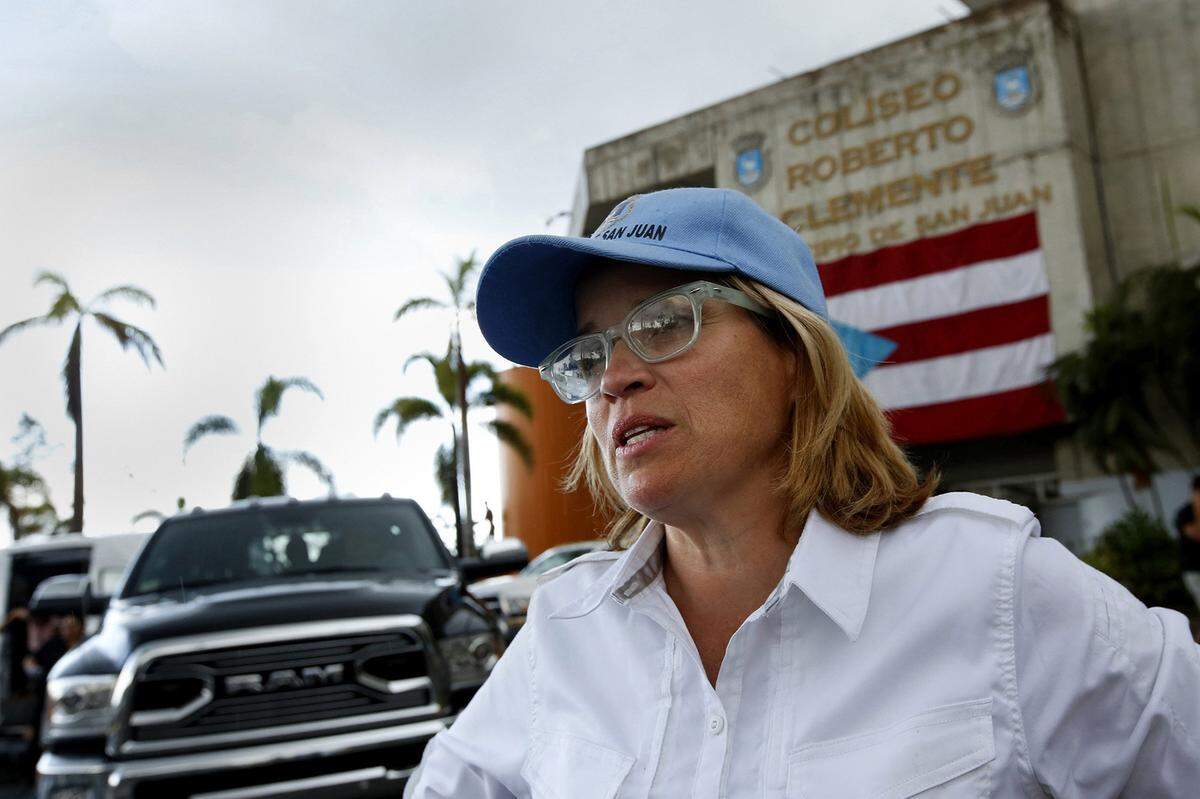
Sanders’ campaign co-chairwoman, San Juan Mayor Carmen Yulín Cruz, does not support statehood. But Sanders supports self-determination, a position adopted by most candidates that voters on the island should be allowed to determine for themselves whether to be come a state.
Cárdenas says many voters view that as a way to not alienate people across the political spectrum, and believes they appreciate his advocacy for debt relief and the disbursement of aid funds.
She thinks the earlier primary could be one reason Sanders supporters have been so active on the island. But she also feels the change in date caught other candidates off-guard, and is skeptical that Puerto Rico will see the kind of full-fledged campaign that leaders hoped for when they changed the date last year.
“Maybe it could have a greater effect if it stays that way for the next primaries in 2024,” Cárdenas said. “But for this year, I don’t think so.”
But Rodriguez, the chairman of the island’s Democratic Party, predicts candidates who survive Tuesday’s 14 primary and caucus contests will quickly establish a presence in Puerto Rico.
“I think this is going to change after Super Tuesday,” he said. “The candidates will be looking at Puerto Rico.”
This story was originally published March 2, 2020 at 12:03 PM.