Rare and elusive ‘wrinkled’ bat seen on the island of Borneo for the first time

There is an elusive species of bat known from a few places in Malaysia and Indonesia. It prefers to forage in the highest levels of the rainforest canopy and fly through open spaces. Because of this, it has rarely been recorded since its discovery in 1873.
According to researchers, not much is known about the ecology, echolocation and genetics of Mops johorensis in Malaysia. But a new sighting is shedding light on this mysterious species, according to a study published Oct. 29 in the journal Check List.
Mops johorensis belongs to a family known as “free-tailed bats.” They are defined by their long, narrow wings that allow for “rapid and agile flight,” according to the study. They also have a unique tail, earning them their name.
For the first time, Mops johorensis was recorded on the island of Borneo, according to the study, extending the species’ known distribution range.
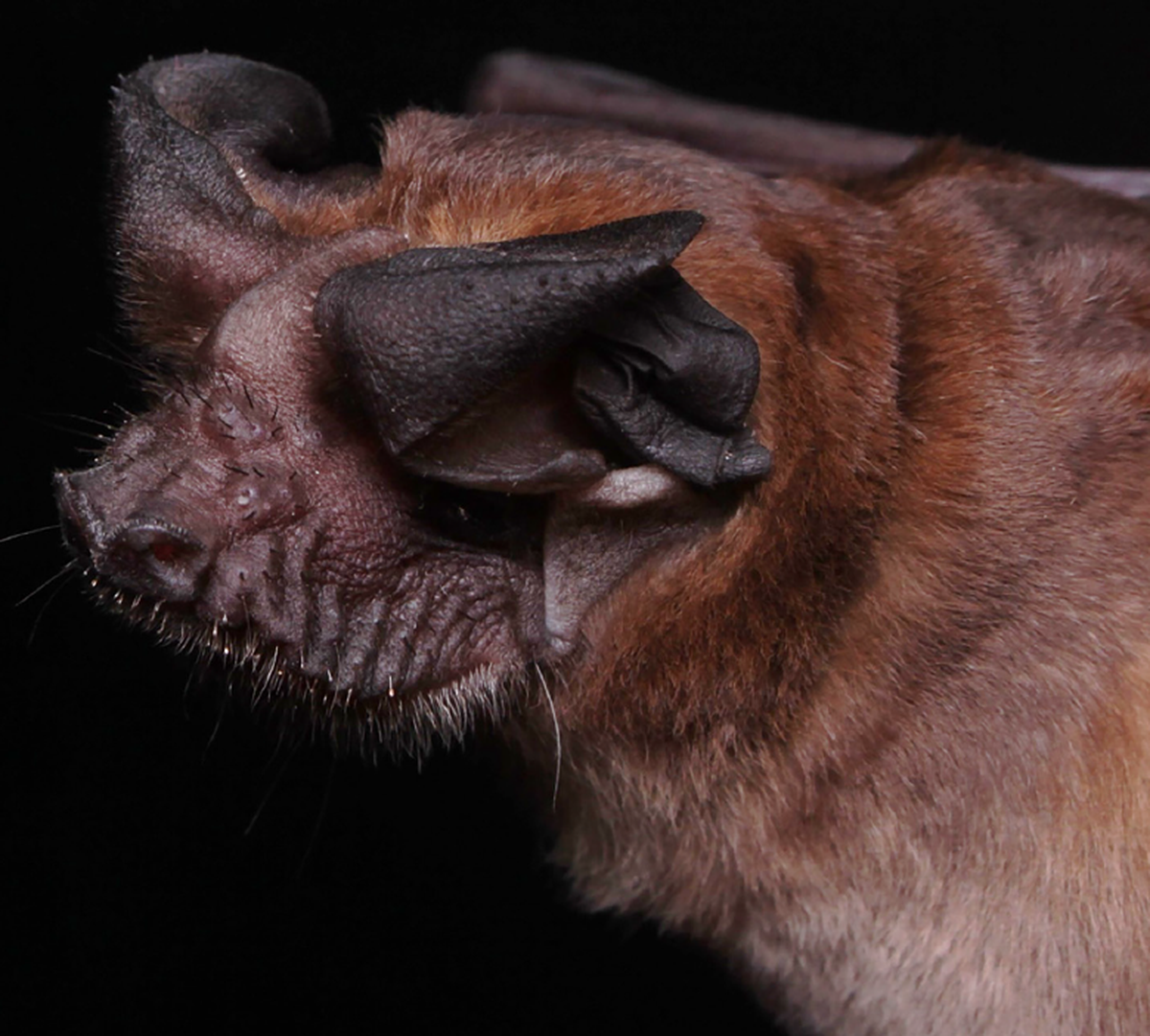
Researchers used nearly invisible nets called mist nets high in the trees to trap the bats. Specimens were captured at elevations from 98 feet to nearly 4,000 feet above sea level in mountainous habitats. These findings prove the species is ecologically flexible, able to survive in a wide range of elevations and habitats, according to the study.
A closer look at the species revealed it has “dark-brown upperparts,” paler underparts, a wrinkled upper lip, and a distinct “pocket” between its ears with tufted hairs, according to the study.
Researchers said karst ecosystems appear to be hotspots for the species on the island.
The species is listed as vulnerable on the International Union for Conservation of Nature (IUCN) Red List 2025 “due to its restricted range and likely small population size, according to researchers.
The research team included Faisal Ali Anwarali Khan, Muhd Amsyari Morni, Julius William-Dee, Jayaraj Vijaya Kumaran, Emy Ritta Jinggong, Praveena Rajasegaran, Qhairil Shyamri Rosli, Norfarhana Mazlan, Wan Nursyafinaz Wan Azman, Siti Nurbaidzuri Reli, Ummu Safiyyah Daud, Amirrah Amat, Lawrence Alan Bansa, Azniza Mahyudin, Noor Haliza Hasan, Juliana Senawi and Isham Azhar.