Rare Celtic medical tool used to drill holes in patients’ heads found in Poland

Archaeologists have discovered a rare iron surgical tool of Celtic origin in Poland.
Experts said the artifact is a trepanation tool — something used in ancient times to bore a hole in a person’s skull, according to an Oct. 24 news release from Nauka w Polsce.
Trepanation, now synonymous with trephination, is the first neurosurgical procedure on record, practiced throughout many regions and time periods, according to researchers.
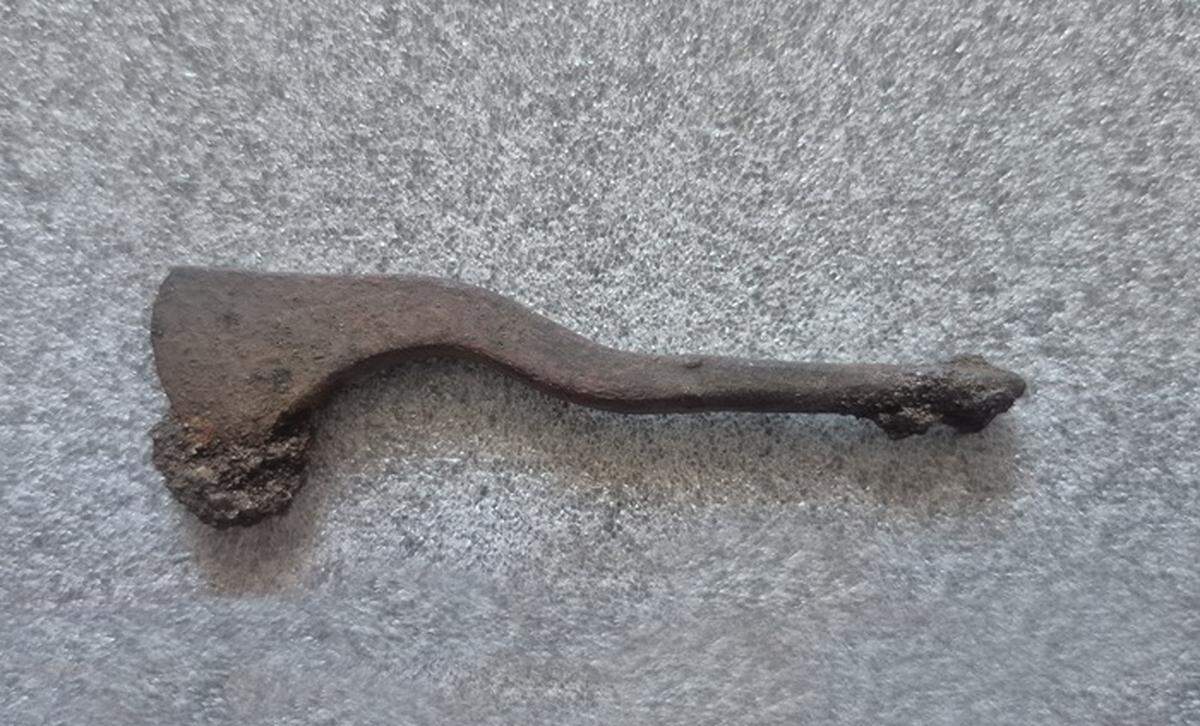
The tool unearthed at Łysa Góra in Mazovia had a wooden handle and one end was shaped like a blade that transitioned into a spike, according to archaeologists.
Such tools are known only from a few Celtic sites in Romania, Croatia, and Austria, according to lead researcher Dr. Bartłomiej Kaczyński from the State Archaeological Museum in Warsaw.
Experts said the find proves people of Celtic origin who arrived in the region, possibly on a trade route, had someone with them who specialized in medical procedures, likely a druid who practiced herbal medicine.
The tool was like carried for magical symbolism rather than practical use, according to the release.
The long history of trepanation
Evidence of trepanation is found across cultures and time periods. Some ancient practitioners believed perforating the skull allowed blood to flow out before becoming stagnant and turning to pus, according to an essay from Charles G. Gross’s book, ”A Hole in the Head: More Tales in the History of Neuroscience.”
Others used it to treat skull fractures and relieve pressure on the brain, Gross said.
In 18th century Europe, trepanation was used to treat mental illness and epilepsy. The intent was to provide an exit for “evil vapors and humors” in the skull, according to Gross.
In ancient Libya, children underwent trepanation so that weren’t “plagued in their afterlives” by fluid leaking from their heads, according to Gross.
Even in the present day, the International Trepanation Advocacy Group believes that when a child’s skull fully fuses, it leads to “a loss of dreams, imagination and intense, perceptions,” according to Gross/, who said the group believes a hole in the skull will reverse these effects.
Google Translate was used to translate the news release from Nauka w Polsce.