Creatures that look and smell like bird poop are new species from Southeast Asia

A scientist has discovered two new species of crab spiders in Southeast Asia with an unusual evolutionary adaptation.
They have evolved to look — and smell — like bird poop, according to a study published Oct. 24 in the peer-reviewed journal ZooKeys.
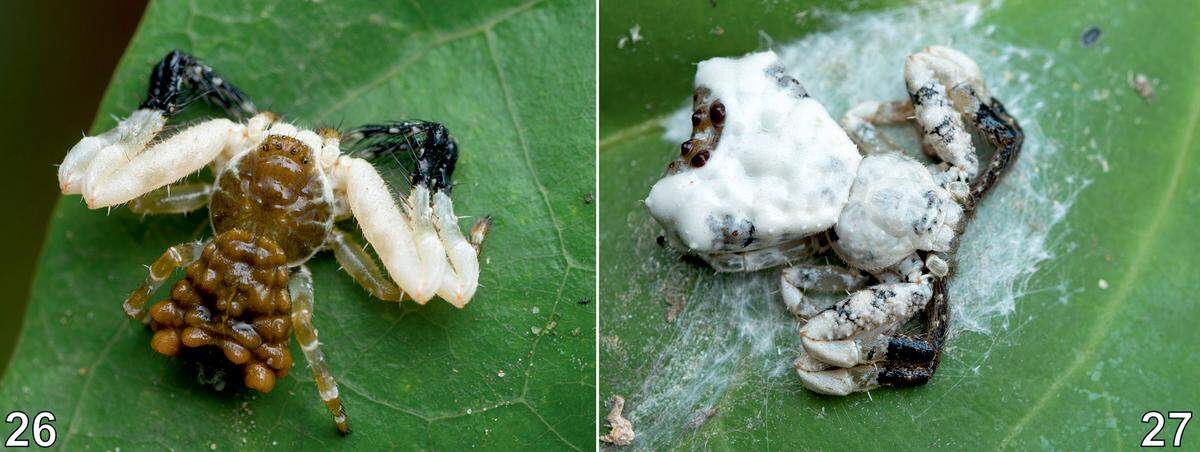
Crab spiders in the Phrynarachne genus are “medium to large size” with growths on their bodies that give them a textured appearance.
“These spiders are often referred to as bird-dropping crab spiders due to their remarkable mimicry as their body shape and coloration closely resemble bird droppings on leaf surfaces,” study author Mikhail M. Omelko said.
To make their camouflage even more believable, the spiders build a white silk patch on a leaf and place insect remains on it, Omelko said. The spider then lies in wait in the center of the silk patch.
“In addition to this striking morphology and behavior, Phrynarachne spiders emit a distinct foul odor that attracts insects such as flies,” according to the study.
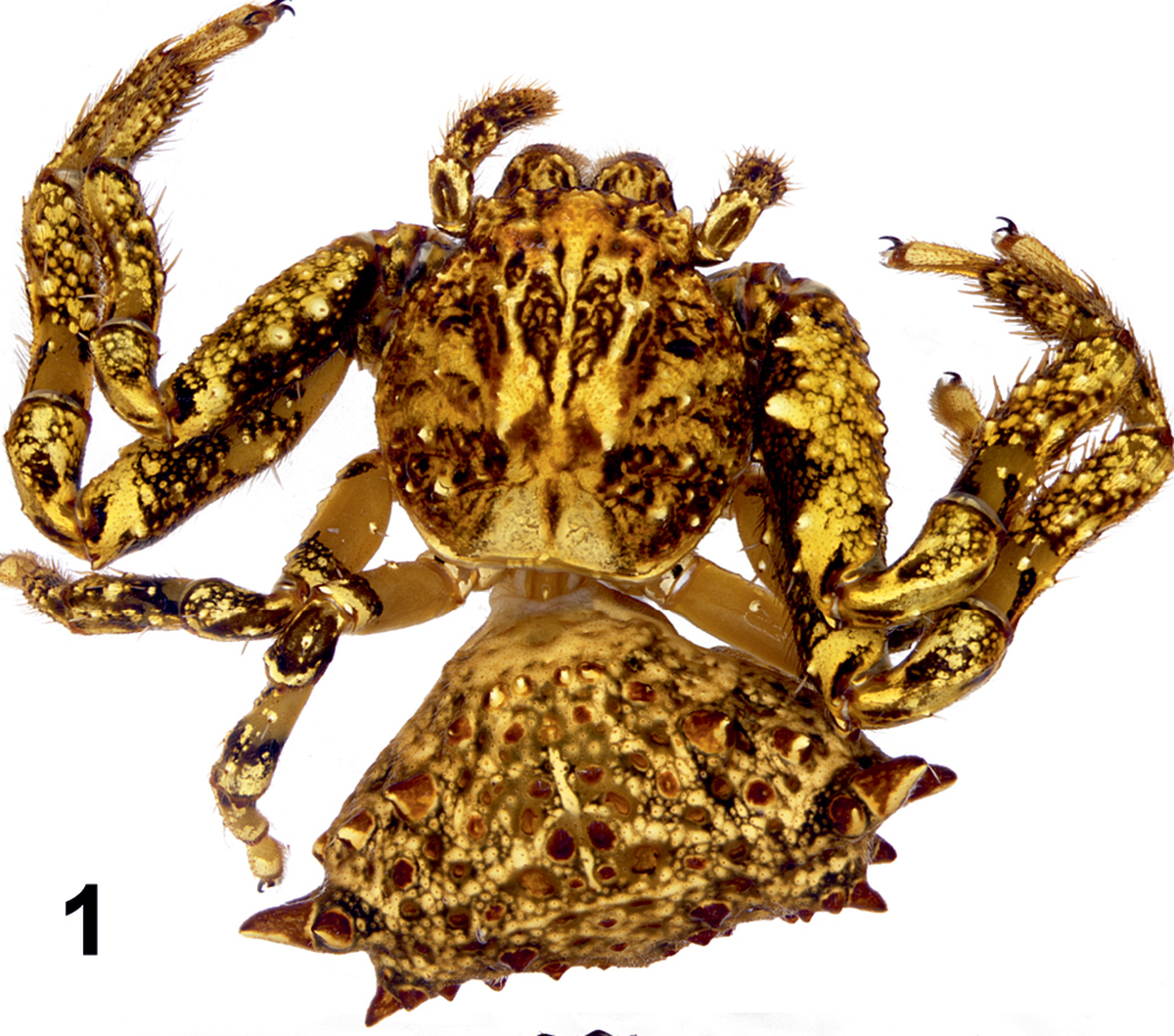
Phrynarachne gorochovi, a new species of bird-dropping spider, was discovered in the Philippines, according to Omelko. It is yellow with many irregular dark brown spots and bumps covering its body. This is the first spider in the Phrynarachne genus found in the country, according to the study.
A second new Phrynarachne species was discovered in Malaysia on the island of Borneo.
Phrynarachne storozhenkoi has a “yellowish white” body with “four irregular black spots,” the study said. Its legs are a similar pale yellow color covered with irregular black and dark-brown markings, according to Omelko.
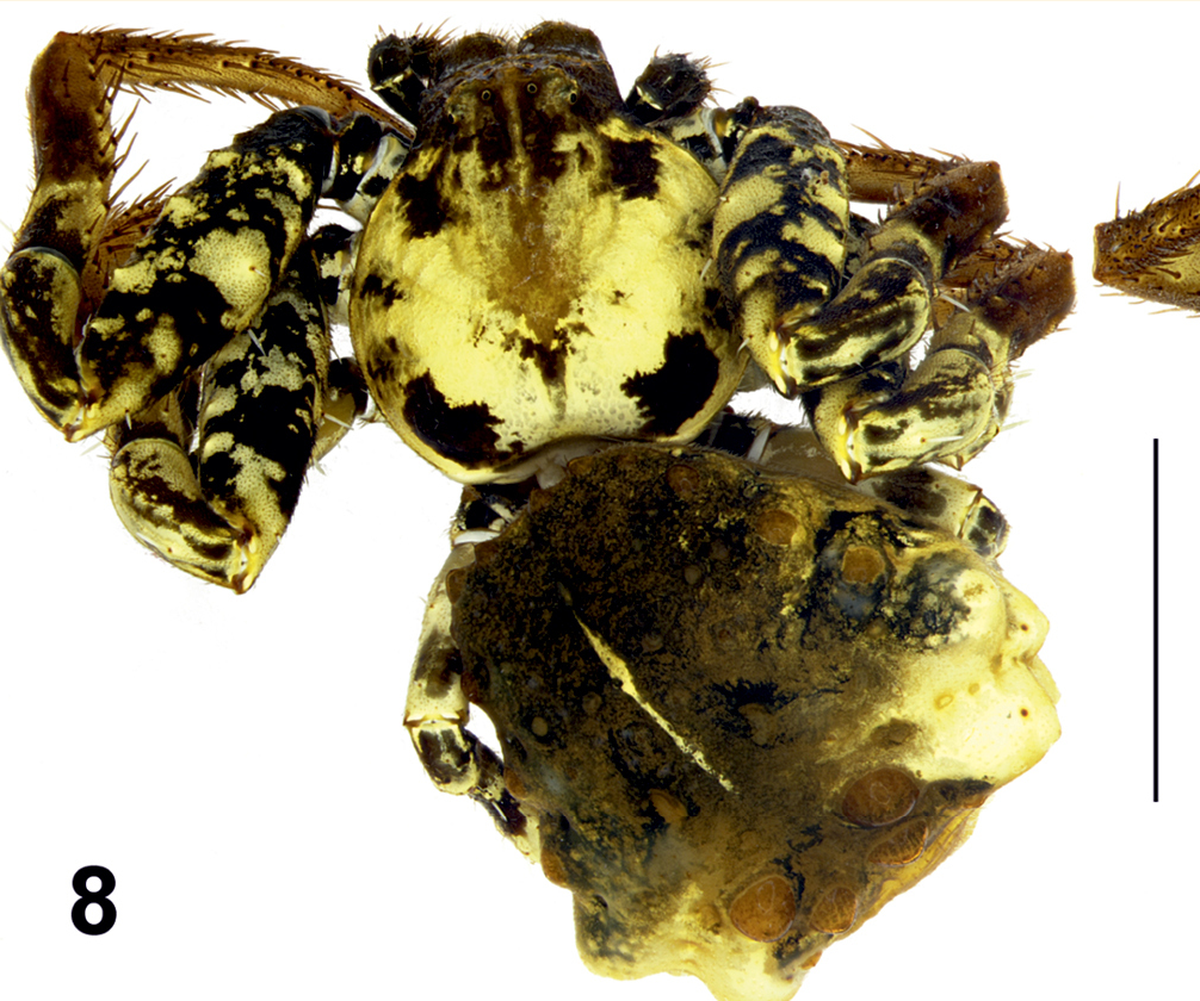
No Phrynarachne species has ever been officially recorded in Borneo or included in the World Spider Catalog, Omelko said.
On the island, however, more than 80 observations of spiders from this genus have been published by citizen scientists on iNaturalist, the study said.
Two other known species — Phrynarachne ceylonica and Phrynarachne decipiens — were recorded for the first time in Laos, extending their distribution range, according to the study.