‘Sun’ creatures — with ‘colored’ wings — are new endangered species in Australia
Bats, raccoons and moths are just some of the creatures of the night that spend most, if not all, of their lives entirely in the dark.
These nocturnal creatures have adapted biologically to the lack of light. But for moths, the “black sheeps” of their group aren’t nocturnal at all.
Castniidae, or sun moths, are a “family of day-flying moths” that appear, at least superficially, to resemble butterflies.
Five new species of sun moths have just been identified in Australia — and they’re already in danger.
Sun moths are known for their “slim bodies, broad, often richly coloured wings and their clubbed antennae,” according to a study published Sept. 4 in the peer-reviewed journal Zootaxa.
In Australia, there were previously 24 recognized species of sun moths, but recent investigations have found that the sun moth genus was much larger than previously believed, according to the study.
“Here we describe another 5 species from eastern and northern Australia belonging to the Synemon collecta species group,” researchers said. “Three of them are known only from small grassland remnants and are thus of substantial conservational value.”
Meet the new species:
Synemon kunama — the Snowy Mountains Sun Moth
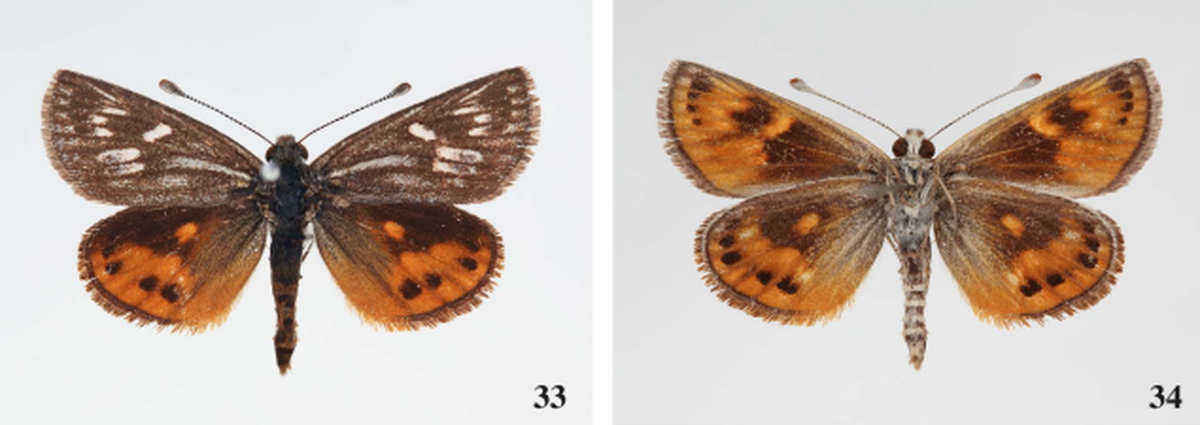
The Snowy Mountains sun moths were found in Kosciusko National Park in New South Wales, Australia, according to the study. They live in the “open areas in grassy woodlands” at a high elevation and were observed in the summer months of December and January.
The moths have a wingspan of about 1.5 inches. The forewings, or front wings, are “dark grey with markings of shining white or shining ash grey,” and the hindwings, or back wings,“ are dark grey” with a “brownish orange patch,” according to the study.
“S. Kunama spec. nov. is currently known only from a small range in the foothills of Mt Kosciuszko. It is likely that it has occurred or may still occur in remnant populations in open woodland at similar altitudes,” researchers said. “However, much of the surrounding areas have been cleared extensively and are now used for grazing or pine plantations. Thus, given the extremely limited range of this species, it should be considered vulnerable.”
Synemon yimanorum — the Taroom Sun Moth
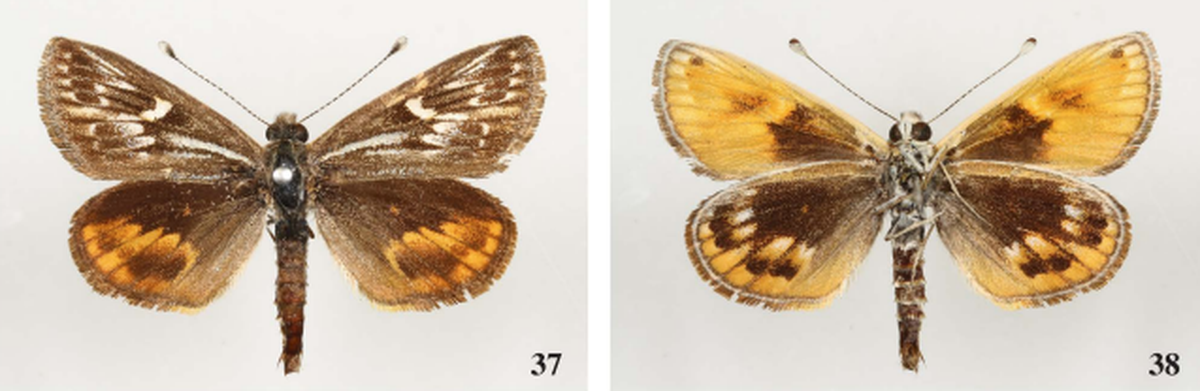
The next new species was found north of Taroom in Queensland, Australia. The species is also found in open grassland, including in a small range. The moths were recorded in late summer and fall months, from February to March, according to the study.
“Given the extremely limited range of this species and the small size of the remnant grasslands it is known to occur in, this species should be considered endangered,” researchers said.
The Taroom sun moths are also about 1.5 inches across at the wing, with dark gray forewing with “markings made up of ellipses” and hindwings a more “brownish yellow” and “brownish orange,” according to the study.
Synemon gunggariensis — the Gunggari Sun Moth
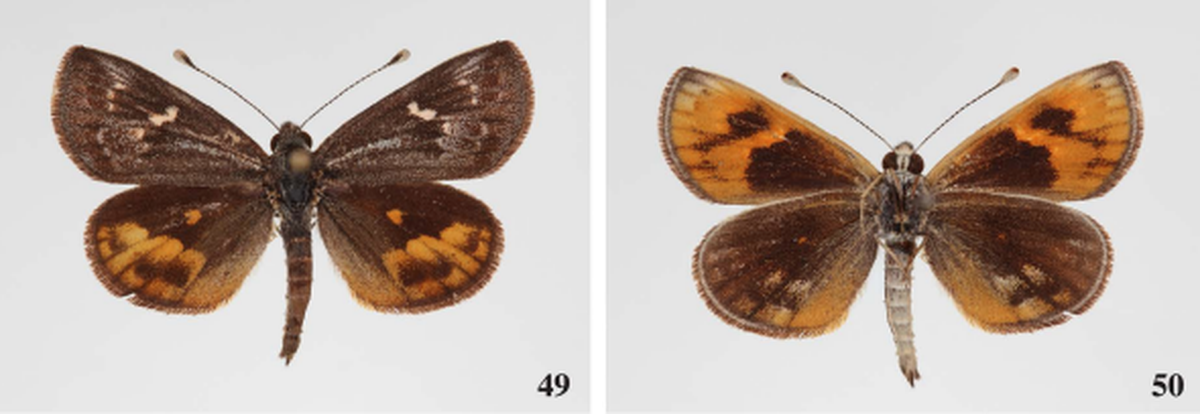
The Gunggari sun moths were found east of Mungallala in Queensland, according to the study. This species should also be considered “endangered” based on its small range in the grasslands of southeastern Queensland. The moths were found during the spring, in October.
This species derives its name “from the Gunggari country, home to the Gungari people, an Aboriginal Australian tribe who live in the Maranoa region of Queensland,” according to the study.
The wingspan of this species is a little bit smaller, about 1.4 inches across, and the wings are covered with similar brown, orange and white coloration, researchers said.
Synemon septentrionalis — the Northern Straited Sun Moth
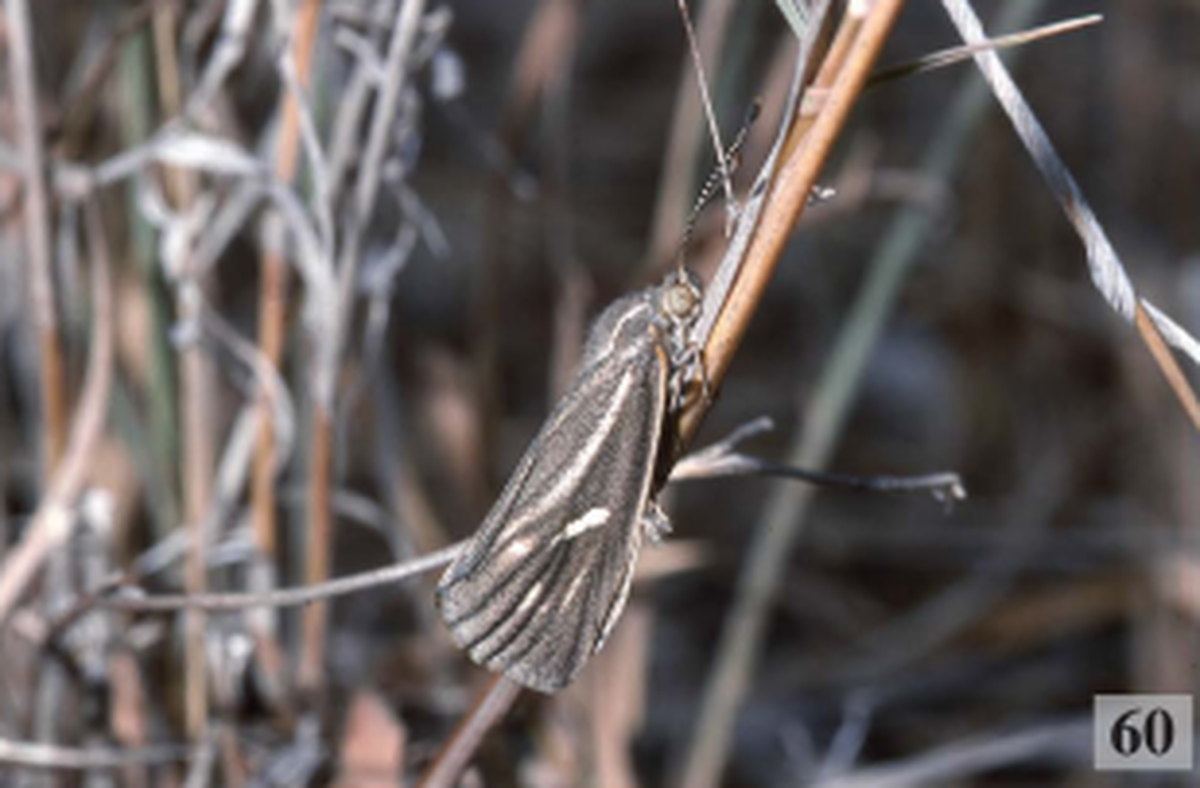
This new species was found in Townsville, Queensland, but researchers expect it can also be found in the grassy woodlands of the Northern Territory, according to the study. The species was found during its main flight period in March and April, but researchers said some records have been made in early May.
“This species may be regionally endangered by grazing, but due to its large range, it can be considered secure at this stage,” according to the study.
This species was named after the word “septentrional,” which means “of the north,” researchers said.
The wings are dark gray with off-white markings and “a series of pale orange-brown ill-defined patches” between the veins of the wings, according to the study.
Synemon striolata — the White-veined Sun Moth
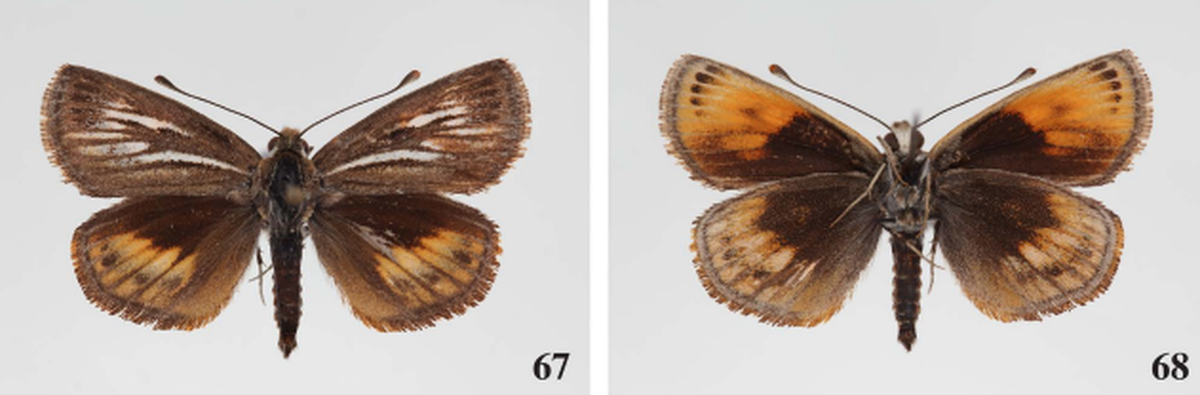
The White-veined sun moth was found near Tanumbirini in the Northern Territory, according to the study.
It has the same brown and orangish coloring of other moths in this genus but also has white patches between the veins of the wing that make the brown veins stand out against the background, researchers said.
The moth is found in the “tropical savannahs and open woodlands” from Western Australia across the Northern Territory, according to the study. This species was also found to be well-adapted to fire as researchers saw the moths emerging from burnt ground and even laying eggs in freshly burnt areas.
“Although it may be regionally endangered by grazing, this species can be considered secure,” researchers said.
The research team includes Axel Kallies and the late Edward D. Edwards.