Deep-sea creature with dozens of tentacles seen moving in ‘peculiar’ way. See it
Thousands of feet deep in the South Pacific Ocean, a pair of scientists piloted a submersible through the dark waters and scanned the seafloor. Some pale creatures with dozens of tentacles caught their attention — and for good reason.
The deep-sea animals were moving in a “peculiar” way that had never been seen before.
A team of researchers visited Nova Canton Trough, a deep-sea trench near Kiribati, in April 2024 to survey the seafloor with a manned submersible, according to an Aug. 7 study published in the peer-reviewed journal Marine Biodiversity.
The submersible held two people and was equipped with several cameras, the study said. On each dive, it dove to the seafloor and then spent four hours systematically observing the marine life.
On one dive, the submersible encountered some sea anemones resting “horizontal” on the seafloor and “rolling,” the study said and photos show. The animals used their tentacles to roll themselves in a “constant, slow, directed” movement and appeared to be moving against the current.
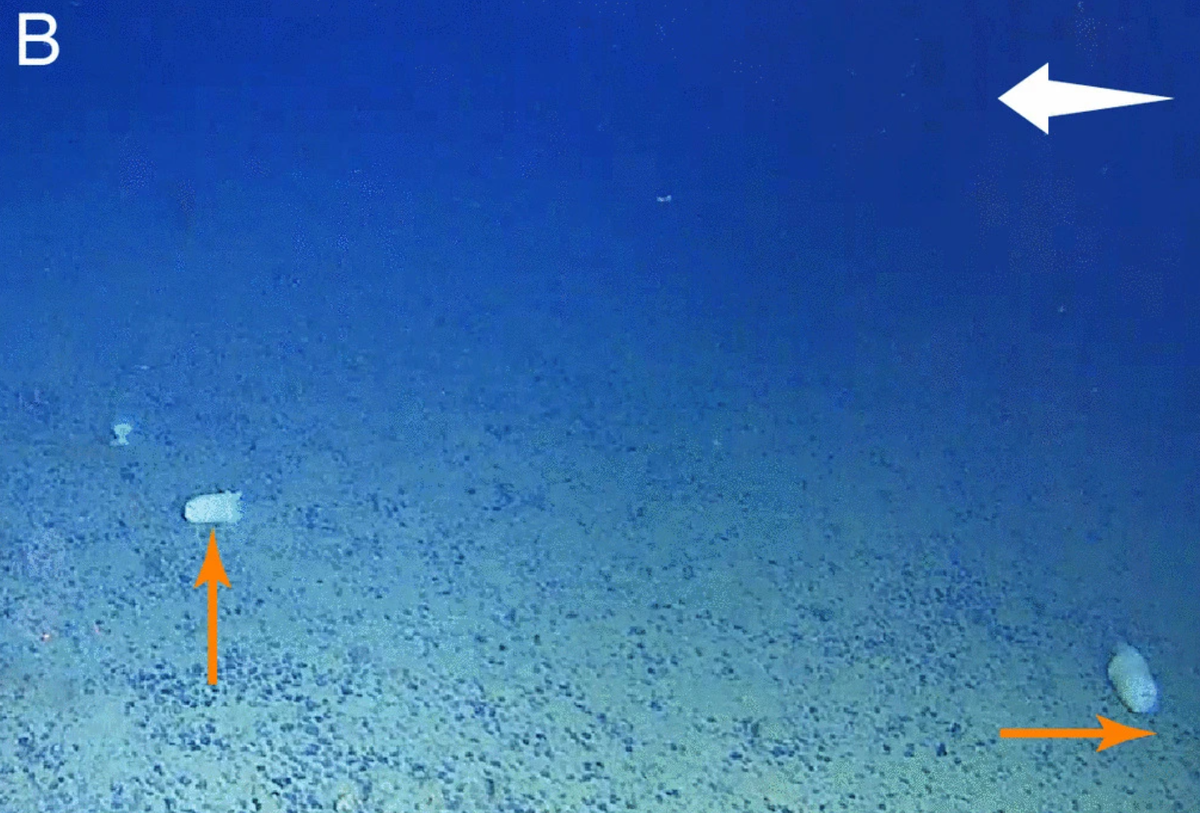
In general, sea anemones are known to keep their tube-like bodies relatively vertical and are considered immobile, researchers said. “Some species have adapted the ability to swim for predator evasion,” but most sea anemone movements are “not well documented” and “often overlooked.”
The “peculiar” rolling behavior of the deep-sea anemones in the Nova Canton Trough was “unique” and “quite different from all known sea anemone movements,” the study said.
Researchers weren’t able to identify what species the rolling sea anemones were but described them as “pale-yellow” with “many irregular dark spots” and dozens of tentacles. One measured sea anemone was about 8 inches long. All were seen at depths of over 19,000 feet.
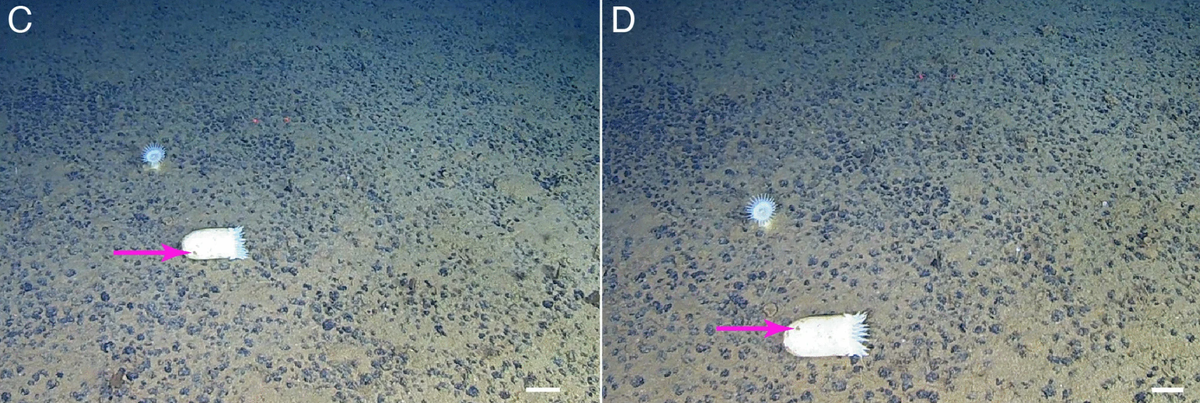
But why were these sea anemones moving around at all? Researchers didn’t see any predators and estimated the animals’ rolling speeds were “unlikely” to be fast enough to escape an attacker.
Instead, “this behaviour was likely mediated by other factors, such as relocation in response to resource availability, escaping from excessive sedimentation, or other abiotic factors unbeknown to our observations,” the study said.
One sea anemone “stopped its rolling behaviour well in advance to the submersible being overhead,” suggesting it might have sensed the “mechanical stimuli,” researchers said. This further “highlights our limited understanding of deep-sea sea anemone behavioural ecology.”
The research team included Alfredo Marchiò, Brett Gonzalez and Alan Jamieson.