Cave creatures — with see-through bodies — are new species in China. See them

In two villages in the Guizhou Province of China, sloping caves hold water below the surface.
Their openings lead down nearly 1,000 feet to large pools of water, their total expanse unknown because of rocks blocking the path of the water.
The pool bottoms are silty, but that doesn’t stop locals from drawing water from the depths — and possibly scooping up a species new to science.
The caves are home to Macrobrachium guizhouense, a species of freshwater prawn that was described for the first time in a study published Aug. 22 in the peer-reviewed journal Zoosystematics and Evolution.
The prawn is one of two new species recently found in southern China caves during animal surveys, according to the study.
Following expeditions into the caves, researchers chose eight caves between Guangxi and Guizhou provinces and set “cage nets” overnight, returning the next day to see what creatures were caught inside.
They caught multiple species of prawn belonging to the genus Macrobrachium, but two were not like anything that had been described before.
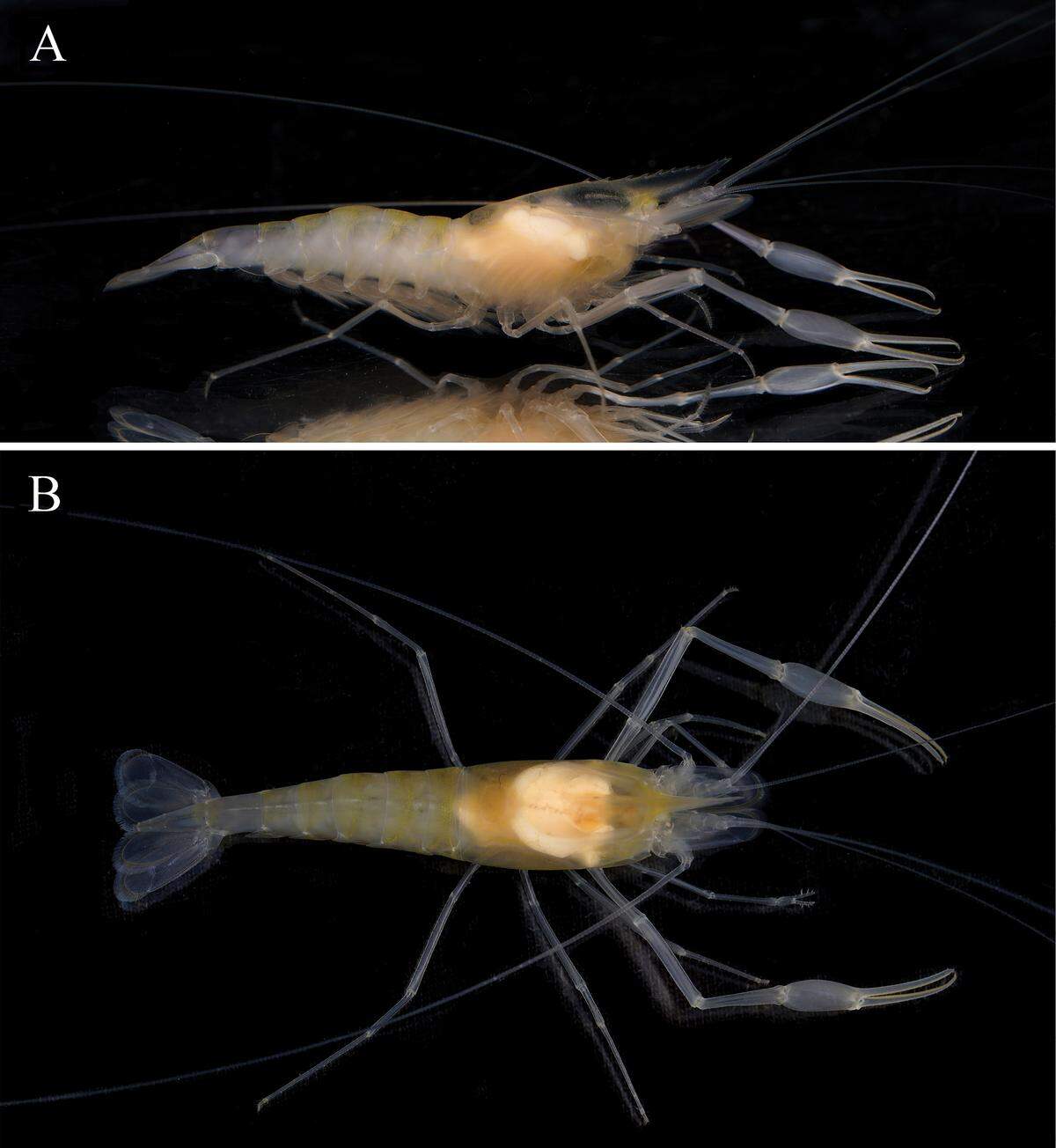
Microbrachium guizhouense, or the Guizhou cave prawn, has a “moderately robust” body with “totally degenerated” eyes, according to the study.
The carapace, or hard exterior, is smooth and without small hairs, according to the study.
The prawn’s body is “semi-transparent to golden yellow,” and “all appendages (are) semi-transparent,” according to the study.
The species stands out from others in the genus because of the “completely degraded somatic pigmentation and eyes,” researchers said, possibly from their lives spent deep in the caves.
The second new species, Macrobrachium parvum, is similar to the Guizhou prawn, but instead found in Guangxi and with some additional color, according to the study.
The prawn is “semi-transparent to yellowish with ochreous marks on surface of carapace and abdomen” while “all appendages (are) semi-transparent,” researchers said.
Ochreous means “resembling ochre,” a natural iron oxide that is yellowish-orange in color and historically used as pigment.
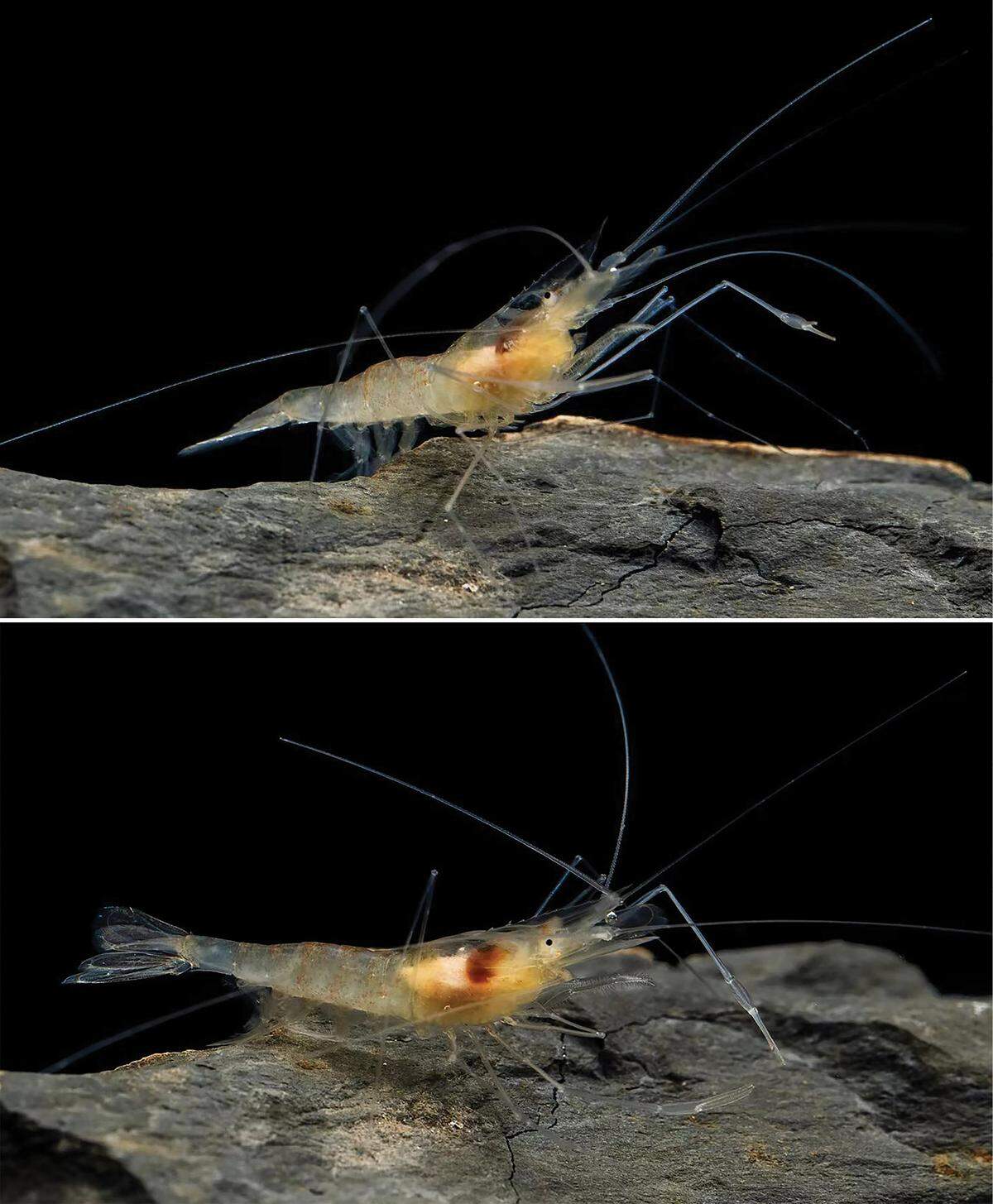
The prawn’s body is “slender” compared to the other new species, and its eyes are “strongly degenerated” with “only small area on tip pigmented,” according to the study.
M. parvum is named for the Latin word for “little,” which refers to the “relatively small body size” of the species.
The little cave prawn was found inside three “spacious” caves with “broad pools” closer to the surface, according to the study.
“Nongguangshang Cave is a section of an underground river, with numerous puddles about (160 feet) from the entrance during the dry season,” researchers said. “Macrobrachium parvum sp. nov. were discovered in these puddles. During the rainy season, the water levels in these three caves rise significantly, even overflowing the cave entrances to form small lakes.”
The little cave prawn can be distinguished from other species by its small and slender body and appendages, as well as its degenerated but still-present body color and eyes, according to the study.
Both new species were found in the karst region of south-central China, which is “recognized as a biodiversity hotspot for cave-dwelling organisms,” researchers said.
The research team includes Xuankong Jiang, Jiajun Zhou, Kayan Ma, Yaqin Wang, Zhicai Xie and Huiming Chen.