Centuries-old religious scrolls read for first time in 100 years. See them

Today, more than half a billion people around the world identify as Buddhists. Since the religion originated in Nepal, it has spread to be interpreted, practiced and honored in many different ways.
The nomadic people of historical Mongolia were Buddhists on-the-go, their constantly moving lifestyle not tied to the traditional Buddhist shrines and sanctuary spaces seen in other parts of Asia.
Instead, they created portable shrines that could carry their faith with them as they traveled. Statues, images and decorative objects were kept together with small, tight scrolls inscribed with prayers called “dharanis.”
In the early 20th century, one of these mobile shrines was discovered by international explorers — and it may be one of the only ones still in existence today.
A “wandering university” expedition began in 1927 and included about 60 men from various disciplines studying the meteorological, topographic and prehistoric conditions of Mongolia, the Gobi Desert and Xinjiang, a region now in modern-day China, according to a study published June 27 in the peer-reviewed Journal of Cultural Heritage.
Sometime during that trip, one of these nomadic Buddhist shrines came into the possession of a German meteorologist, who then passed it along to experts at the Ethnological Museum in Berlin, according to the study.
The shrine sat for the better part of a century before Birgit Kantzenbach, a restorer at the museum, started researching the artifact, according to a July 23 news release from the Helmholtz Zentrum Berlin.
When she took a closer look, “she found that nothing was in its place; fabric flowers, relics, small statues and three small scrolls lay in a jumble,” according to the release.
At first, Kantzenbach traveled to Mongolia for more information, but “during the revolutionary period from 1921 to 1930, this cultural practice was almost completely eradicated with many shrines being destroyed,” the release said.
This meant she and fellow researcher Tobias Arlt had to find another way to learn more about the shrine and where it may have come from.
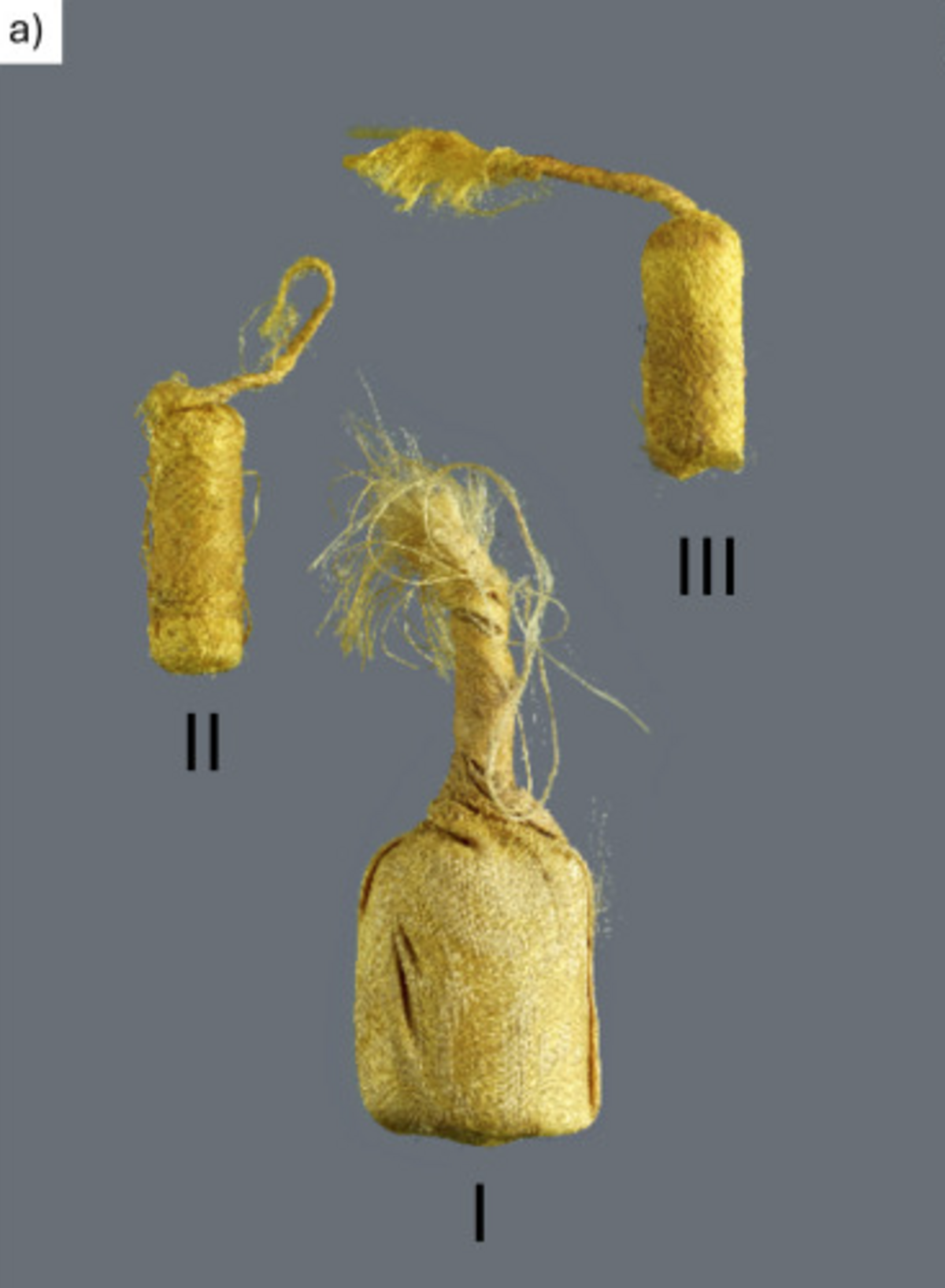
The shrine included three dharanis, or tiny scrolls wrapped in yellow silk, typically known for containing “mantras or prayer texts,” but sometimes printed with additional information, according to the study.
In order to unravel the scrolls without damaging their potentially centuries-old paper, the research duo used X-ray tomography to see inside.
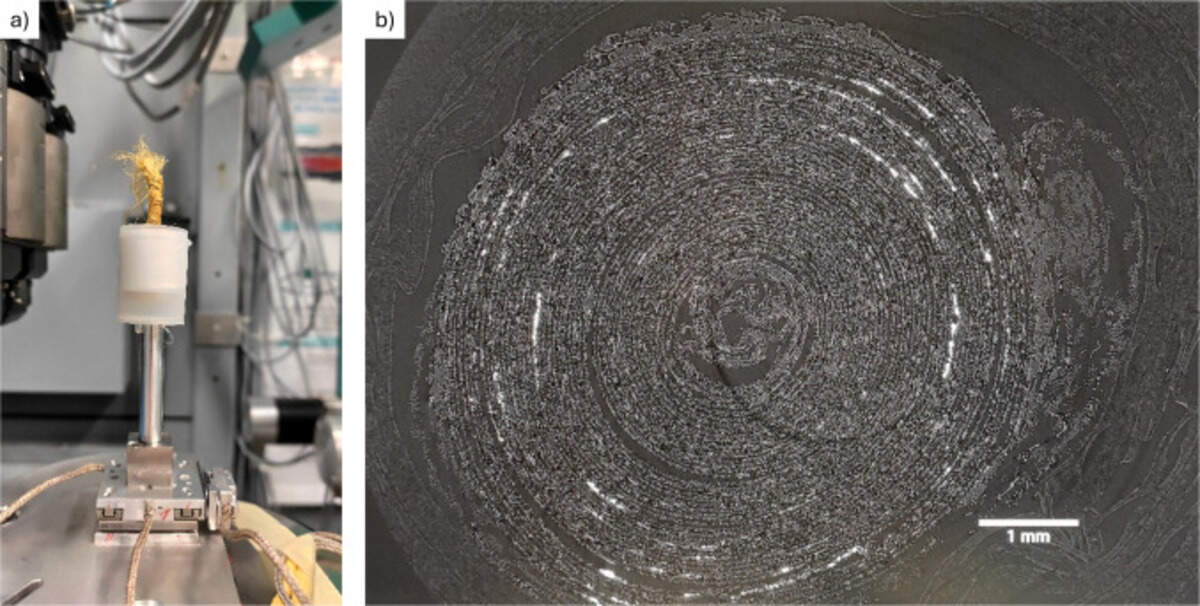
“The high-resolution 3D images show that there are approximately 50 windings in each roll; strips of more than 80 centimeters (31 inches) were wound very tightly and carefully,” Arlt said in the release.
They found traces of ink that was metal-based, and while the characters are Tibetan, the language is Sanskrit, the researchers said.
The material and combination of characters and language were considered a “surprise,” according to the release.
“This is interesting since Chinese ink traditionally consists of a mixture of soot and animal glue, but here, ink containing metal particles was apparently used,” Kantzenbach said in the release.
One inscription was identified as the “Om mani padme hum,” a famous Tibetan Buddhist mantra “for all-encompassing compassion,” the researchers said.
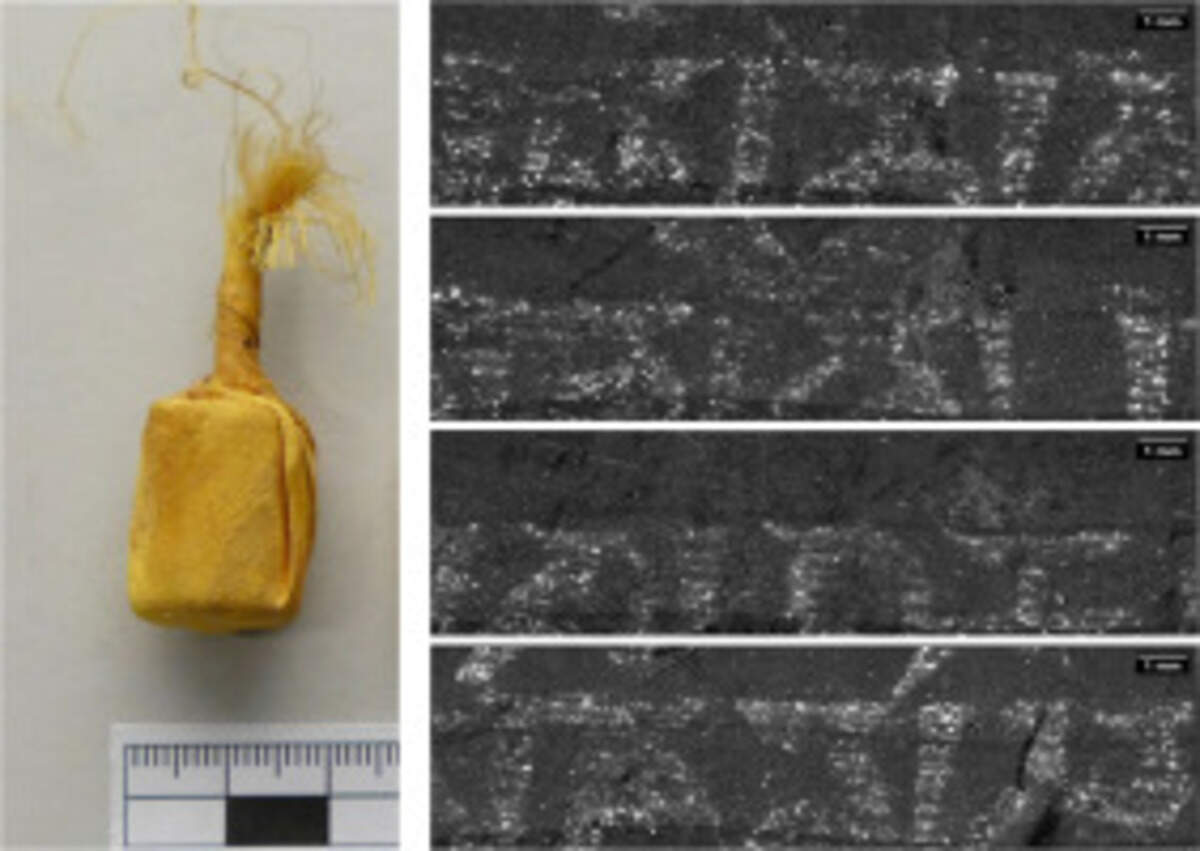
“Dharanis have been passed down over the centuries in the form of very precise mass prints, making it extremely difficult to categorize and date them,” according to the study. “Only when more sections of the scrolls can be visualized and more specific texts come to light will there be a chance to gain new clues through textual analysis.”
The shrine will be displayed next year after researchers consulted Buddhists in Mongolia on how best to share their work and the artifacts, according to the release. More information on this collaboration was shared in a July 26 podcast.