
Rock starts glowing after being pulled off Pacific seafloor. What causes it?
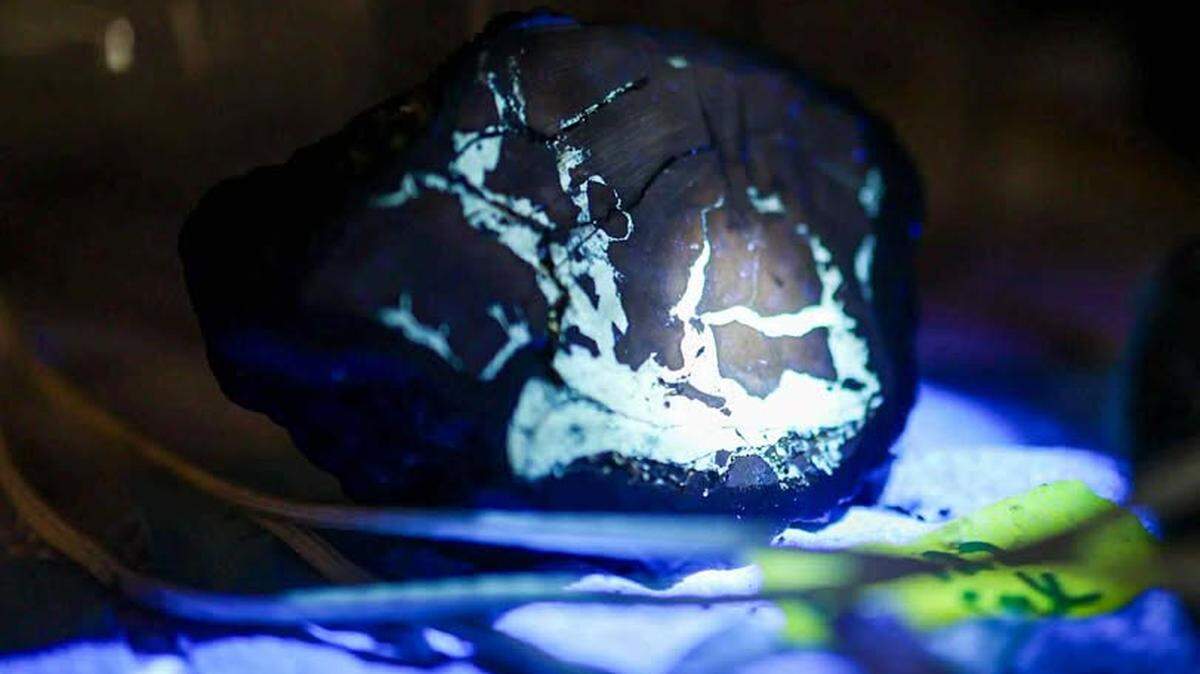
An ancient piece of volcanic rock plucked from the central Pacific Ocean did something unexpected when a scientist hit it with ultraviolet light in a lab: It started glowing green.
The discovery was made by University of Maryland Assistant Research Scientist Dr. Val Finlayson, as she examined rock samples collected off the Marshall Islands by the Ocean Exploration Trust.
A photo shared on Facebook shows the sight was as eerie as it sounds, with the color emerging from the black rock as if it were a cracking egg. The glow mysteriously faded within seconds.
“The strong phosphorescence of these sediments — especially lasting several seconds — was not something I’d expected. I was able to catch it because I was working after sunset and could darken the lab enough to get a really good look at some samples under UV,” Finlayson told McClatchy News in an email.
“My reaction was a little bit of surprise, then to repeat it to make sure I saw what I thought I had. I then went to go find one of my crew mates, a science teacher, who would know exactly what it was because I had to show someone. Next thing I knew, most of the science crew was in the lab to take a look!”
The rock is just under 6 inches wide and estimated to be 75 million and 90 million years old.
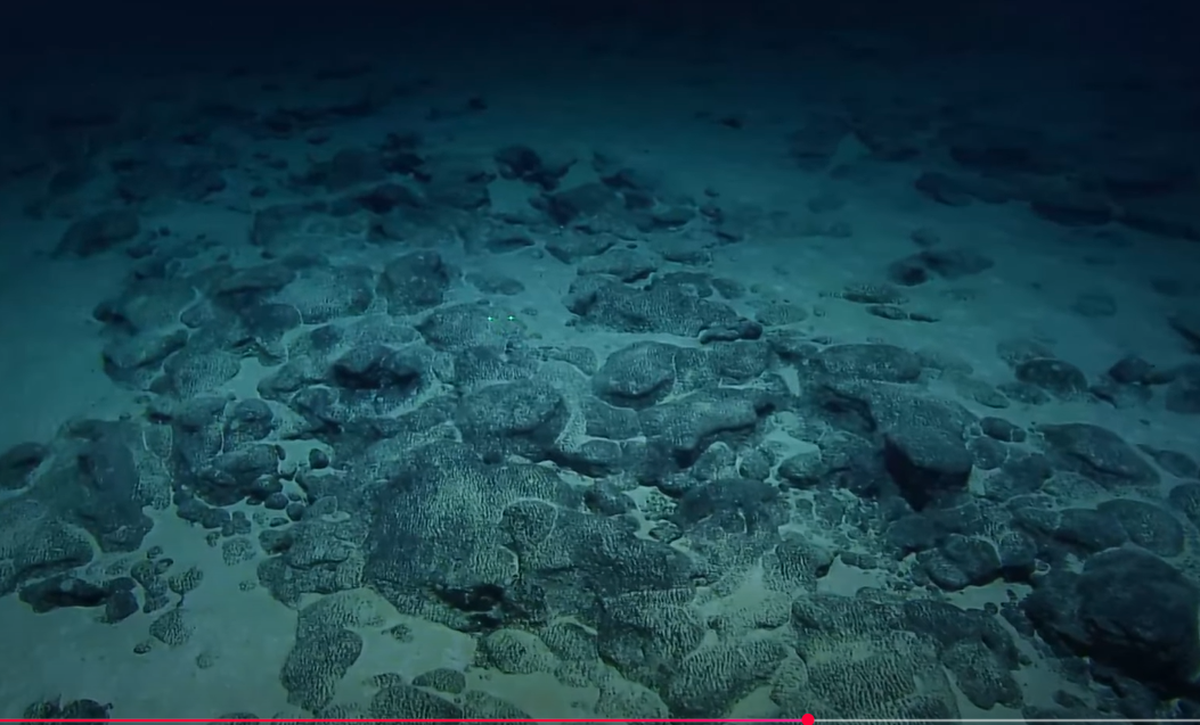
It was found at a depth of 5,050 feet while the Ocean Exploration Trust was investigating a Pacific region that has “over 300 unexplored seamounts” created by ancient volcanos. The expedition, which ran from July 27 through Aug. 17, also visited “extensive deep-sea ridges and escarpments” and several famous World War II shipwrecks.
One guess as to the origin of the glow: “calcite and/or a phosphate mineral,” the trust wrote in an Aug. 8 Facebook post.
The effect is likely a common phenomenon for such rocks, but scientists haven’t been looking for it, Finlayson noted.
In this case, she just happened to bring a small longwave UV light to sea in her field kit, thinking it would help identify secondary minerals clinging to the rock.
“I tested a number of other geological samples we collected at various depths during the expedition, and of those, all of the rocks containing some fraction of lithified sediment displayed phosphorescence,” Finlayson said.
“As far as what’s causing these fairly common lithified marine sediments to fluoresce, I’m not sure what trace element/compound might be the culprit. That said, it would be interesting to learn what that might be … so maybe some mystery is to be solved there.”
The answers could help scientists understand how rocks react to long-term exposure to seawater, she said.
Val Finlayson is an assistant research scientist in high-temperature isotope geochemistry, marine geology and tectonics with the Department of Geology at the University of Maryland.
This story was originally published September 2, 2025 at 9:50 AM.