Deep-sea sharks spotted for first time in South China Sea feasting on cow carcass
Unlike great white sharks off the coast of Australia or blacktip reef sharks in the Florida Keys, Pacific sleeper sharks don’t fit the stereotype of one of the ocean’s fiercest predators.
They spend their entire lives in the depth of northern oceans, diving more than 3,000 feet below the surface where light from the sun no longer penetrates the water.
The sharks are “enigmatic,” according to a June 26 study published in the peer-reviewed journal Ocean-Land-Atmosphere Research, but a situational discovery is helping scientists learn more about the elusive species.
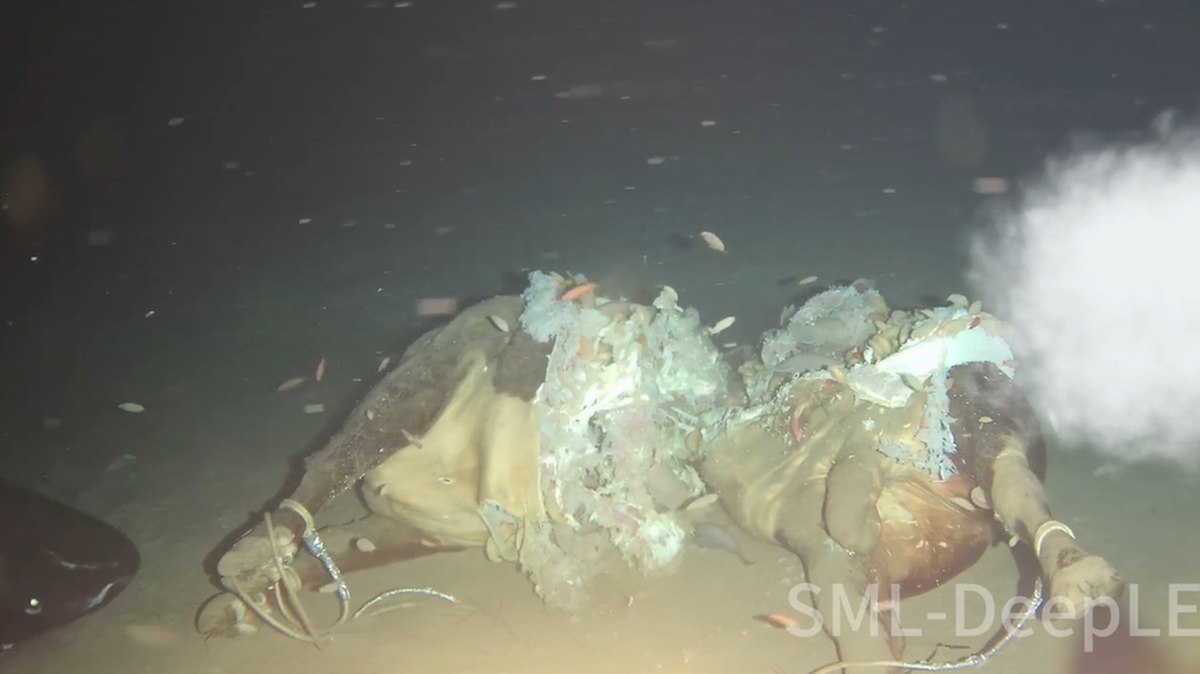
In the South China Sea, off China’s Hainan Island, researchers dropped the carcass of a cow about 5,340 feet down to the seafloor and trained cameras on the bovine bait, according to the study.
To their surprise, not one or even two Pacific sleeper sharks appeared from the darkness to take a bite, but eight individual sharks, researchers said.
It’s the first time the sharks have ever been recorded this far southwest, and they exhibited unique and previously unknown behaviors, according to the study.
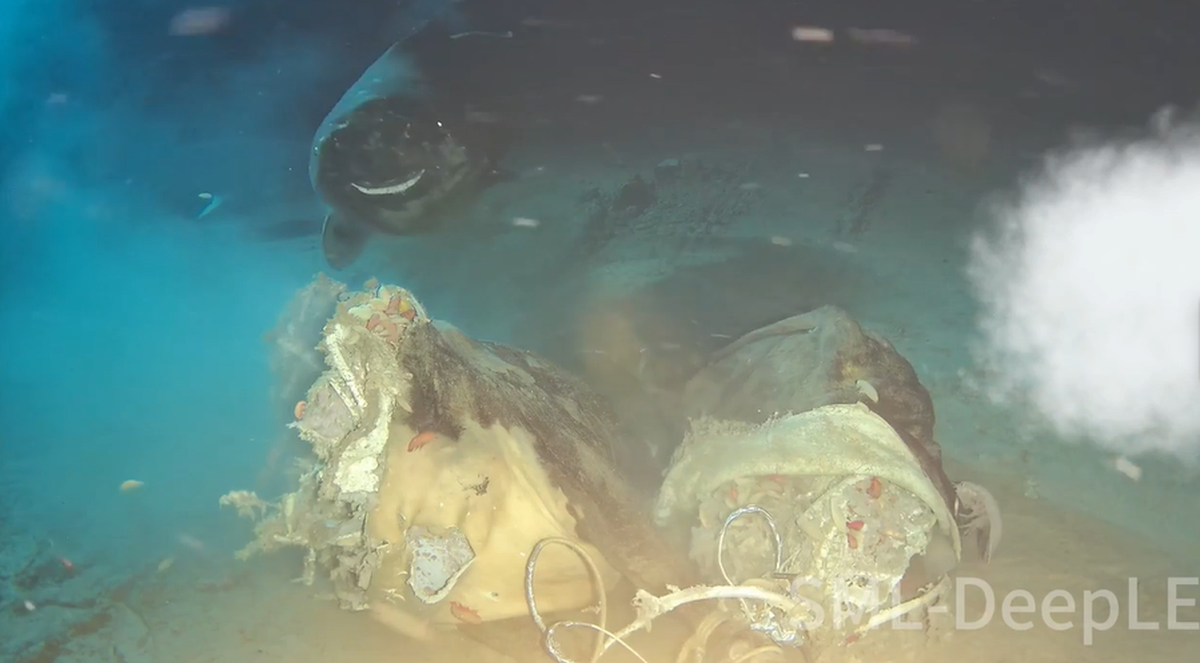
“Video footage provided new insights into the predating behavior of Pacific sleeper sharks, capturing multiple sharks launching attacks on the carcass and displaying queuing behavior during feeding,” researchers said.
The larger sharks, those more than 8.8 feet long, were direct and attacked the carcass, but when it was the smaller sharks’ turn, they were more reserved and cautious and deliberately circled the bait before going in for a bite, according to the study.
Two of the sharks seemed to even be waiting in line for their opportunity, researchers said.
“Sharks yielded their positions to individuals approaching from behind,” researchers said. “... Was the seemingly polite queuing order observed between these 2 Pacific sleeper sharks in the deep sea coincident? We think that the queuing behavior observed in the deep sea closely resembles the hierarchical feeding patterns observed when sharks are scavenging from large floating whale carcasses at the surface.”
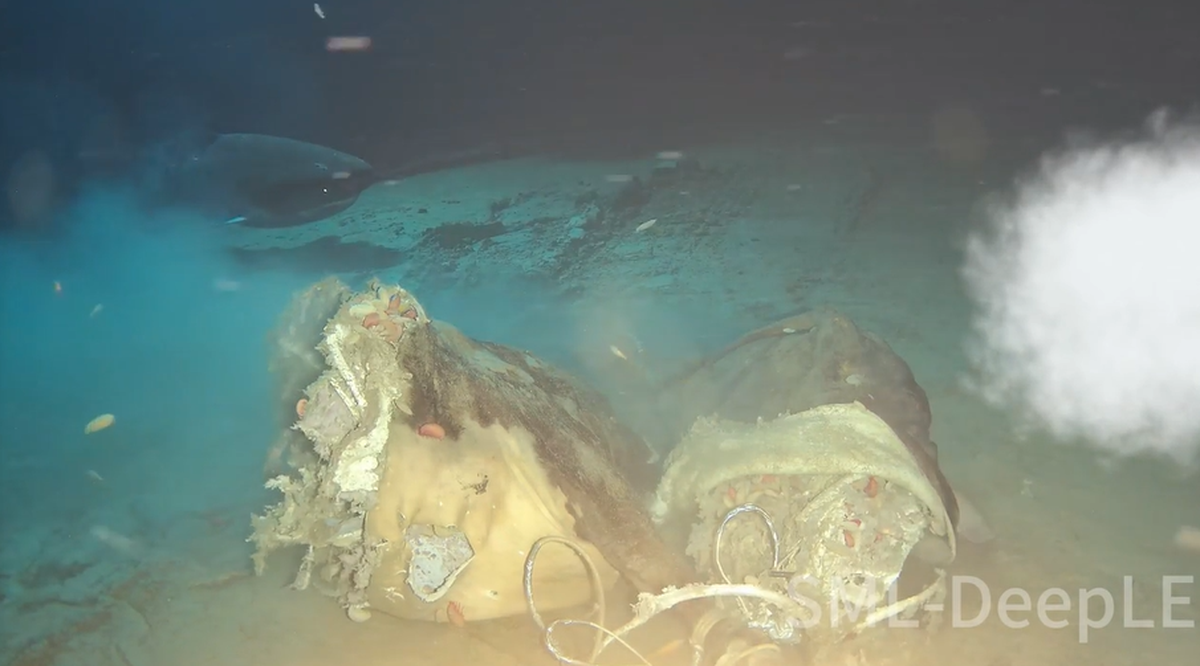
As the sharks got closer to the camera when they fed, researchers also noticed them changing their eyes, according to the study.
“Notably, the sharks displayed distinct eye retraction movements during feeding. Eye retraction is likely a protective adaptation because members of the genus Somniosus (sleeper sharks) lack a nictitating membrane, supporting the hypothesis that eye retraction serves as a defensive mechanism during feeding,” according to the study.
Nictitating membranes act as a type of third eyelid going horizontally across the eye and found in some animals like birds, reptiles and some mammals. It can add an additional layer of protection for the cornea and even provide additional tears.
Sleeper sharks therefore may be more like whale sharks that can retract their eyeballs by more than 50% of the eye’s total diameter, McClatchy News previously reported.
A video of the Pacific sleeper sharks was shared on YouTube.
“Historically, Pacific sleeper sharks have been primarily documented in the North Pacific Ocean, ranging from Japan and the Bering Sea to the Gulf of Alaska and as far south as Baja California,” researchers said. “... This discovery marks the first recorded instance of a Pacific sleeper shark in the South China Sea, suggesting a southwestern expansion of its range.”
Despite the name “sleeper shark,” the animals aren’t lazy bottom dwellers with a sluggish reputation, according to the Alaska Department of Fish and Game.
Instead, the sharks move constantly through the water column to hunt, the department said. Their large mouths and bottom teeth are used to chop up food and then inhale their prey like a vacuum.
Near the surface, it’s a different story.
“Sleeper sharks are like big tubs of goo. It’s hard to tell if they’re dead or not,” said Alaska Fish and Game biologist Lee Hulbert, who was not involved in the study.
The new research was published by Han Tian with the School of Marine Sciences at Sun Yat-sen University and the Southern Marine Science and Engineering Guangdong Laboratory in Zhuhai, China.
The South China Sea is a contested body of water in southeastern Asia that borders Brunei, China, Indonesia, Malaysia, the Philippines, Taiwan and Vietnam.