125,000-year-old site used as ‘fat factory’ by Neanderthals unearthed in Germany

In the prehistoric landscape of Germany, finding calorie-rich food was harder than going down to your local corner store.
To get energy you had to spend it, so when an animal was killed it wasn’t just the meat ancient people were after — they wanted the fat.
Now, at a site in eastern Germany, archaeologists have discovered a place where animals were processed and their fat extracted in what they are calling a “fat factory,” according to a study published July 2 in the peer-reviewed journal Science Advances.
The site, called Neumark-Nord, was first discovered back in the 1980s and has been the subject of many years of excavations, according to a July 2 news release from Leiden University, which was involved in the study.
It’s about 125,000 years old and covers a 74-acre area that creates a “snapshot” of ancient hunting and processing, according to the study.

Neumark-Nord was used by Neanderthals, categorized as hunter-gatherers that could weigh between 110 and 176 pounds, researchers said. This means they only needed about 1200 calories per day to sustain themselves, but if they relied solely on protein to reach that number, they could suffer from a condition known as “rabbit starvation,” according to the study.
“For mobile foragers, obtaining fat can become a life-sustaining necessity during periods when carbohydrates are scarce or unavailable, such as during the winter or spring,” researchers said.
Across the site, archaeologists found tens of thousands of animal remains, including 26,003 bone specimens that could be measured, according to the study.
Most of them were very small and they had evidence of fragmentation that occurred when the bones were fresh, researchers said.
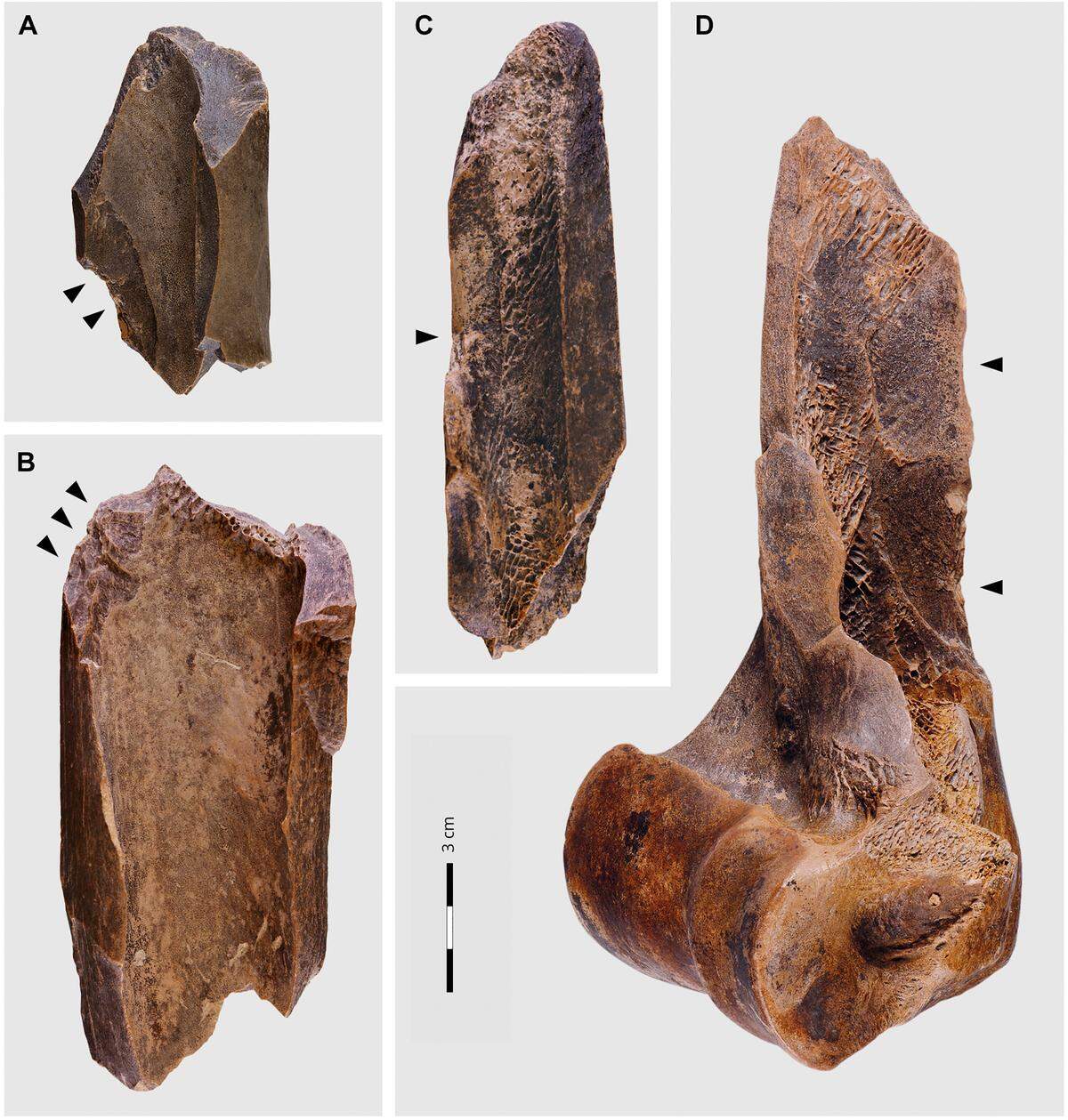
They found bones belonging to at least 172 large mammals processed at the site, ranging from straight-tusked elephants to smaller deer, according to the release.
The team also found “abundant evidence for fire use” in burnt stones, heated bones and leftover charcoal, according to the study. The heat could have been used to boil the fat out of the bones, as evidence of Neanderthals boiling their food has been found at other sites.
“Bones, especially long-bone epiphyses (joints) and vertebrae, are broken into small fragments with a stone hammer and then boiled for several hours to extract the grease, which floats to the surface and is skimmed off upon cooling,” according to the study. “For foragers heavily dependent on animal foods, bone grease provides a calorie-dense nonprotein food source that can play a critical role in staving off rabbit starvation.”

“What makes Neumark-Nord so exceptional is the preservation of an entire landscape, not just a single site,” study author Wil Roebroeks said in the release. “We see Neanderthals hunting and minimally butchering deer in one area, processing elephants intensively in another, and — as this study shows — rendering fat from hundreds of mammal skeletons in a centralized location. There’s even some evidence of plant use, which is rarely preserved. This broad range of behaviors in the same landscape gives us a much richer picture of their culture.”
The entire “fat factory” shows Neanderthals were capable of planning ahead, processing their food and using their environment in various, sophisticated ways, researchers said.
“The sheer size and extraordinary preservation of the Neumark-Nord site complex gives us a unique chance to study how Neanderthals impacted their environment, both animal and plant life,” study author Fulco Scherjon said in the release. “That’s incredibly rare for a site this old — and it opens exciting new possibilities for future research.”
This practice has been documented as far back as 28,000 years ago, but has not been confirmed at older sites, making Neumark-Nord the oldest known Neanderthal fat processing site, according to the study.
The archaeological site is just south of the city of Halle, in east-central Germany.
The research team includes Roebroeks, Scherjon, Lutz Kindler, Sabine Gaudzinski-Windheuser, Alejandro Garcia-Moreno, Geoff M. Smith, Eduard Pop and John D. Speth.