Rare half-ton statue — once guarding medieval gate — unearthed in France. See it

Built along the banks of the Moselle river, the ancient city of Toul, France, has seen centuries of change.
Once the capital of a Belgic tribe, the town was on the edge of the Roman Empire, then evangelized in the fourth century and ruled by sovereign bishops.
It wasn’t until the middle of the 16th century that the city became part of the Kingdom of France. By then, the city had been built and torn down more than once, leaving remnants of past communities buried under new layers.
Now, archaeologists are pulling back the layers of the ancient city, revealing the stages of history as they sift through the rubble.
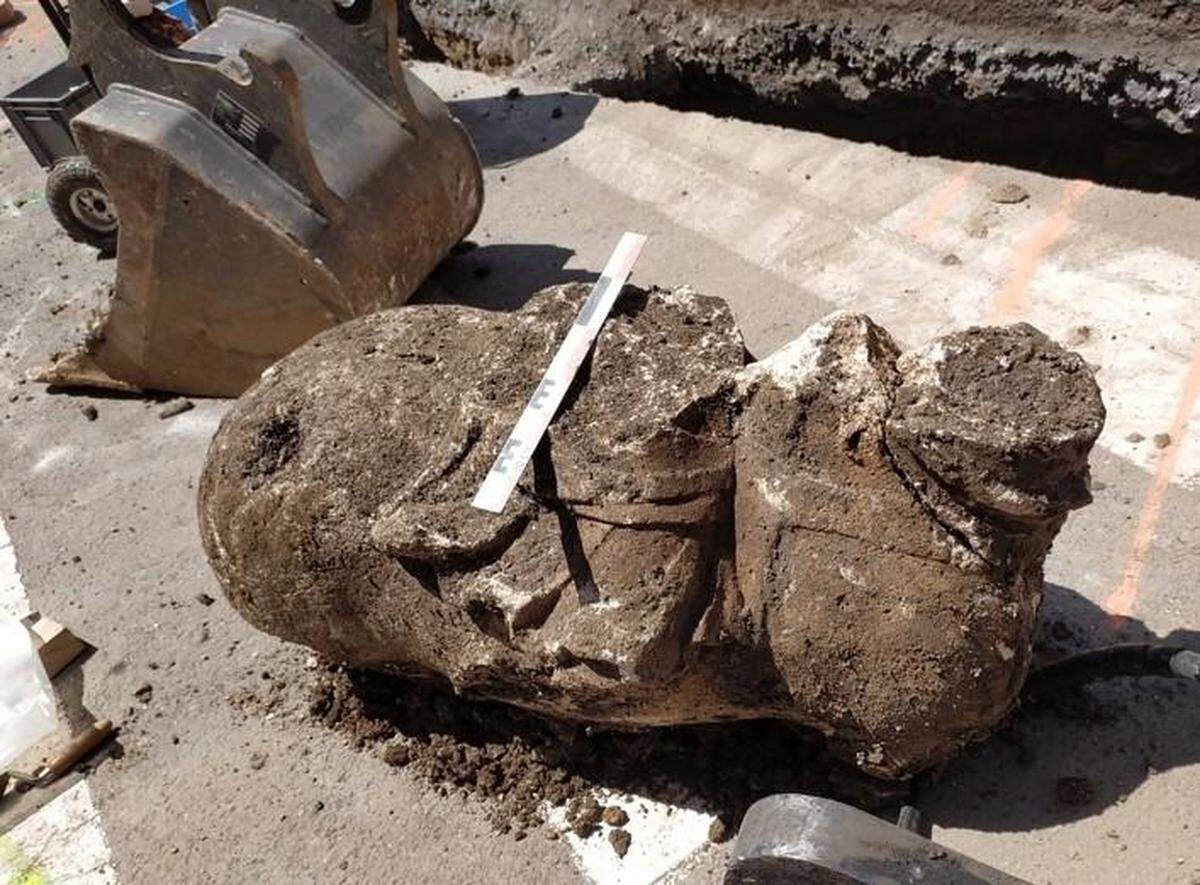
Archaeologists were working on “La Place,” a medieval northern city gate that was demolished in the 1700s, when they found a large, carved stone, according to a June 27 news release from the French National Institute for Preventive Archaeological Research.
The stones of the gate were broken down by military engineer Sébastien Le Prestre de Vauban, but the pieces were put back together as a fortified wall and later as a retaining wall established in the ditch where the gate once stood, archaeologists said.
The lower section, possibly used as a cellar or low room, was then filled with rubble and some of the more architectural elements of the gate, hidden below the surface, according to the release.
In this rubble, archaeologists uncovered a rare Renaissance-style equestrian statue, broken but mostly preserved, officials said.
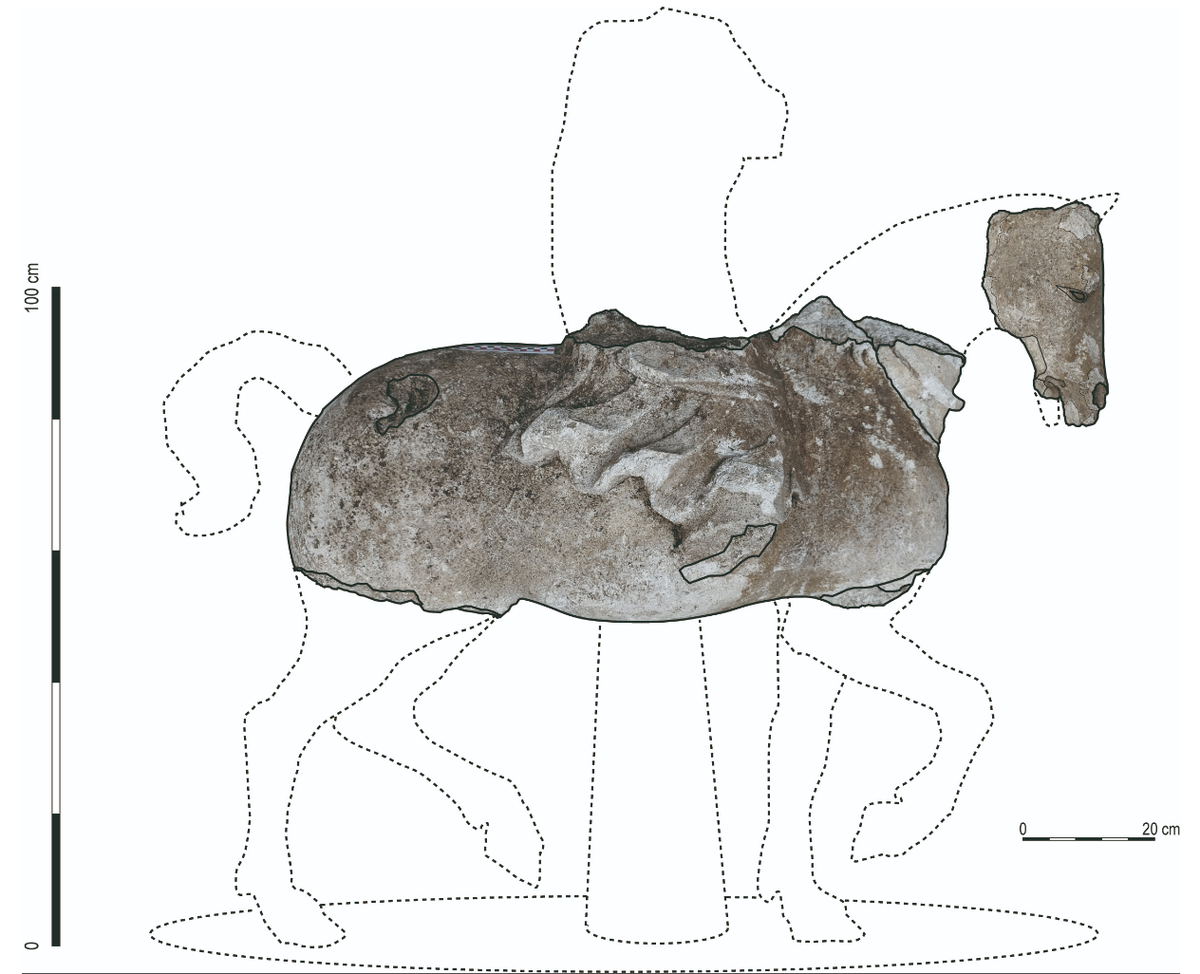
It included the body, upper legs, neck and head of the horse, as well as the pelvis, thighs and a saddle cloth belonging to the rider, according to the release.
The head and limbs of the rider, which may have been able to identify them, was missing, archaeologists said.
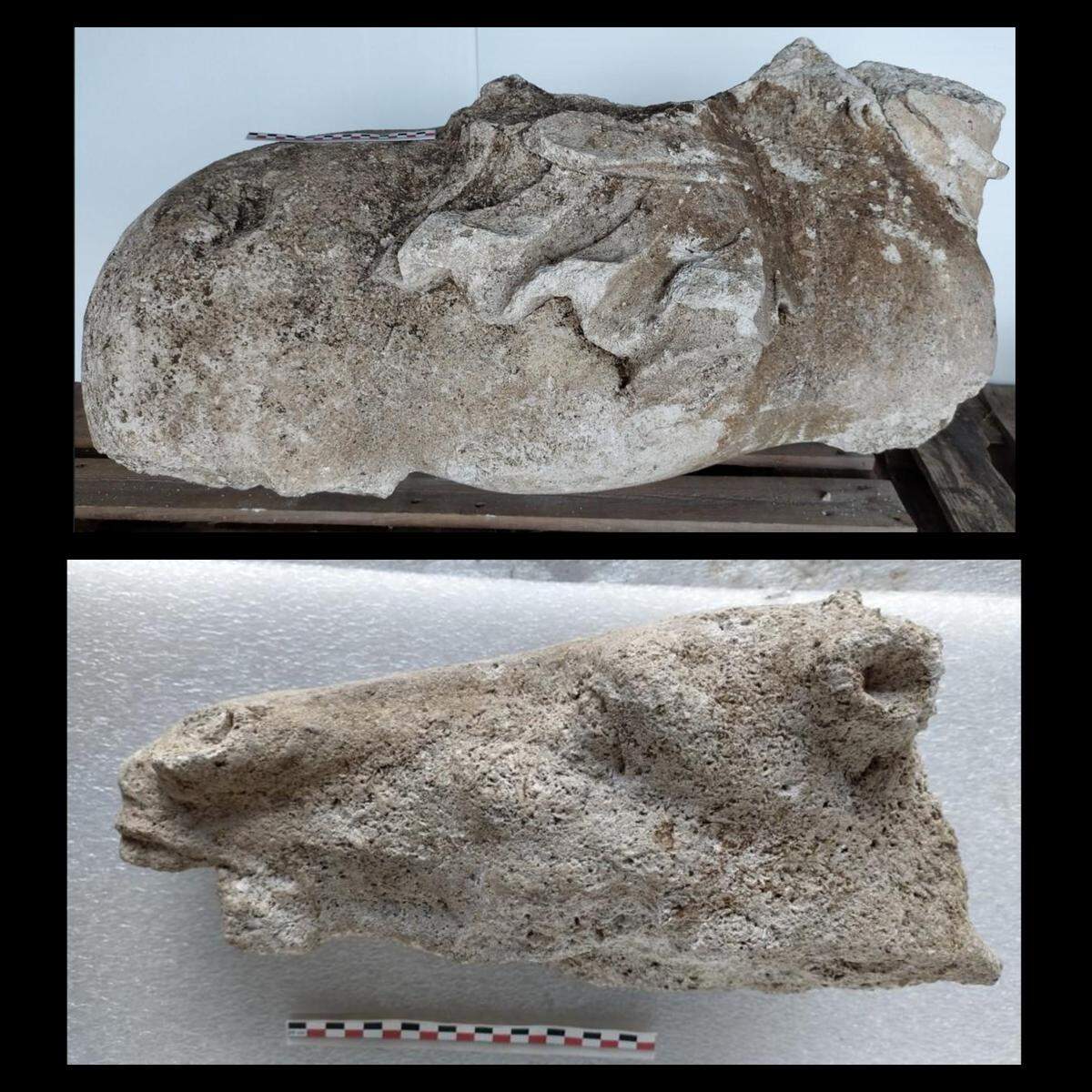
The statue stands out from other examples of the style by its sheer size — the main fragment alone weighs more than 1,000 pounds and is 3.6 feet long and about 2 feet wide.
The entire piece likely stood about 5 and a half feet tall, and a similar length, when pieced back together, archaeologists said.
The sculpture is made from a white shell limestone, possibly originating from Barrois in eastern France, according to the release.
Archaeologists believe the statue would have been placed in a niche overlooking the city gate during the 15th and 16th centuries.
When the gate was demolished, the statue was taken down and placed at the base of the monument, and its pieces were quickly buried.
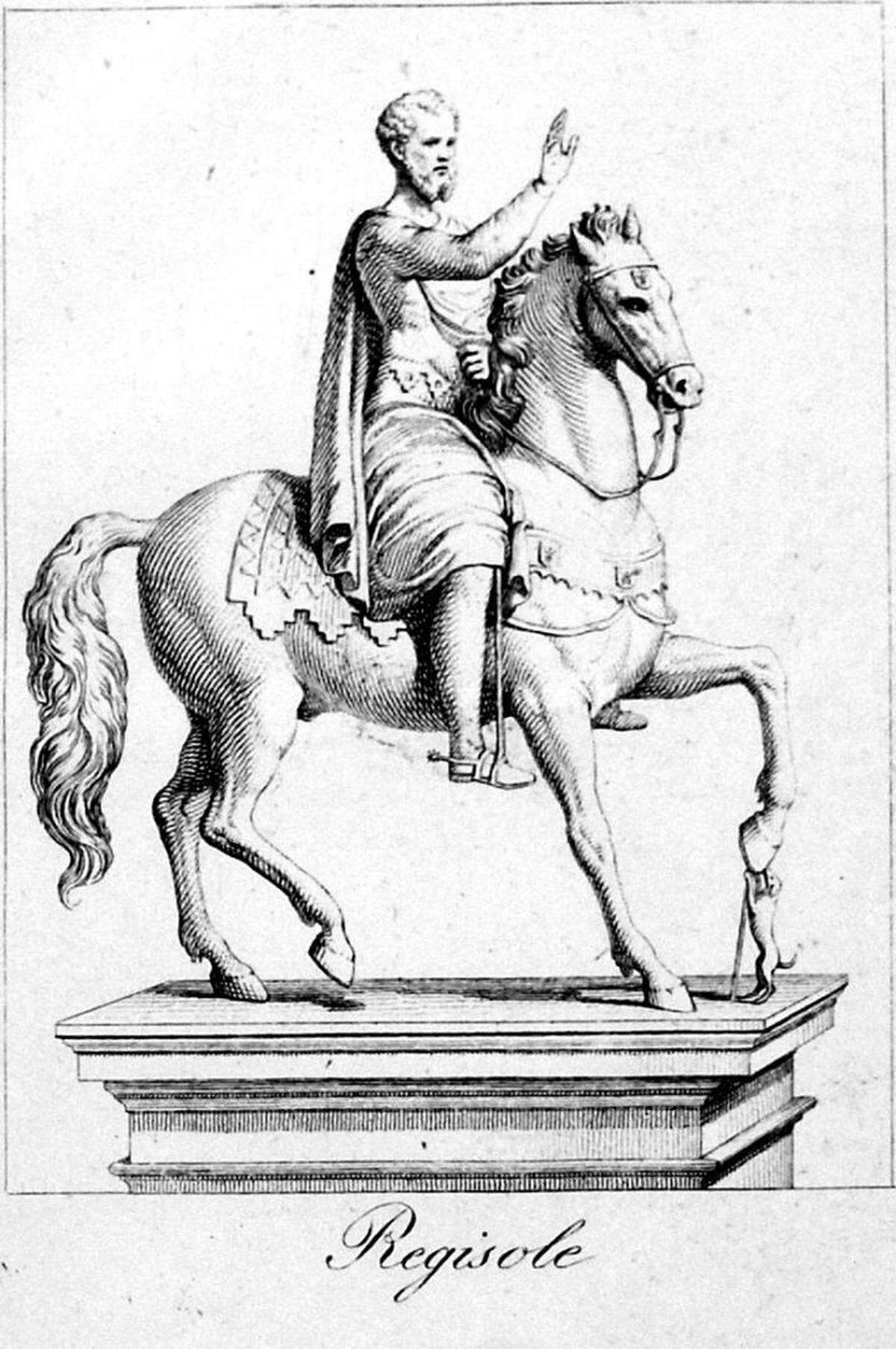
The style of art mimics examples seen from the Romans, archaeologists said.
French and Italian Renaissance artists were commonly inspired by statues in the Roman capital depicting Marcus Aurelius on horseback, and their works would show a Roman noble figure draped in a tunic and cloak, according to the release.
Similar pieces can be found across Naples, Florence and Milan, and Italian artists were sometimes commissioned to make these kinds of pieces in France, archaeologists said.
The horse and rider sculpture, while likely made during the end of the medieval period, was inspired by the ancient Roman work and would have been symbolic of aristocratic power and Italian Renaissance ideas reaching France, according to the release.
A total of 27 statue pieces were found, and additional analysis aims at putting them together through 3D modeling.
Archaeologists are also hoping to identify who may have commissioned the work, because mention of not only the statue but also the gate are mainly absent from archives and historical accounts, according to the release.
The statue was possibly commissioned by King of France Henry II, who conquered the Three Bishoprics of Lorraine in 1552 and worked to reinforce the fortifications around Toul, archaeologists said.
It could have also been commissioned by the Cardinal of Lorraine, who was a lover of Renaissance art and a close friend and diplomat of Francis I with the Pope, as the style stands out from the 16th-century architecture still seen in Toul today, according to the release.
Toul is in northeastern France, about a 200-mile drive east from Paris.
Google Translate was used to translate the news release from the French National Institute for Preventive Archaeological Research.