Parasitic creatures — living in spider egg sacs — found as new species in India

Across the regions of West Bengal, India, a group of researchers were on the hunt for the egg sacs of spiders.
Between 2021 and 2023, they searched near farmland and natural environments alike until they found the groups of eggs.
“Spider egg sacs, along with guarding mother spiders, whenever encountered were collected from different localities in West Bengal,” researchers said in a study published June 23 in the peer-reviewed European Journal of Taxonomy.
The researchers weren’t after the spiders — they wanted the parasites hidden within.
“Each spider egg sac was carefully placed in a labelled vial and covered by muslin cloth,” researchers said. “These vials were kept at room temperature (75 to 77 degrees Fahrenheit) in the lab for one month to monitor the emergence of spiderlings and parasitoids.”
What emerged from the egg sacs were members of the Idris genus of parasitic wasps, according to the study.
The group is known as “gregarious” parasites, meaning more than one parasite is depositing in each host, in this case the egg sacs.
When the wasps were reared from the eggs, they were revealed to belong to four new species, according to the study.
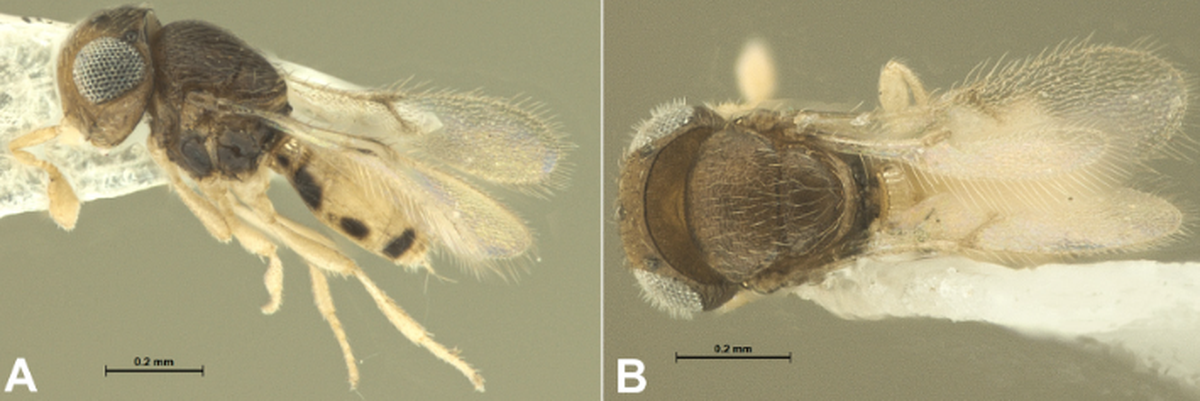
The first new species is Idris bianor, named after the spider genus it parasitizes, according to the study.
Its body length is just 0.02 to 0.03 inches long, researchers said, and its body is light brown, reddish brown and pale yellow with brownish black patches.
The species is found in West Bengal, India, as well as in Pakistan, according to the study.
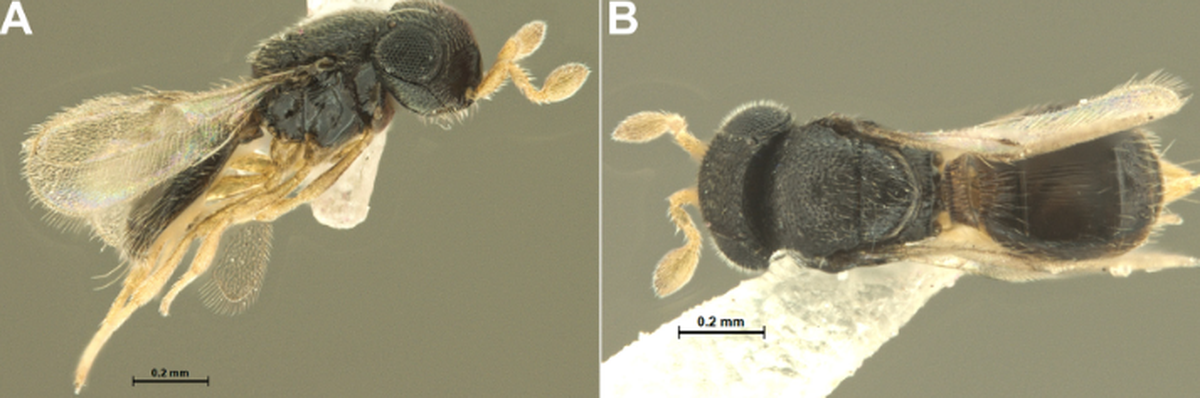
Idris furvus, the second new species, was named after the Latin word for “black,” and references its body color, according to the study.
The wasp is predominantly black, with “honey brown” legs and antennae, researchers said.
The black Idris wasp is a bit larger than the bianor wasp, measuring 0.05 inches long, according to the study.
The species has only been found in West Bengal, researchers said.
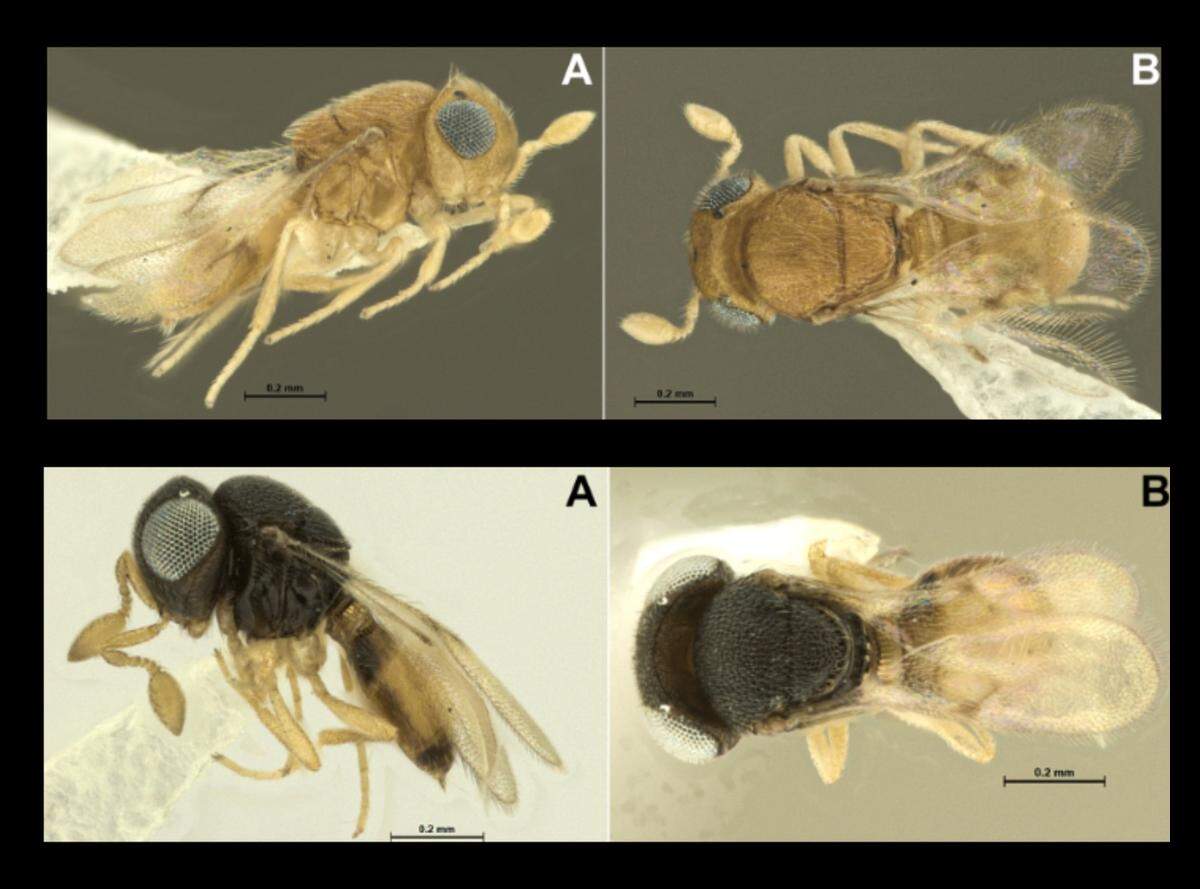
The third new species is named Idris hyllus, again named after the host spider it parasitizes.
The head and body are “honey brown to yellow,” with “pale yellow” mandibles that are “reddish-brown” on the tip, according to the study.
Only females of the species were discovered, researchers said.
The last species, Idris longiscapus, was named after the “elongated scape characteristic of this species,” or the section of antennae closest to the wasp’s head, according to the study.
Similar in size to the other species, the wasp is “brownish black” with “yellow” legs and antennae and white hairs on the body, researchers said.
The species is found in West Bengal and Pakistan, researchers said.
Parasitic wasps are a group of wasps that rely on other species to complete their life cycles, according to the University of Minnesota.
They are all generally very small and lay eggs either in the eggs of another species or in another species itself the university said.
Parasitic wasps don’t build a hive or have a queen, and instead lead solitary lives that begin hidden. When the wasps emerge from a parasitized insect, the insect dies, according to the university.
All four species were found in West Bengal, a state on the far eastern border of India, just west of Bangladesh.
The research team includes V. Sushama, Rupam Debnath, K. Rajmohana and K.P. Dinesh.