Hidden cliffside nest of the world’s largest flying bird discovered in Peru Andes

For just the fourth time ever, researchers on an expedition in the Andes Mountains have recorded the Andean condor — the world’s largest flying bird — nesting in Peru.
The team spent about six hours a day for several days in August 2024 scouring rough terrain on foot, using binoculars and spotting scopes to record sightings of the threatened species.
It took a drone, however, to discover a hidden nest with two adults and one chick on a cliff in the Junin region of Peru, according to a study published June 24 in the journal Check List.
The sighting marks not only the fourth record in the country, but the second record in the Peruvian Andes and the first record in the Paccha district, according to researchers.
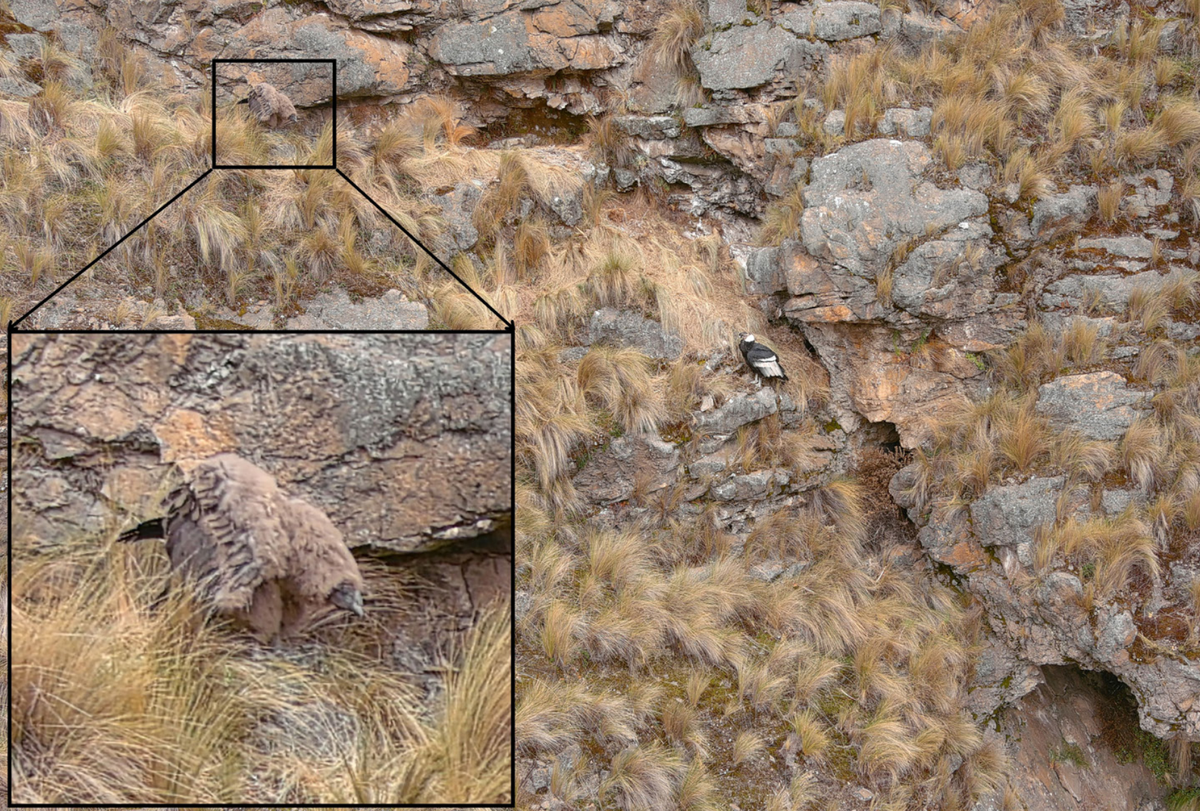
The Andean condor lays an average of one egg every two years. Both parents incubate the egg for about 60 days and feed their offspring for six months, according to the study.
Researchers said the species is listed as vulnerable on the International Union for Conservation of Nature’s Red list, and given Endangered status by the Peruvian National Service of Forestry and Wildlife.
It faces threats including “lead poisoning, collisions with electrical and telecommunications infrastructure, illegal use in folklore events, illegal wildlife trade, and competition with feral dogs.”
Andean condor nesting sites in Peru have all been recorded in the last 40 years, with the first seen in 1988, a third in 2016, and the most recent, marking the first in the Peruvian Andes, was found in 2023, according to the study.
The research team recorded 11 individual Andean condors during their expedition, not including the three at the nest, the study said.
Researchers said the areas where the nest was found and where individuals of the species were recorded for the first time should receive protection and conservation priority.
The research team included Henry Tinoco-Vega, Luis Castillo-Roque, Matt T. Herbert, John Azua and Roberto Elias-Piperis.