Dozens of unmarked graves from WWII prisoners of war uncovered in Poland
Nearly 80 years after a group of Italian soldiers lost their lives, their final resting place has been discovered and excavated for the first time.
In 1964, the land of the Łambinowice Site of National Remembrance in Poland was dedicated as a museum to honor those impacted by decades of war, resettlement camps and prisoner of war camps once built on the same ground.
Part of the Central Museum of Prisoners of War’s work includes using remote sensing and historical references to document the people who lost their lives.
“Archival research revealed that the site likely contains unknown and unmarked graves of (prisoners of war) from various nationalities, including Polish and Italian soldiers, as well as of civilians from the Warsaw Uprising of 1944, who died in captivity,” researchers said in a June 16 study published in the peer-reviewed journal Antiquity.
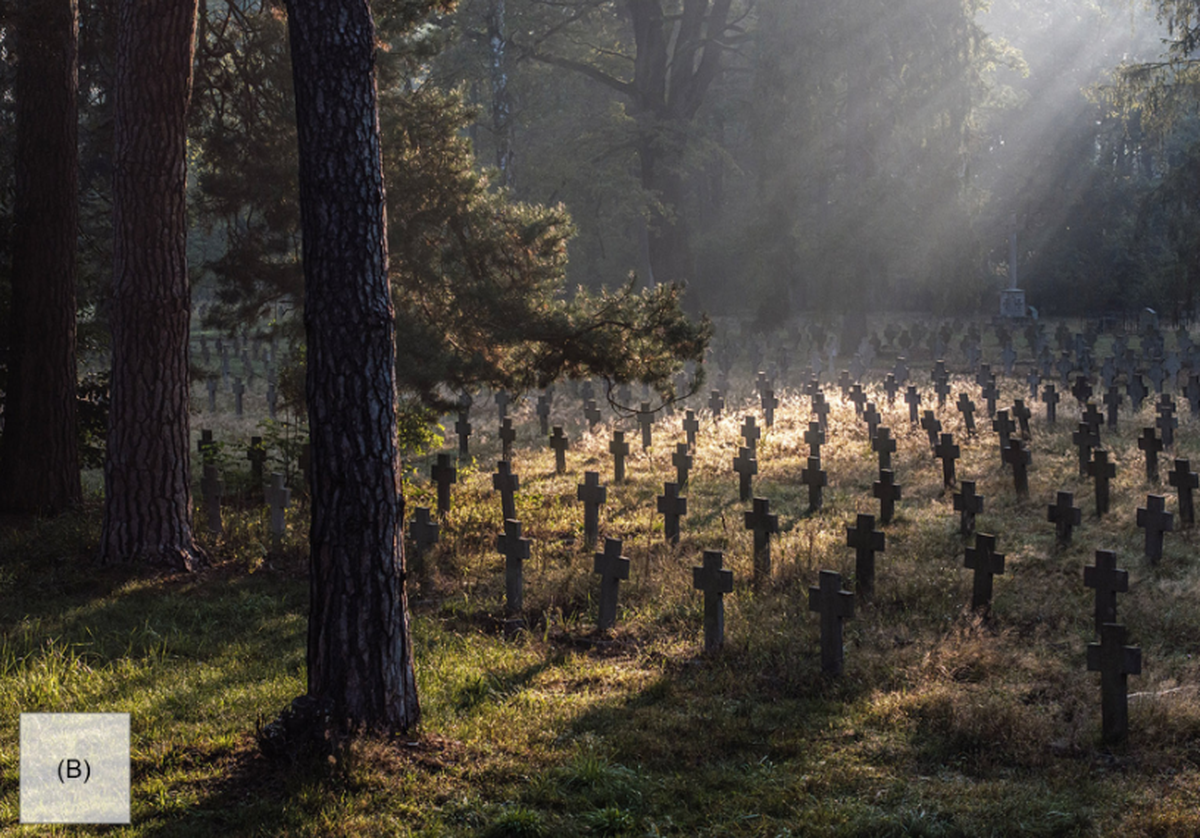
In 1959, representatives of the Italian government searched for the graves of missing soldiers thought to have died in Poland during World War II, according to the study. They believed as many as 60 could be buried at the museum site, but with a lack of care gone into creating the cemetery and no grave markers, they were unsuccessful.
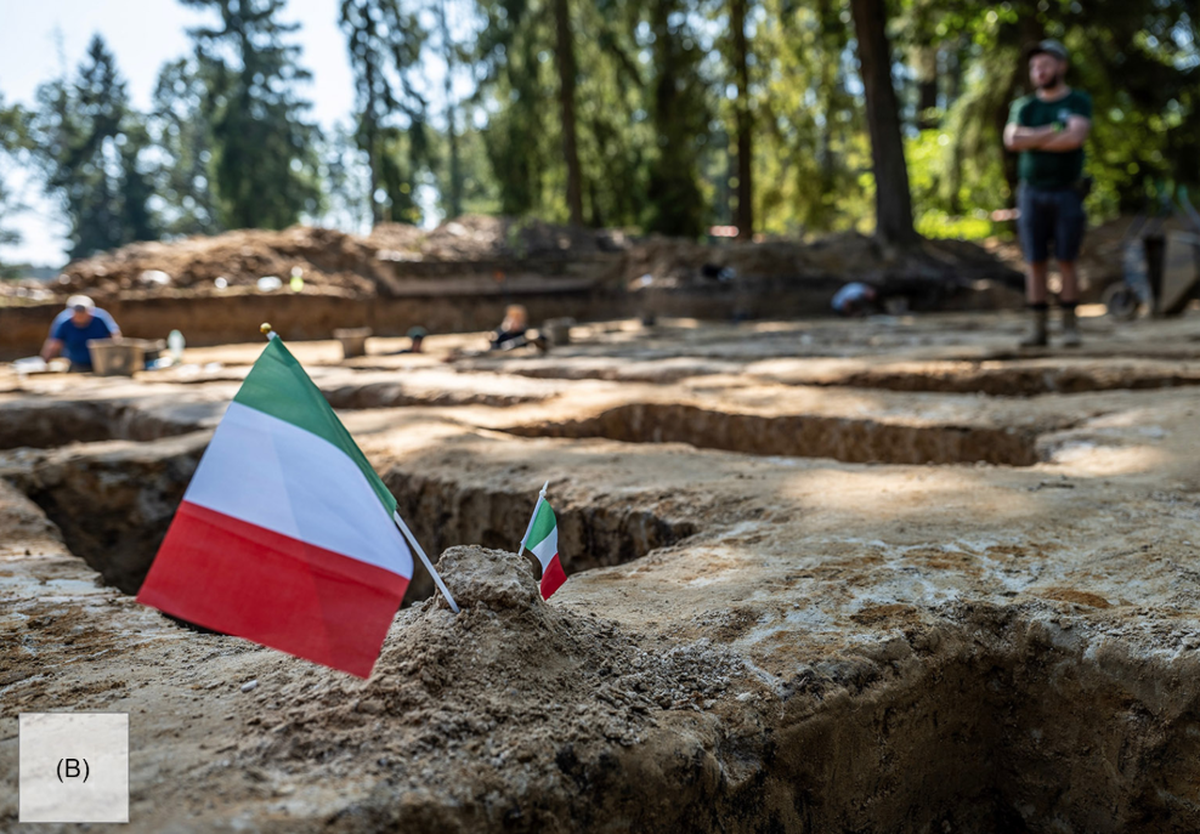
Then, in 2023, researchers discovered an “unknown quarter” of the cemetery that had never been excavated before, according to the study.
A trench measuring roughly 80 feet by 60 feet was excavated, revealing 60 rectangular structures buried beneath the surface — the missing soldiers.
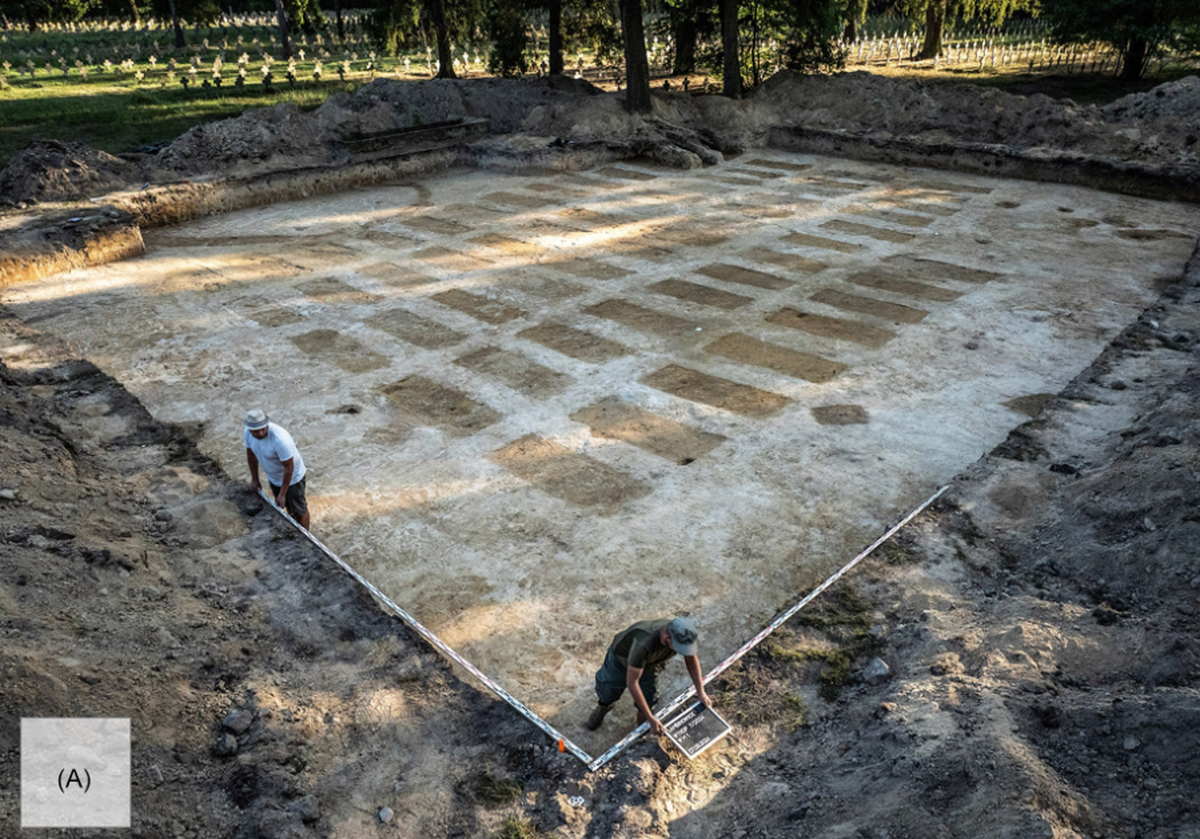
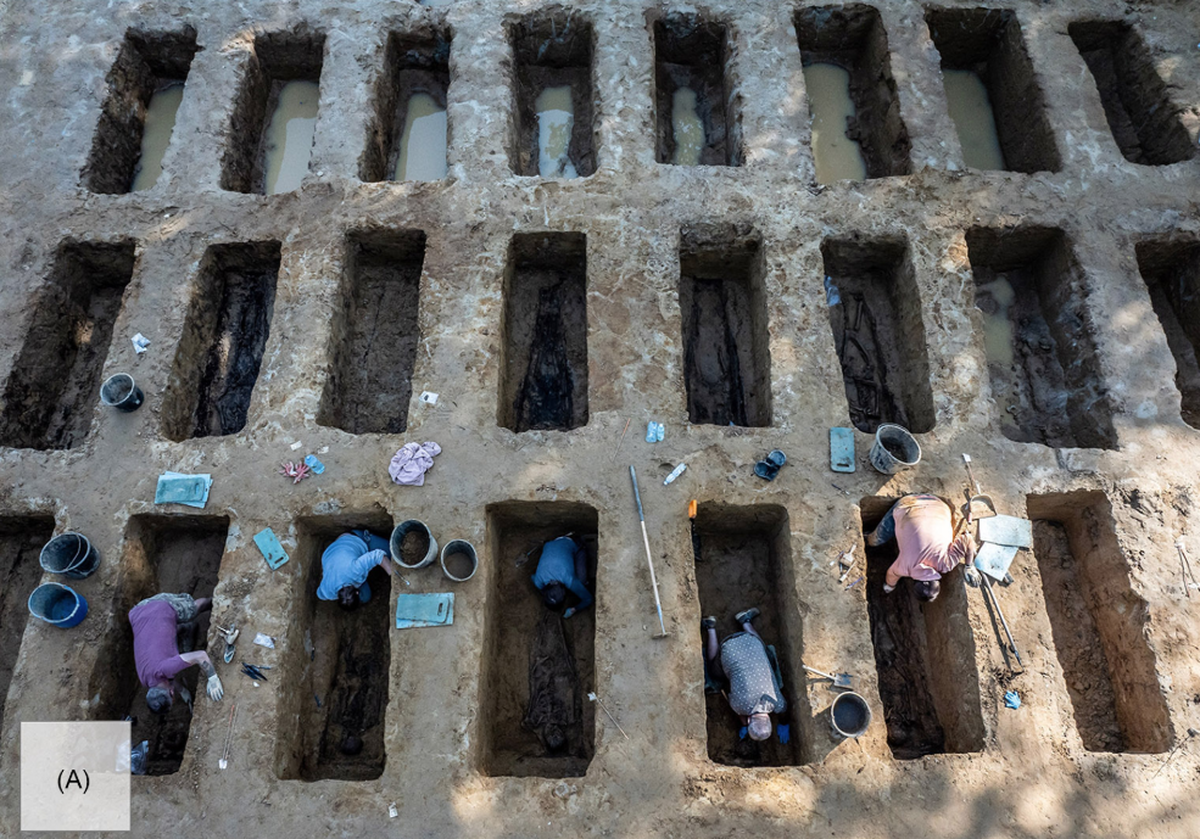
“It can be inferred that the entire quarter was arranged to a specific plan. The layout consisted of five rows of graves: four rows with 13 burials each, and a final row containing eight graves,” researchers said. “In all cases, the deceased were buried in an extended supine position with their heads turned to face north-east. Traces of wooden coffins, with variable preservation, were recorded in most of the burials.”
The individuals were not buried with any personal items or clothes, according to the study, apart from two crucifixes, a medallion and three rings found in graves.
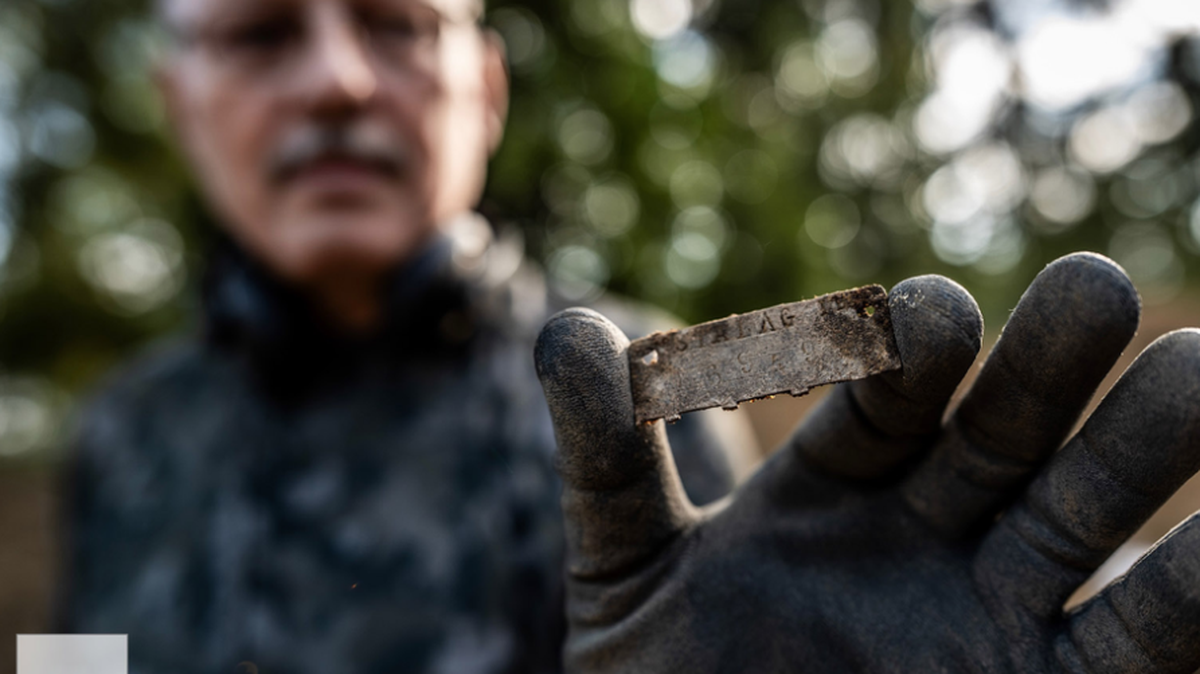
However, there were identification tags in almost all of the burials, found as broken dog tags.
The next step was matching the remains to names, and those names to historical records in a project called “Lamsdorf/Łambinowice: an archaeology of memory.”
“Due to intensive archival research, the project team was able to create a detailed list of the given names, surnames and dates of birth and death of each Italian soldier who died in Lamsdorf from 1943-1944,” researchers said. “Notably, some historical records even included information about the row and grave number where each individual was buried in the ‘Italian quarter.’ By comparing the data from the dog tags with the row and grave numbers, along with the camp numbers given to prisoners, we were able to identify the discovered human remains by name.”
The site is located in Łambinowice, in southwestern Poland just north of the border with Czechia.
The research team includes Dawid Kobiałka, Michał Pawleta, Kamil Karski, Michał Czarnik, Marek Michalski, Adam Lokś, Joanna Wysocka, Paige Lynch, Violetta Rezler-Wasielewska, Dorota Lorkiewicz-Muszyńska, Julia Sobol, Paulina Przepiórka and Bartosz Żarkowski.