Metal detectorist caught trying to sell historic musket balls found in Australia
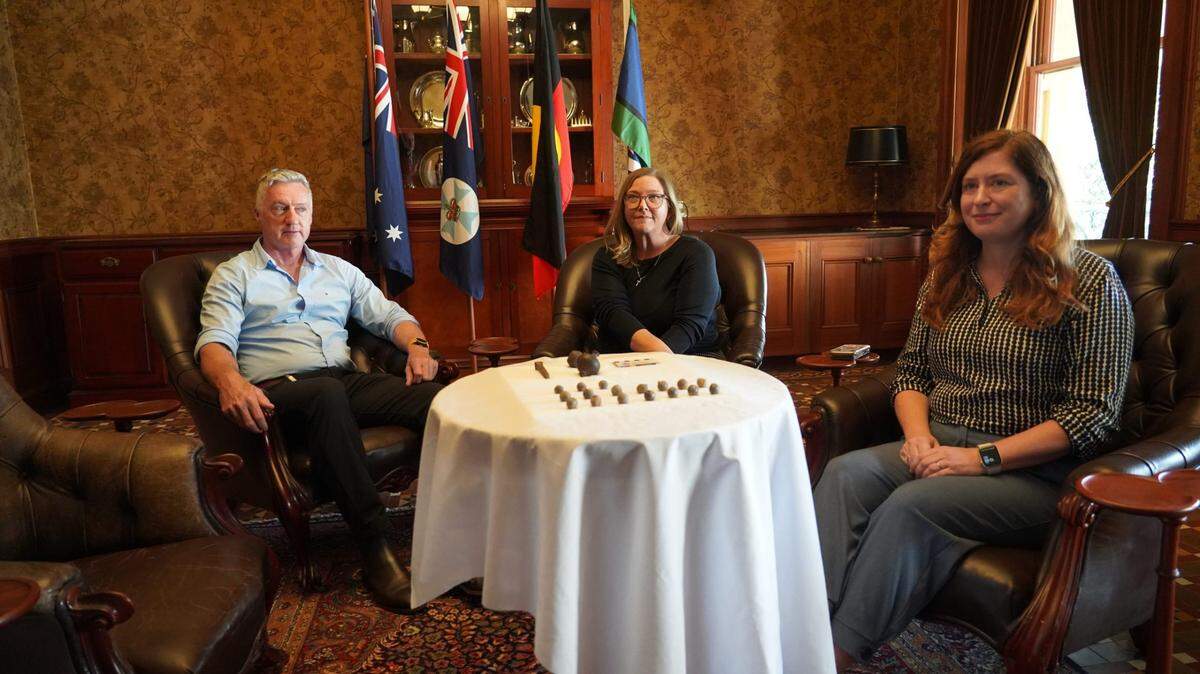
For more than a decade, an Australian metal detectorist searched and collected historical items on the country’s east coast, including a national park.
Now, government officials have been alerted to his discoveries after he tried to sell his finds — for tens of thousands of dollars.
Officers with the Department of Environment, Tourism, Science and Innovation were alerted to 52 items up for sale totalling $20,000 Australian dollars, or about $12,850 U.S. dollars, according to a May 6 news release from the office of Ariana Doolan, a member of Parliament from Pumicestone.
The items included musket balls, a plum bob and a square copper nail, all considered historical items, according to the release.
Some of the pieces had been found in Bribie Island National Park, officials said, and the metal detectorist had not reported the finds when they were made, violating the law.
The pieces were confiscated, and historians were able to take a closer look.
Andrew Powell, Minister for the Environment and Tourism and Minister for Science and Innovation, said the pieces date back to the end of the 18th century, and more specifically, the year 1799, according to the release.
“Based on historical records, the items may have belonged to Captain Matthew Flinders,” Powell said. “Flinders was the first British explorer to enter Moreton Bay and spent two weeks in the area on HM sloop Norfolk in July 1799.”
Powell and Doolan shared the finds in a May 6 Instagram video.
The hand-wrought nail would have been used in construction and boat repair, according to the release. The plum bob, or a pointed weight, was attached to a string to find vertical lines. There was a total of 48 small lead shot musket balls and one decahedron metal ball that may have been used as a ship’s ballast.
According to historical records, when Flinders arrived at Skirmish Point on Bribie Island, he had initially peaceful interactions with the First Nation people, Powell said.
However, after a misunderstanding possibly stemming from his hat, a spear was thrown which was then met by musketfire, luckily ending in no deaths, according to Powell.
Later, Flinders interacted with the First Nations people again, this time giving them his shot belt that included musket balls, according to the release.
The musket balls were found together near a midden by the metal detectorist, cultural heritage coordinator Anthony Simmons said in the release, meaning a member of the First Nations could have brought the shot belt there and then discarded it.
“Based on information contained in Flinders’s diaries, it is plausible that the artefacts are associated with the incidents at Point Skirmish and White Patch,” Simmons said. “If confirmed with peer-reviewed research, the artefacts could have intrinsic value as physical evidence of those historical events.”
After an investigation, the metal detectorist was not charged with a crime, and was instead warned against unlawful removal of historical items, according to the release.
The artifacts will be on display at the Queensland Museum.
Bribie Island is on the central-east coast of Australia, about a 50-mile drive north from Brisbane.