Slippery creature with ‘mask’ found lurking on former prison island for 1st time
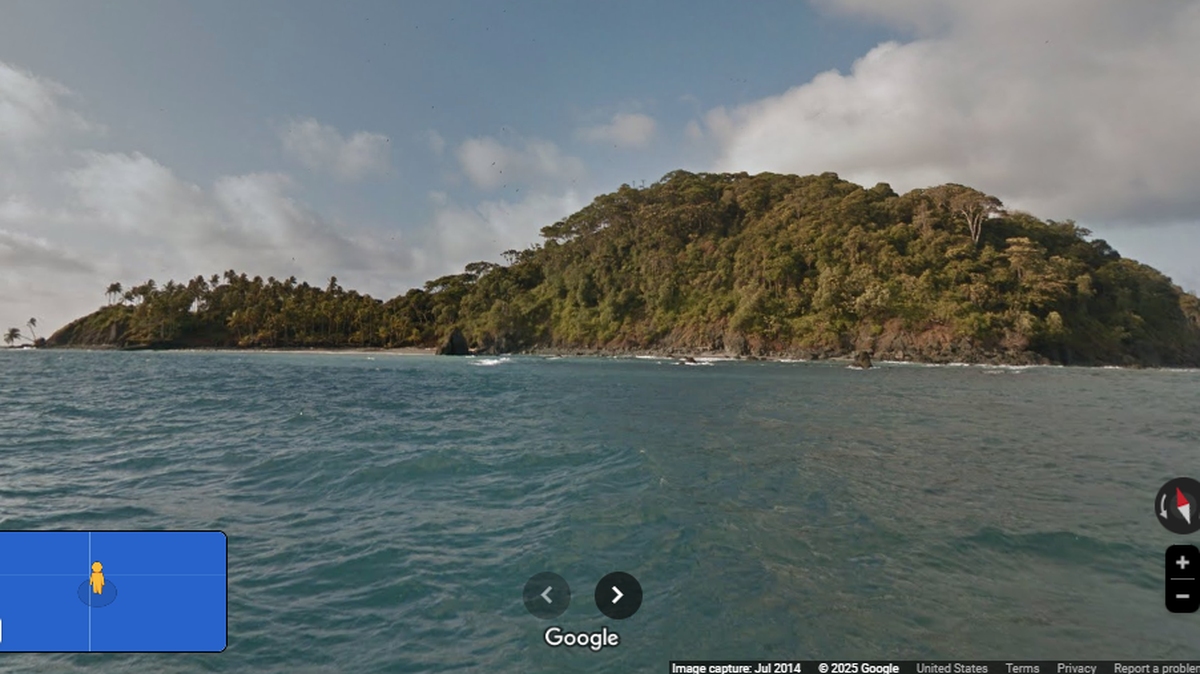
From a distance, an island just off the coast of Colombia looks like paradise.
Luscious trees cover nearly 150,000 acres of protected land, now known as Gorgona National Natural Park.
But when you get on the island, ruins of a prison sit reclaimed by the natural environment.
Prior to 1984, the island was used as the site of a maximum security prison, likened to Alcatraz, reachable only by a two-hour boat ride and home to more than 1,000 prisoners throughout its history.
A quarter of a century after its construction, however, an environmental and human rights campaign led to the closure of the prison and the island’s establishment as a national park, according to the Colombian government.
The park is now a stop for the more adventurous sightseers, or researchers cataloging the species that call the island home.
During recent fieldwork as part of a project to survey the herpetofauna, or reptiles and amphibians, a research team found a small salamander lurking inside a rotting log, according to a study published May 12 in the peer-reviewed journal Check List.
The log was on the edge of the forest, and surrounded by leaf litter and fallen debris, researchers said. Salamanders live in moist environments to keep their smooth, slippery skin wet in order to breathe, according to the Texas Wildlife Association.
The animal inside was “predominantly dark brown,” and covered in “light blue spots,” according to the study. The head was lighter brown with a “cream colored facial mask” that match the color of sporadic cream markings on the legs.
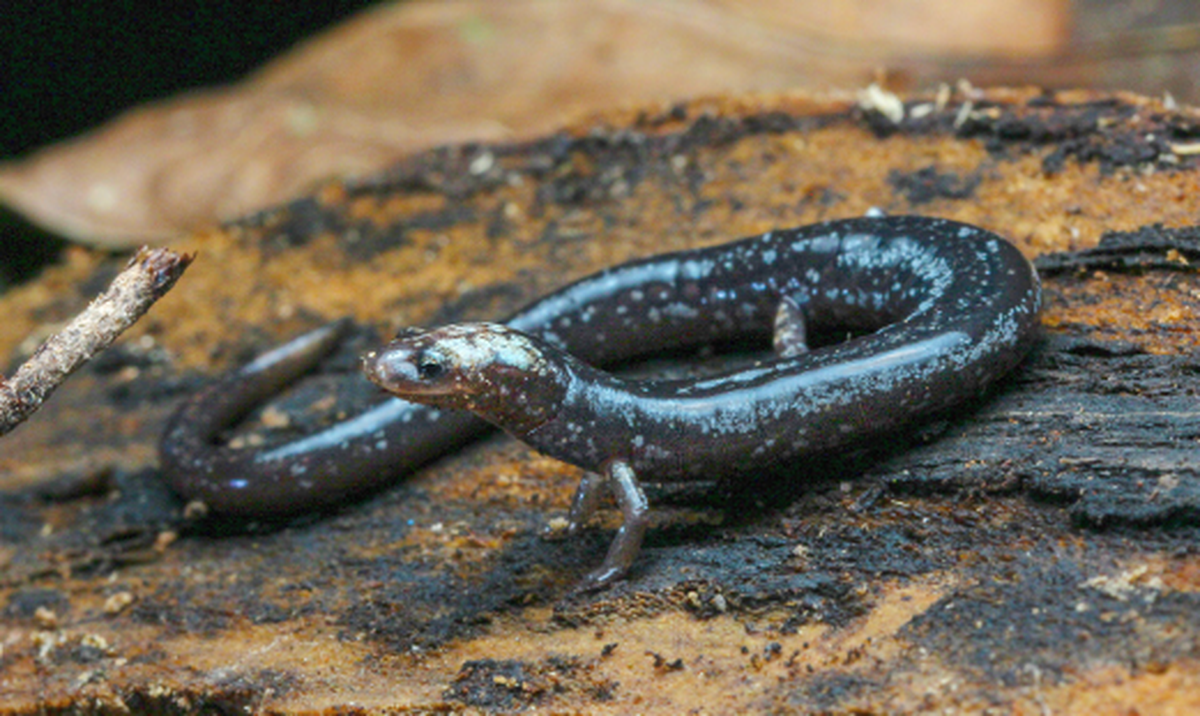
The worm-like amphibian was identified as Oedipina villamizariorum, or Villamizar’s worm salamander, but this brought more questions than answers for the research team.
Villamizar’s worm salamanders are known for “elongated” bodies and “cryptic habits” that make them “especially difficult to detect in the field,” according to the study.
They also have never been found on the island before.
So far, the worm salamanders had only been found in Ecuador, but the species is externally very similar to another known species, O. complex, researchers said. Because the two species require genetic testing to confirm their separation, there is a chance that salamanders that were actually O. villamizariorum were misidentified as O. complex in the past, according to the study.
Previous study of the Villamizar’s worm salamander in Ecuador suggested the species be listed as “critically endangered,” researchers said, citing an incredibly small geographic range. Now, with the extended range into Colombia, that could be reconsidered.
“Expanding the species’ range to Gorgona National Natural Park represents an important conservation contribution. Nevertheless, the record remains limited to a single population isolated from the mainland and confined to only (about 10 square miles),” researchers said. “This report underscores the need for further field surveys and research, particularly in areas where the species’ presence remains unconfirmed.”
Gorgona National Natural Park is located off the southern coast of Colombia in the Pacific Ocean.
The research team includes Ana M. Saldarriaga-Gómez, Augusto Acosta-Peña, Damián S. Pardo, Darío Alarcón-Naforo and Esteban Betancourt.