98-million-year-old amber discovered in Myanmar — with a new species inside. See it
When tree sap runs down rough bark and pools together, what started as a liquid hardens into a solid clump.
Sometimes, these clumps become buried under fallen leaves, then soil, then layers and layers of rock, compressing the material until it forms what we know as amber.
These sunset-colored chunks hold a snapshot of ancient history in their core — or small critters caught up in the gloopy avalanche.
In 2016, a small piece of amber that had been found in northern Myanmar was sold into the “vast amber collection” of Patrick Müller of Germany, according to a study published March 17 in the peer-reviewed journal Evolutionary Systematics.
The piece was later loaned to researchers, according to the study, who were surprised to find something inside.
“Authenticity of the amber was tested using UV light, under which Myanmar amber is known to fluoresce blue,” researchers said. “As with many amber pieces, a ‘window’ has been polished on the surface to allow a better view of the inclusion.”
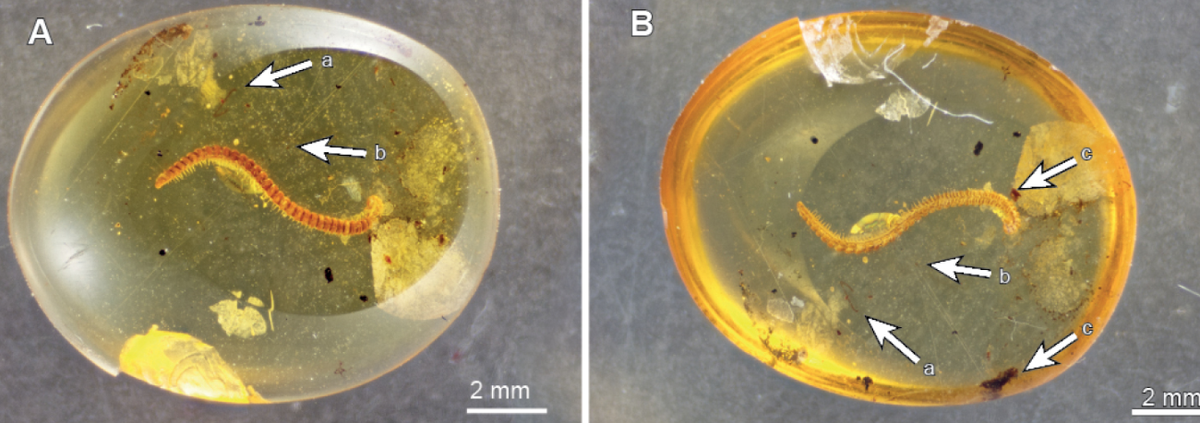
A closer look revealed a millipede, but not like one that had ever been recorded before. The amber piece was dated to the upper Cretaceous period, meaning the millipede inside was around 98 million years old, according to the study.
It’s also a species new to science.
Protosiphonorhinus patrickmuelleri, or the Patrick Müller Siphonorhinus ancestor, comes from a genus of small millipedes, and reaches a length of about a quarter of an inch long, researchers said.
Its body is “elongated” and a “color between dark orange and yellow, in light-orange colored amber,” according to the study.
The millipede has a “pear-shaped” head that tapers towards the front, with a smooth and round forehead, researchers said.
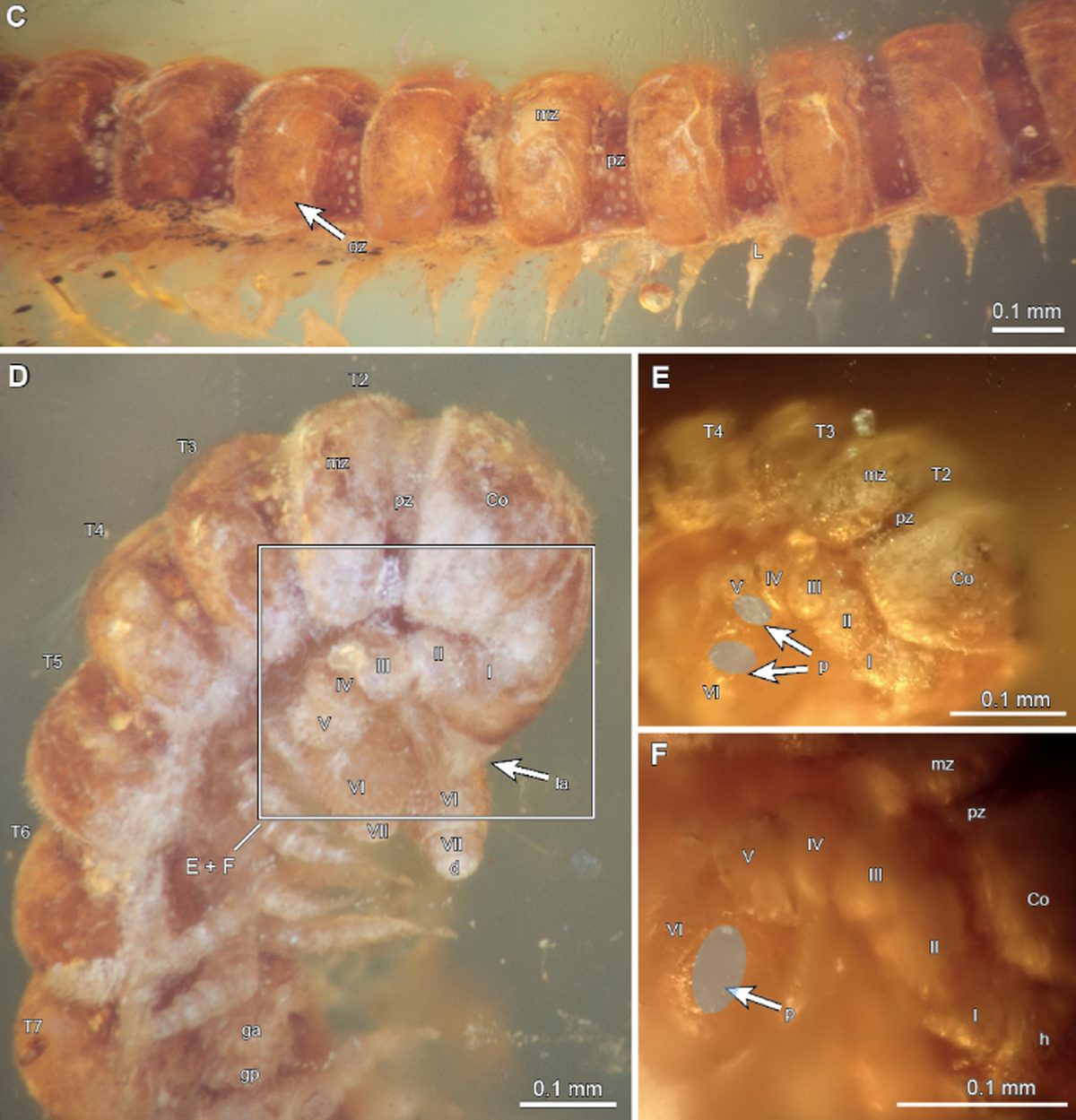
The species stands out from those living today, called extant species, by its “peculiar” gonopods, or sexual organs in males on the end of their bodies used for copulation, according to the study.
The species has both front-facing and back-facing gonopods, but further investigation was limited because the section that typically carries “species-specific” characteristics was not fully preserved in the amber, researchers said.
The millipede family Siphonorhinidae, of which the new species is an ancient ancestor, still lives today and includes four genera and at least 12 species.
The amber piece was found in the Hukawng Valley of northern Myanmar, just south of the border with India.
The research team includes Leif Moritz, Benjamin Wipfler and Thomas Wesener.