‘Unique’ jade-like pendant — 7,600 years old — discovered in Serbia. See the jewelry
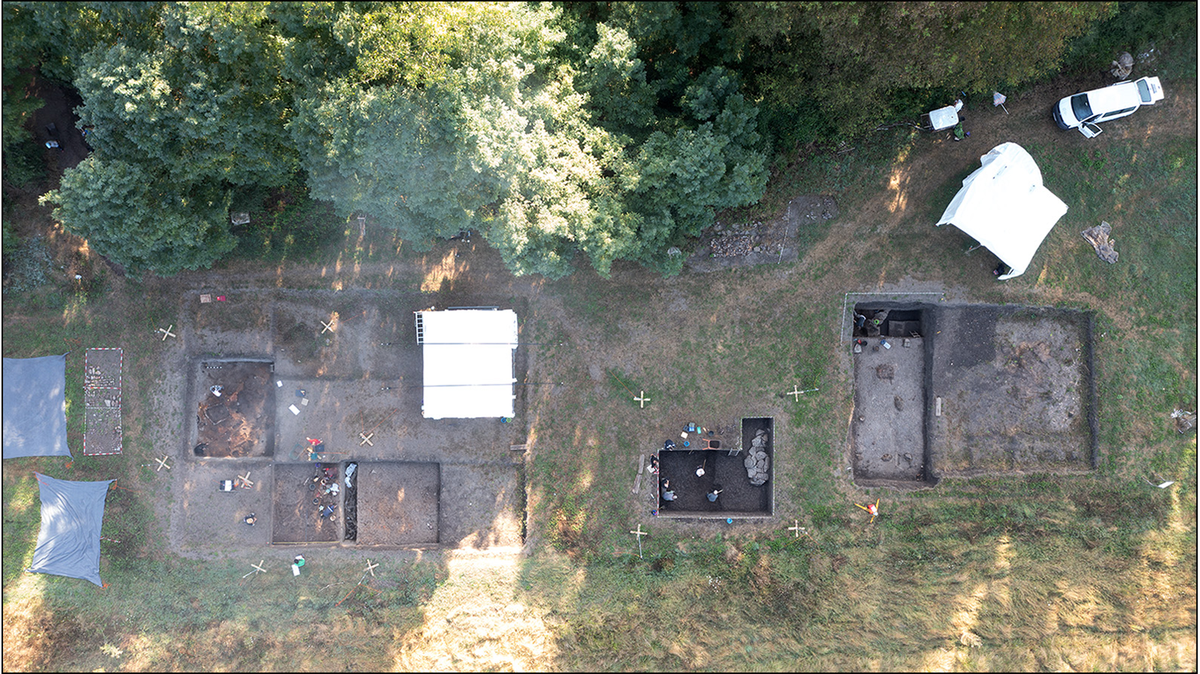
More than 7,000 years ago, the Vardar-Morava River corridor led early farmers from the far reaches of modern-day Serbia into Europe.
The “resource-rich hinterland” of the river valley was perfect for agriculture, and people of the Neolithic era put down roots on a small river terrace.
The site, called Svinjarička Čuka, was occupied multiple times from around 6100 B.C. until the first millennia B.C., and was discovered by archaeologists during surveys in 2017.
Now, excavations at the site have revealed ancient structures — and a “unique” carved stone.
“The majority of the approximately 30 excavated or partially investigated early to middle Neolithic sites in the central Balkans lack a long sequence of occupation and comprise predominantly dug-in structures,” researchers said in a March 10 study published in the peer-reviewed journal Antiquity. “The evidence from (Svinjarička Čuka) challenges this model for the central Balkans.”
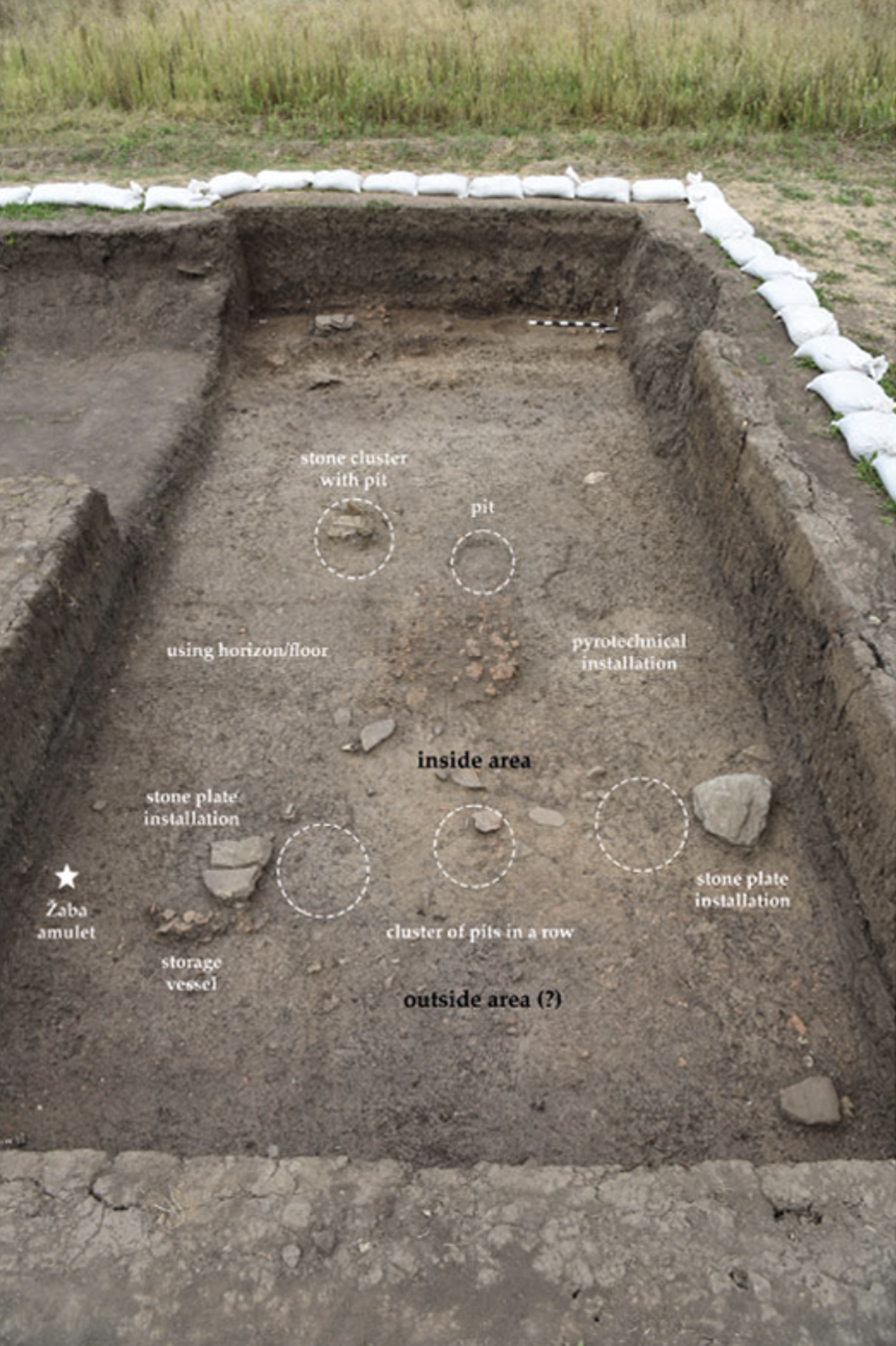
Researchers uncovered wattle-and-daub houses, stone slabs and wooden posts used to build “solid houses,” according to the study.
The homes were used for a variety of purposes, like textile and tool production, as well as preparing food and grinding materials, researchers said.
The structures weren’t the only significant feature found at the site.
“While Neolithic clay figurines are numerous at S. Čuka (115 have been found), the imagery of one stone pendant is unique in Serbia,” researchers said.
The piece of jewelry was discovered at the corner of one of the large houses, dated to roughly 5600 B.C., making the pendant 7,600 years old, according to the study.
The pendant is symmetrical and about 1.5 inches tall and wide, researchers said.
“Both polished and carved surfaces probably symbolize a frog-like creature that is female in the birth-giving position,” according to the study.
Traces found on the pendant suggest it was worn with soft straps, researchers said.
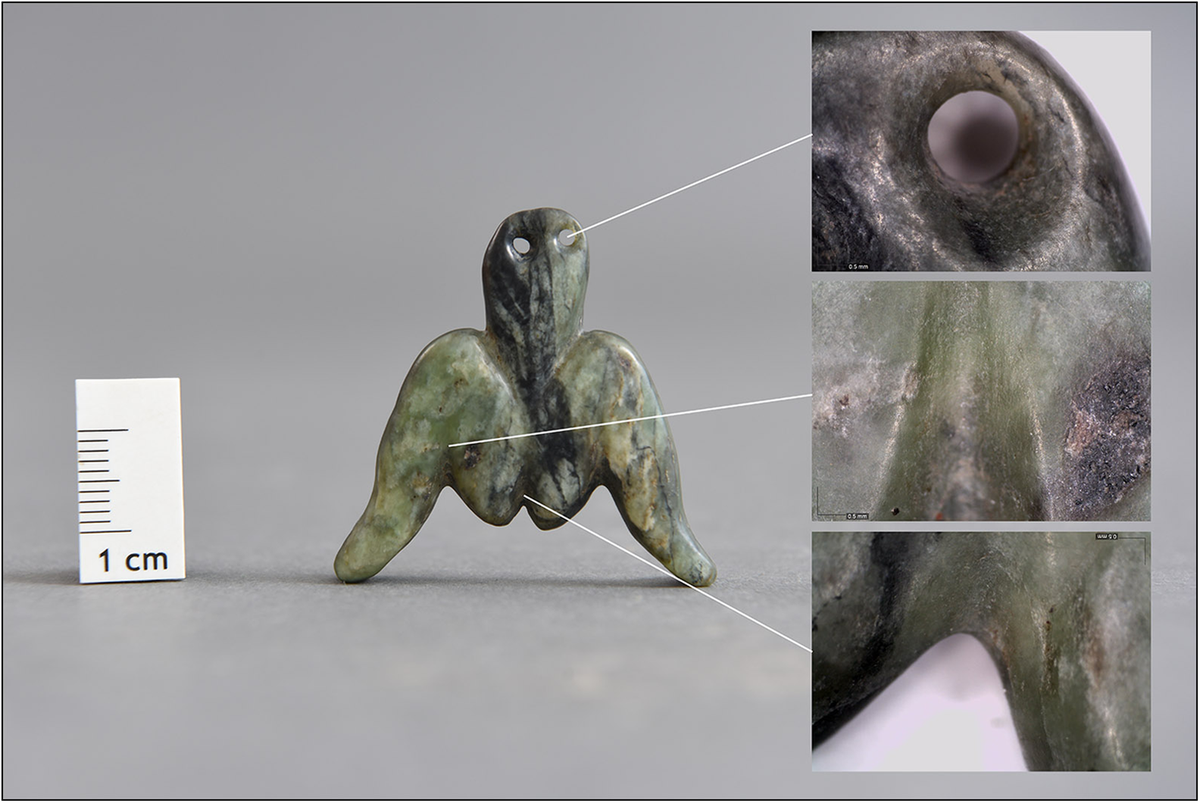
The pendant is a rich green color, and appears to resemble classic jade.
Chemical analysis of the piece found it is actually made of nephrite, a mineral that is commonly used as “jade,” but different from the mineral jadeite. Both are green in color, but jadeite has the “imperial green” color it is famous for, while nephrite tends to be more translucent, according to the International Gem Society.
“The only presently known source of nephrite in the Balkans is in southern Bulgaria, an area where other nephrite objects have been found, mostly in the shape of swastikas,” according to the study.
Other items like obsidian have been found to be part of “long-distance networks,” researchers said, so it’s possible the nephrite made a similar journey.
Archaeologists also uncovered another valuable material at S. Čuka, this time as part of a human burial — gold.
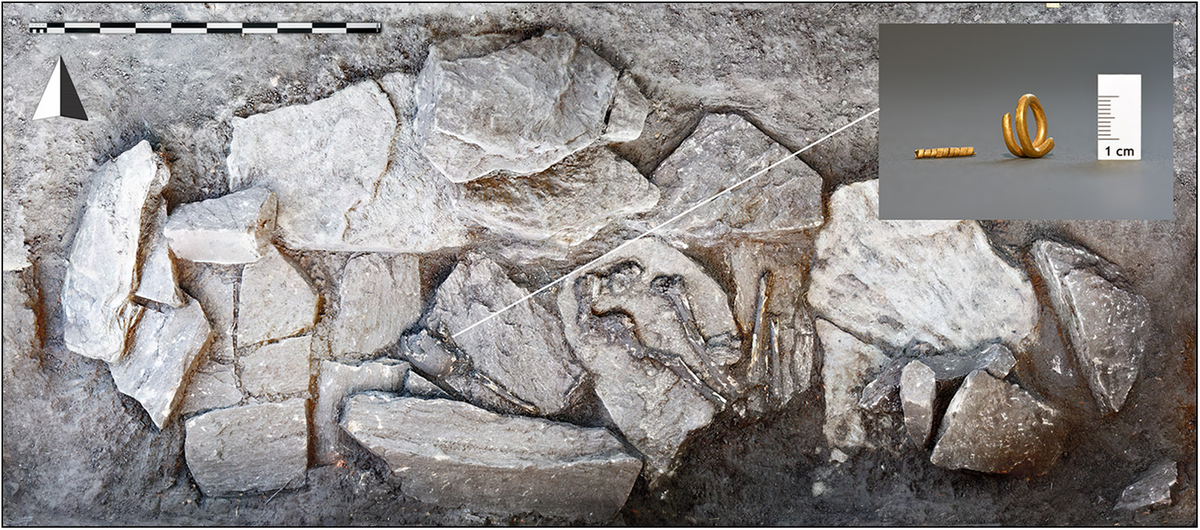
“A unique find in Serbia comes from the Early Bronze Age burial yet uncovered at S. Čuka,” researchers said.
The human remains belong to a middle-aged adult, and their sex is yet to be determined, according to the study. The body was dated to 2469 to 2288 B.C., thousands of years younger than the rest of the site.
“A hair ring and spring wire made of gold were found near the skull and more than thirty gold beads were recovered from around the thorax,” researchers said. “Such burial customs and grave goods represent a novelty in Serbia and can be connected to the Lower Danube burials of the first half of the third millennium B.C.”
The site was found in southern Serbia, a country in the central Balkan region between Romania and Bosnia and Herzegovina.
The research team includes Barbara Horejs, Aleksandar Bulatović, Michael Brandl, Laura Dietrich, Bogdana Milić, Ognjen Mladenović, Lukas Waltenberger and Lyndelle Webster.