Rare ceramic dragon head — at least 1,400 years old — found at temple in China. See it

Seven years into excavations at a Tang Dynasty site in eastern China, archaeologists have uncovered a rare ceramic found only a few times in history.
Archaeologists were working at the site of the ancient city of Xiongxian when they made the discovery in October, according to a Feb. 19 news release from the Institute of Archaeology of the Chinese Academy of Social Sciences.
They dug into a brick and tile pit next to what was once a high-level temple building when a ceramic shape emerged from the soil, according to the release. Archaeologists found the upper brow of a face followed by two large eyes, and the head of a dragon came into view.
Coins, lotus tiles and building materials were also found, according to the release.
The sculpture would have been what was called a ridge beast, or an ornamentation placed on the corners and edges of roofs or along the upper ridge, archaeologists said.
While dragon iconography is far from unique in Chinese architecture and art, a ceramic dragon head from this era is incredibly rare, according to the release.
The dragon head was taken to a laboratory to be cleaned, and archaeologists discovered the dragon’s eyeballs were once black in color, and they had a green eyeliner painted onto the ceramic.
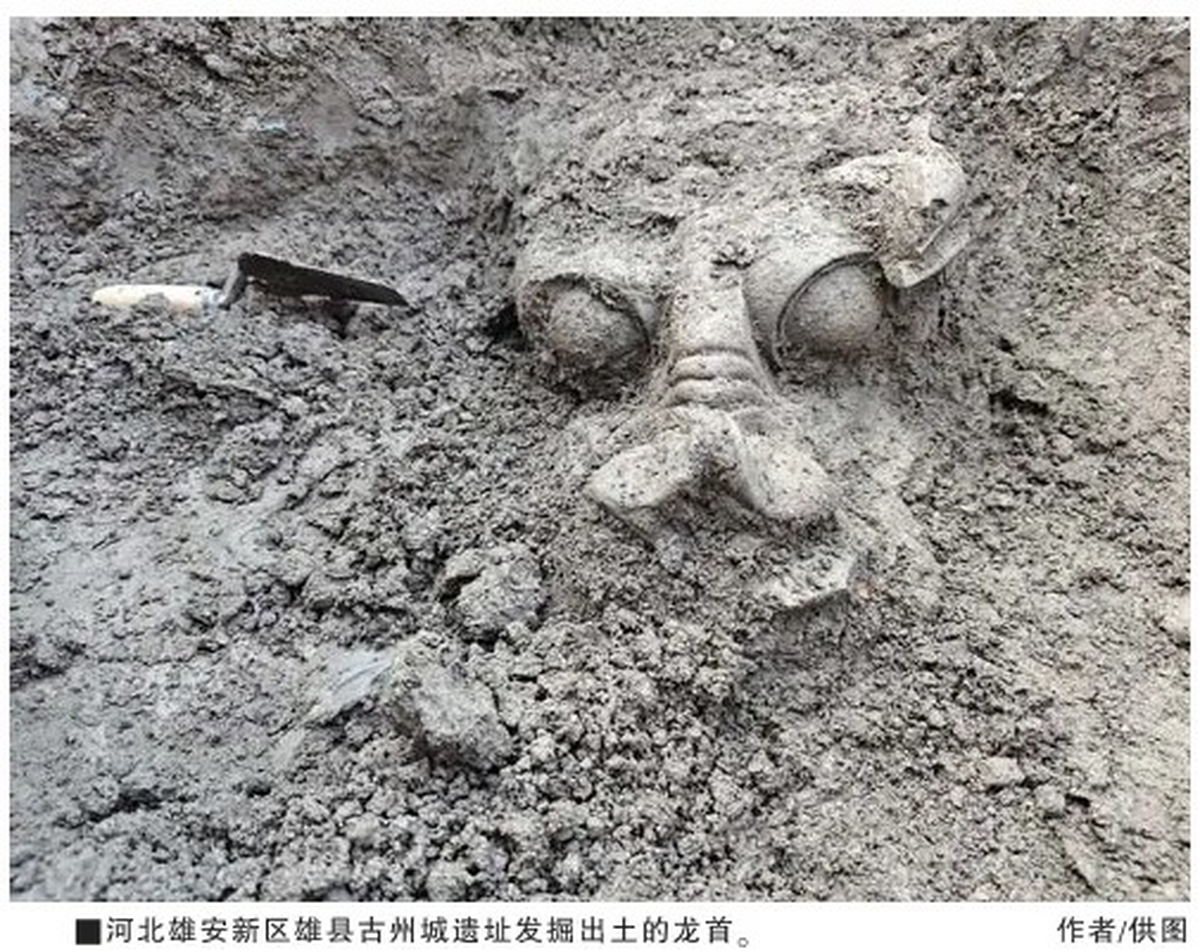
During the Tang Dynasty, a ruling period from the years 618 to 907 that reached its peak in the 8th century, dragons were considered spiritual creatures that protected buildings and houses and those inside them from natural disasters and provided luck, archaeologists said.
Tang dragons were different from the golden dragon heads used in the Forbidden City in the nation’s capital, and they didn’t represent status, according to the release. Instead, the heads were made from gray pottery and were artistically more vivid, round and strong in appearance.
The material used to make the dragon heads also contributed to their lack of preservation in the archaeological record, archaeologists said.
Very few heads from the Tang Dynasty exist because the ceramic, more than 1,000 years old, can break very easily, according to the release. Tang Dynasty buildings where the heads were adorned are also rarely found as they were commonly reconstructed and replaced over time.
The find also contributes to the understanding of how dragon imagery developed and evolved over time in China, according to the release.
During the Tang Dynasty, dragon heads were placed on buildings but also integrated into murals, paintings, stone carvings, daily ceramic pieces, gold ware and clothing, starting to be included in every part of life instead of being reserved for the elite few, archaeologists said.
Researchers began excavating the Xiongan site in 2017, working their way from the outer city to the inner city and discovering the Tang Dynasty temple where the dragon was found in 2023 as well as other ceramics and Buddhist relics.
The site was found near the Xiong’an New Area in Hebei Province in northeastern China, near the city of Beijing.
Google Translate was used to translate the news release from the Institute of Archaeology of the Chinese Academy of Social Sciences.