Thick-lipped creature — with purple belly — discovered as new species in China. See it

In the Dabie Mountains of China, crystal clear streams cut through the ravines and run into deep, rocky pools.
The water clarity allows you to look into the water and see the stony bottom, and a small, striped fish darting between the rocks.
The fish belong to a genus called Acrossocheilus, a small- to medium-sized species found across Laos, Vietnam and southern China.
But when researchers collected specimens of this group from the Dabie Mountains, they realized the fish weren’t like anything they had seen before — and identified a species new to science.
Acrossocheilus dabieensis, or the Dabie Mountains Acrossocheilus, is about 4 inches long, according to a study published March 4 in the peer-reviewed journal Animals.
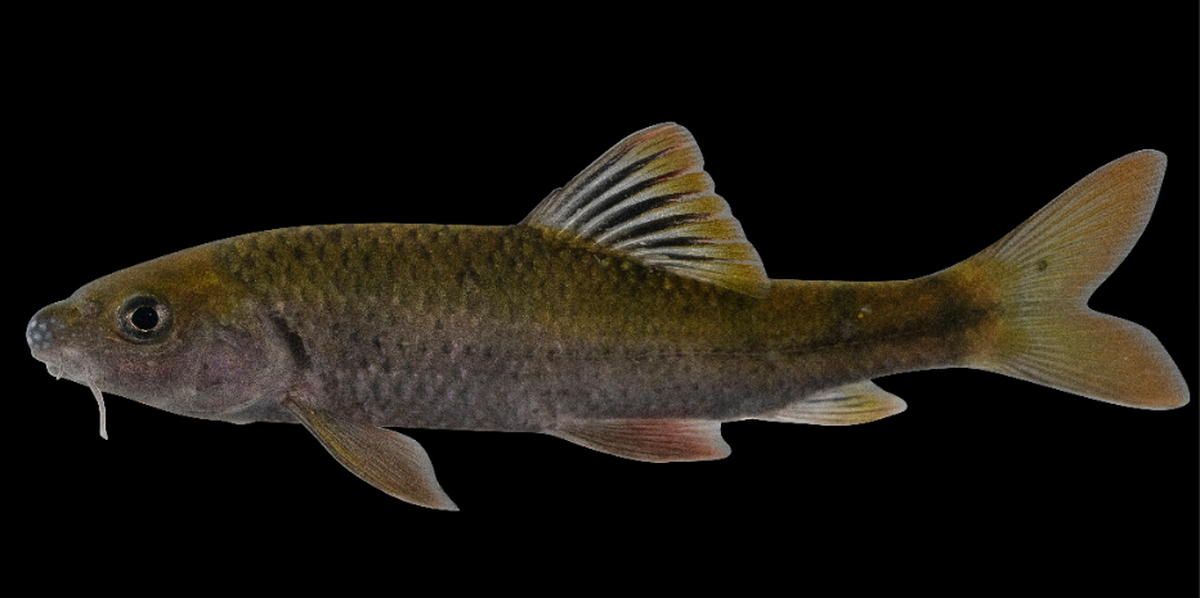
The fish’s body is considered “elongated” and “compressed,” researchers said, with a “moderately large” head and “blunt” snout.
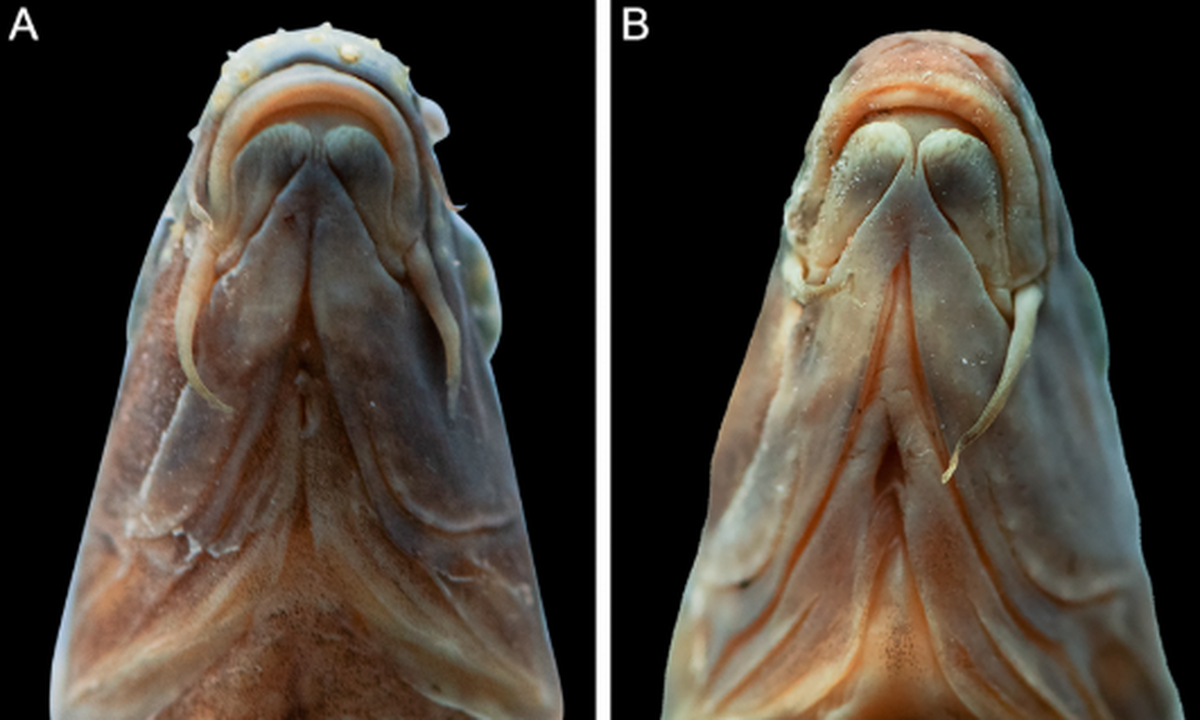
It has a “horse-shoe shaped” mouth facing downward and two pairs of barbels, or the whisker-like fleshy protrusions found on some fish, according to the study.
“The lips are thick, and the upper lip is complete, connected with the lower lip at the corners of the mouth, with a groove between the rostral fold and upper jaw,” researchers said.
The rest of the fish’s body is covered in small “cycloid,” or arch-like, scales, according to the study.
“Under natural conditions or immediately after collection, the head, (back) and upper sides are dark brown to black, while the lower sides are dark purple,” researchers said.
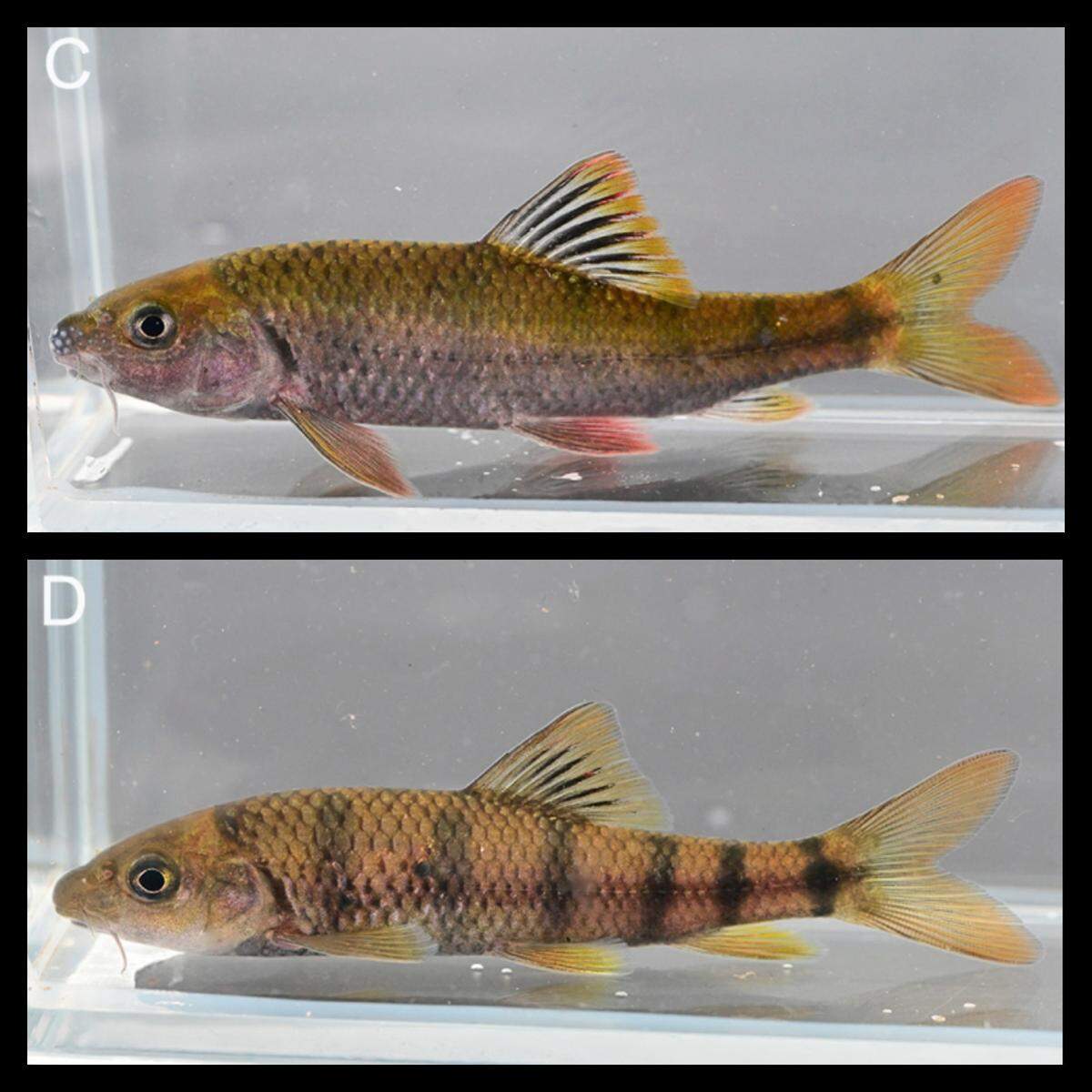
When put in a laboratory under brighter lights, the colors are more clear, researchers said, including “strikingly orange-red” pelvic fins on males and more prominent vertical bars on females.
The species is sexually dimorphic, meaning there are visual differences between males and females, including the darker bars on female fish as well as male fish’s abdomen turning light red during the breeding season, according to the study.
The new species has only been found in the Huaihe River Basin of the Dabie Mountains, researchers said, and it is restricted to the “clear ravine streams and deep pools.”
Fish of the Acrossocheilus genus are omnivorous and feed on algae as well as aquatic arthropods and organic matter, according to the study.
When fished for consumption, the fish’s diet contributes to its taste to people.
“The adults are tender and delicious in taste, possessing highly polyunsaturated fatty acids,” researchers said.
The Dabie Mountains are in east-central China, and the fish were found in southern Henan Province.
The research team includes Tian-En Chen, Jia-Xin Xu, Peng-Ju Li, Huan-Fu Hu, Kai Gao and Hai-Peng Zhao.