‘Lost’ creature — missing for 40 years — found on farm in Peru. See rediscovered species
.png "On a small farm in the mountains of Peru, a small creature was rediscovered for the first time in 40 years.")
In 1982, researchers traveling through the Ayacucho region of Peru discovered a small amphibian in the mountain coffee groves.
About an inch and a half long, the animal was a salamander with an oddly-shaped tongue. It was described as a species new to science.
Bolitoglossa digitigrada, or the Rio Santa Rosa mushroom tongue salamander, was described using 10 specimens collected from the field.
Then, it was never found by researchers again — until decades later.
Four salamanders of this “lost” species were discovered by a research team in October 2022, according to a study published March 3 in the peer-reviewed journal Zootaxa.
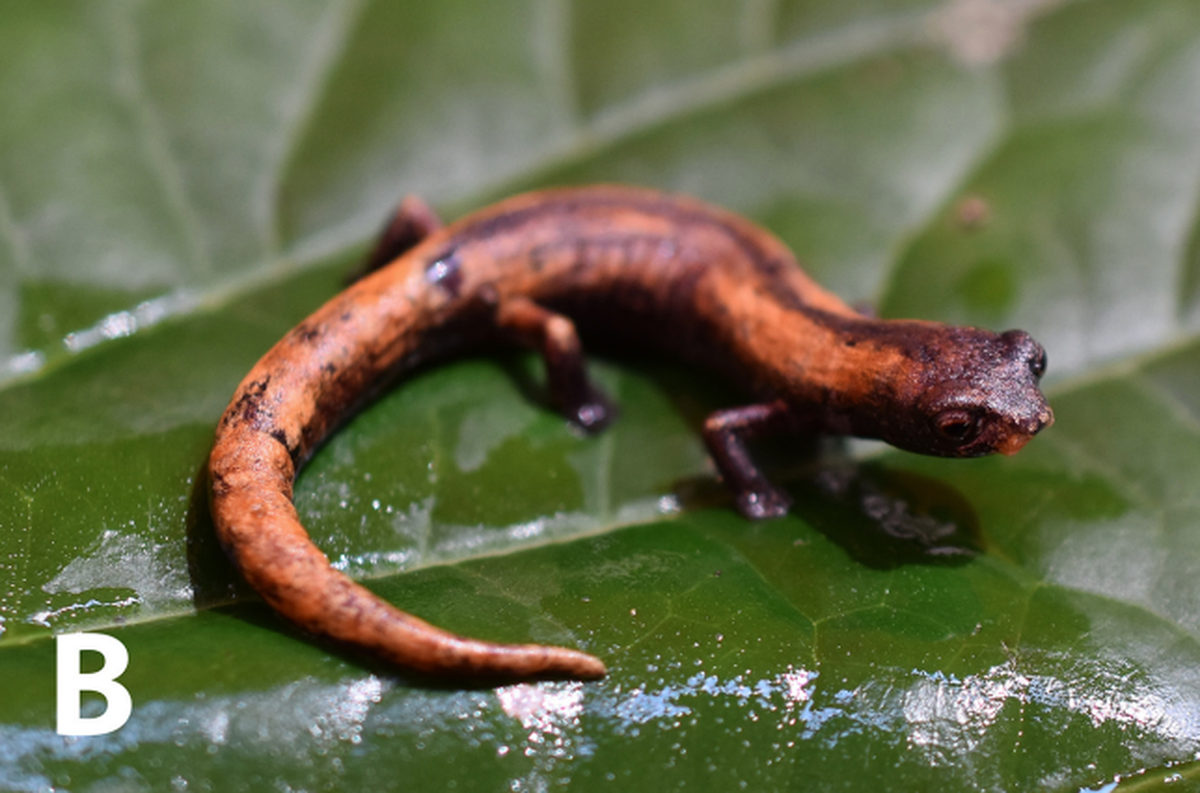
“We performed a field survey … in an open area close to primary montane forest,” researchers said. “We actively searched for (amphibians) during five hours, starting at (7:00 p.m.). Four people searched using flashlight in agricultural areas on vegetation and under shelters all along a small unpaved road connecting plantations.”
Their search revealed two males and two females, according to the study.
The search area included a small farm plot where corn and bananas were grown, and the animals were all found on the leaves of pepper plants, or vines, researchers said.
The species was collected at a site 4,133 feet above sea level in the Peruvian mountains, according to the study.
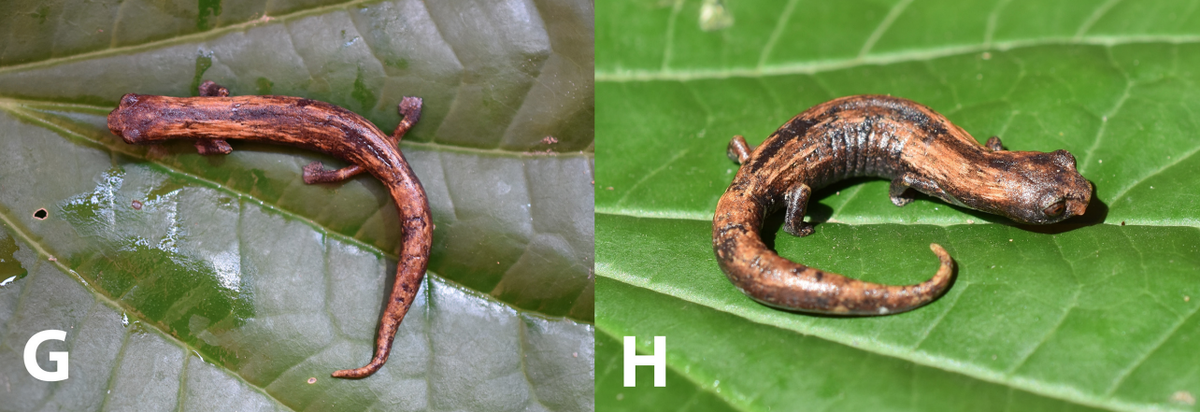
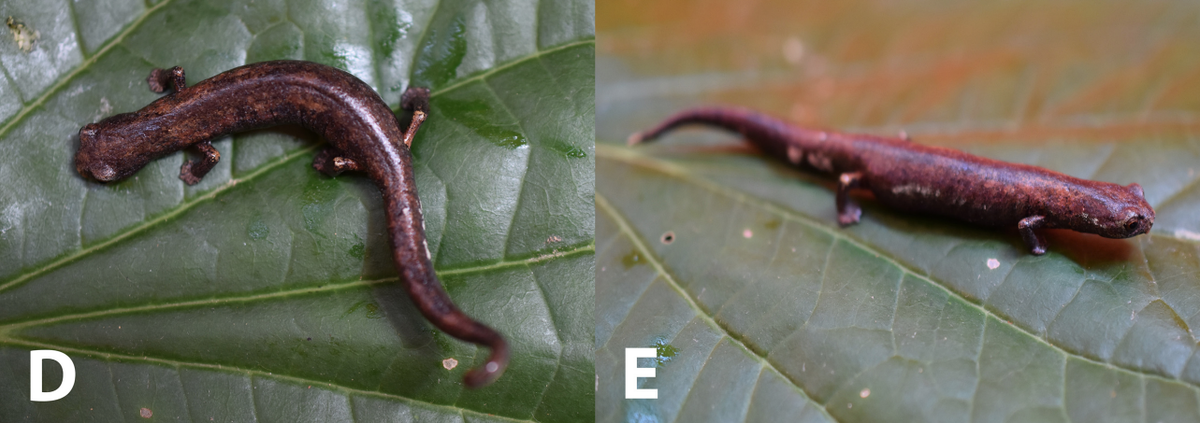
All of the salamanders have a “pale orange iris with dark speckles,” researchers said, but there is some variation between males and females of the species.
Females have a “pale orange” back with a dark brown band that runs from their head to the beginning of their tails, according to the study.
Males, on the other hand, are more “uniform dark brown” with “faint orange marks” and white marks on their bellies and the underside of their tail, researchers said.
The salamanders appear to be geographically isolated from related species, and so few have ever been found that the International Union for Conservation of Nature recognizes the species as “data deficient” and cannot determine a conservation status, according to the study.
“The apparent ecological isolation of (the Rio Santa Rosa mushroom tongue salamander), coupled with its recognition as a regional endemic species, suggests potential ecological plasticity but also highlights its vulnerability to habitat loss,” researchers said. “Field surveys in neighboring regions, such as Junín and Cusco, could help delineate its range and identify potential corridors or refugia to support its long-term survival.”
The species was rediscovered in south-central Peru, about a 430-mile drive southeast from Lima.
The research team includes Valia Herrera-Alva, Ernesto Castillo-Urbina, Alessandro Catenazzi, Luis Fajardo, Kimberly Ñaccha and César Aguilar-Puntriano.