Elusive 2-foot-long predator — with ‘dangerous’ bite — discovered as new species
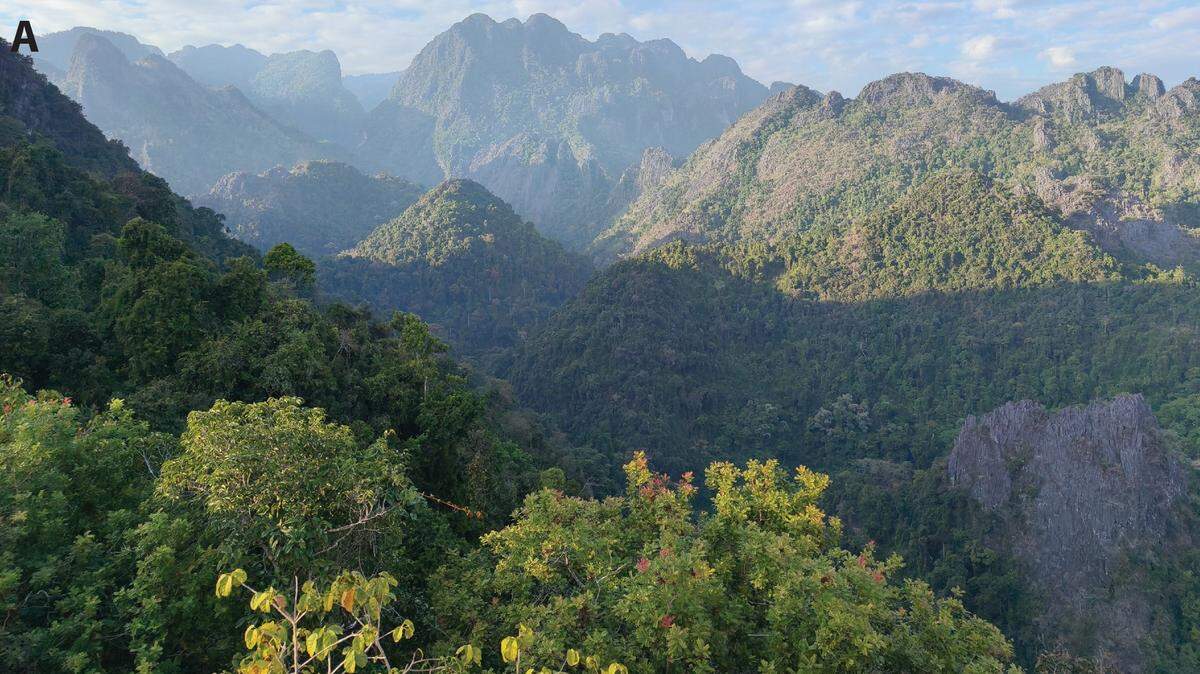
As night settled across Laos, an elusive 2-foot-long predator emerged from its hiding place and began climbing along the rocks. Its “cryptic camouflage” and “secretive” lifestyle helped it go largely unnoticed.
But when visiting scientists eventually found the “dangerous” animal, it turned out to be a new species.
Researchers hiked into the rocky landscape of Vang Vieng District in October 2024 for a third year of wildlife surveys. The team knew the country’s biodiversity was “critically undersurveyed” and hoped to change that, according to a study published Feb. 25 in the peer-reviewed journal Herpetozoa.
One night during their visit, researchers spotted an unfamiliar-looking snake climbing along the rocks and captured it. They took a closer look and quickly realized they’d discovered a new species: Protobothrops flavirostris, or the Vang Vieng lance-headed pit viper.
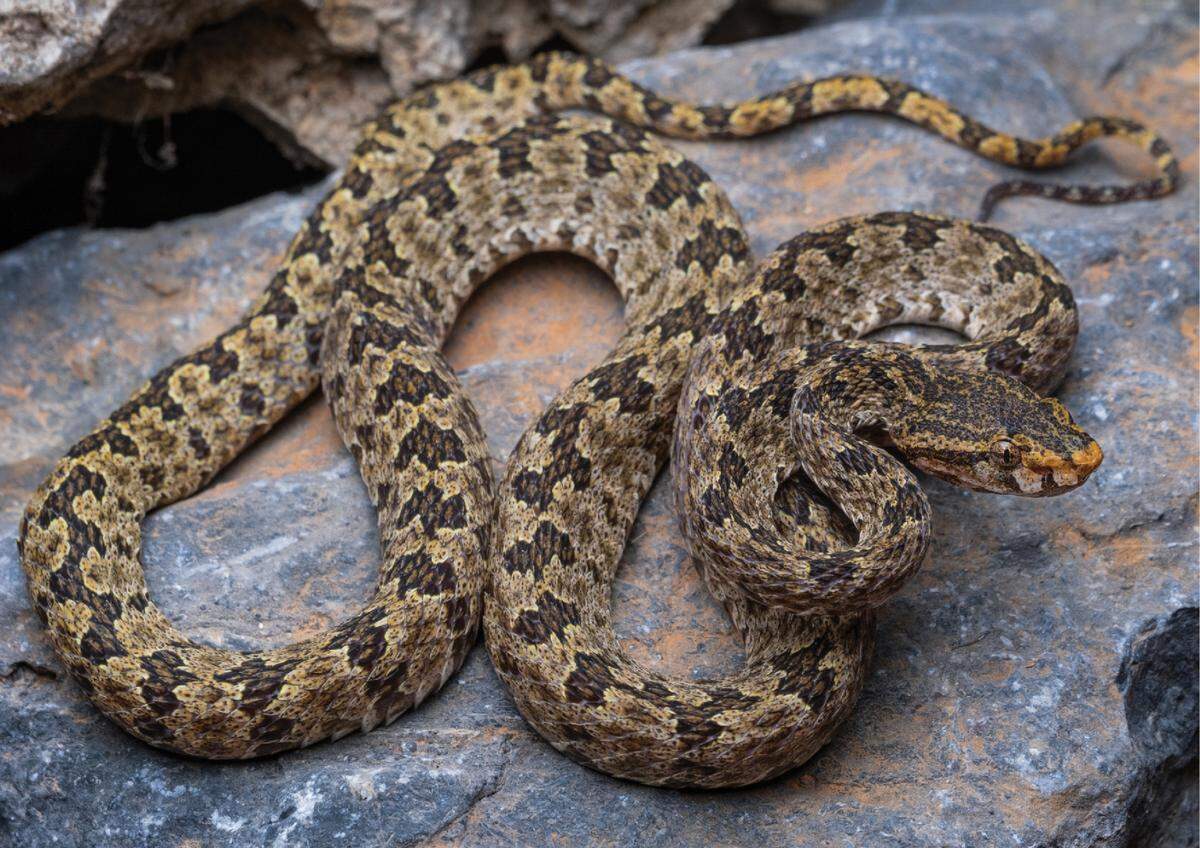
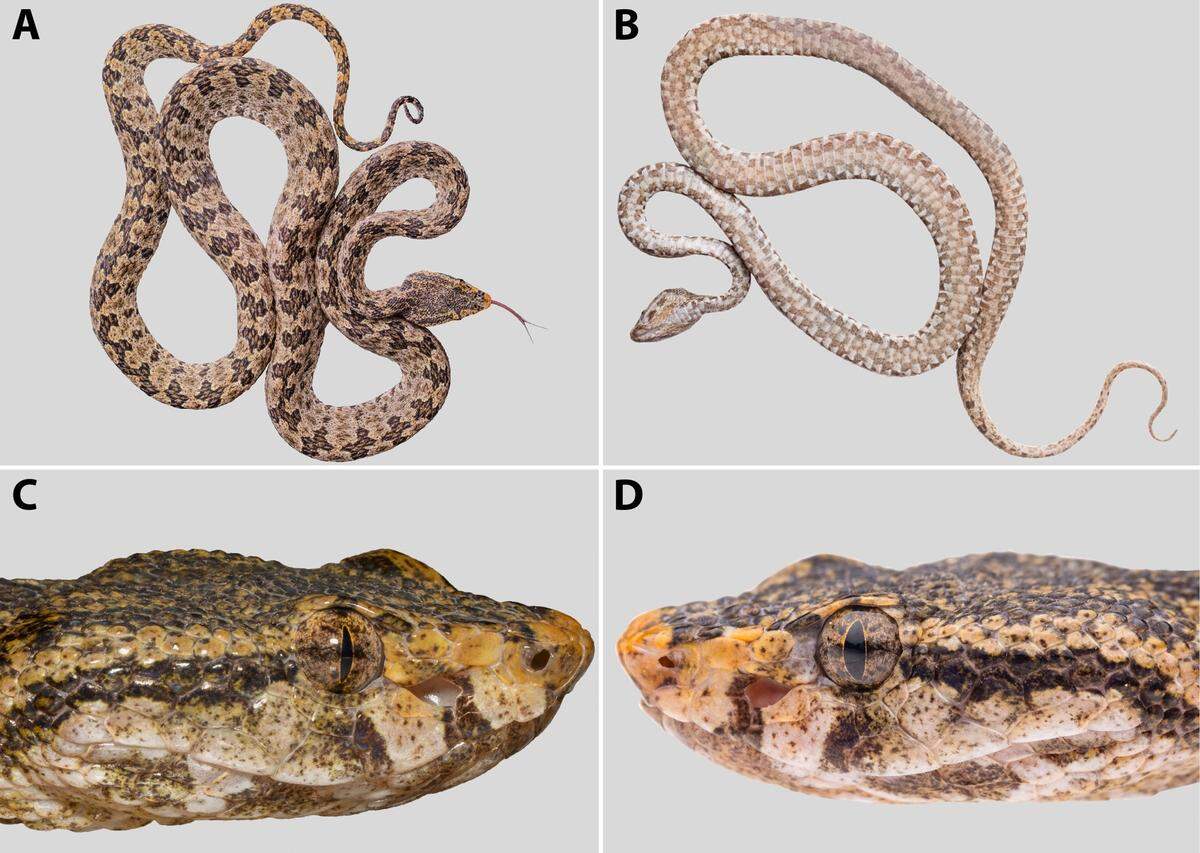
Vang Vieng lance-headed pit vipers can reach at least 32 inches in length, the study said. They have “thin” bodies with “triangular” heads, “elongate” snouts and “pinkish-purple” tongues.
Photos show the gray-brown coloring of the new species. A “lance-shaped pattern” of darker brown blotches runs down its back, “forming an interrupted and irregular zigzag line.”
Researchers said they named the new species “flavirostris” after the Latin words “flāvus,” meaning “yellow,” and “rostrum,” meaning “snout” or “beak,” because of its “characteristic” yellow-tinged snout.
Vang Vieng lance-headed pit vipers are “highly secretive and elusive,” the study said. Researchers only caught one snake and tracked down three more sightings “despite intensive survey efforts.”
The most detailed information about the new species came from the local Hmong people who lived nearby. Their name for these snakes “roughly” translates to “‘a snake that can open its mouth very wide’ or ‘big-mouthed snake,’” according to the study.
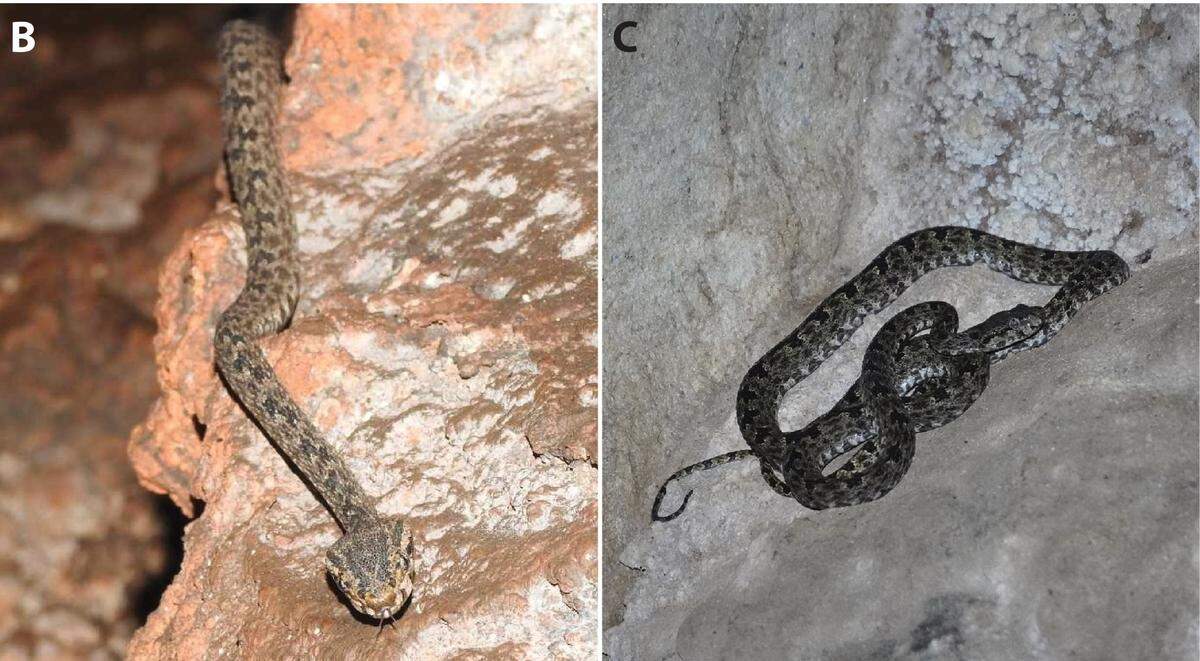
Locals described the new species’ bite as venomous, “dangerous for humans” and potentially “life threatening,” the study said. They typically see these snakes “perching on rocks” or occasionally inside caves “at the end of the rainy season” in the fall.
The Vang Vieng lance-headed pit viper is nocturnal, “spending most of its life climbing or resting amongst steep limestone rocks and hiding in their crevices,” researchers said. One snake seen rock climbing “would constantly anchor itself to anything possible using its tail and was very agile.”
The new species is a predator, likely feeding on bats and possibly geckos, but its diet “is not reliably known,” the study said.
The new species’ common name refers to the Vang Vieng District where it was first discovered and, so far, the only area where it has been found. The district is in northern Laos, a landlocked country bordering Cambodia, China, Myanmar, Thailand and Vietnam.
Researchers considered Vang Vieng lance-headed pit vipers to be an endangered species. Locals described these snakes as being “much more common even 10–15 years ago” but “very rarely observed” in recent years. The new species is likely threatened by human competition for prey, habitat loss and increased disturbances from mining, manufacturing and spelunking tourists, per the study.
The new species was identified by its scale pattern, texture, head shape, color pattern and other subtle physical features, the study said. DNA analysis found the new species had at least 7% genetic divergence from other related snake species.
The research team included Rupert Grassby-Lewis, Peter Brakels, Nathanaël Maury, Saly Sitthivong, David Frohlich, Parinya Pawangkhanant, Sabira Idiiatullina, Tan Van Nguyen and Nikolay Poyarkov.