Tiny creature crawls to top of logs to call in Madagascar. See newly discovered species
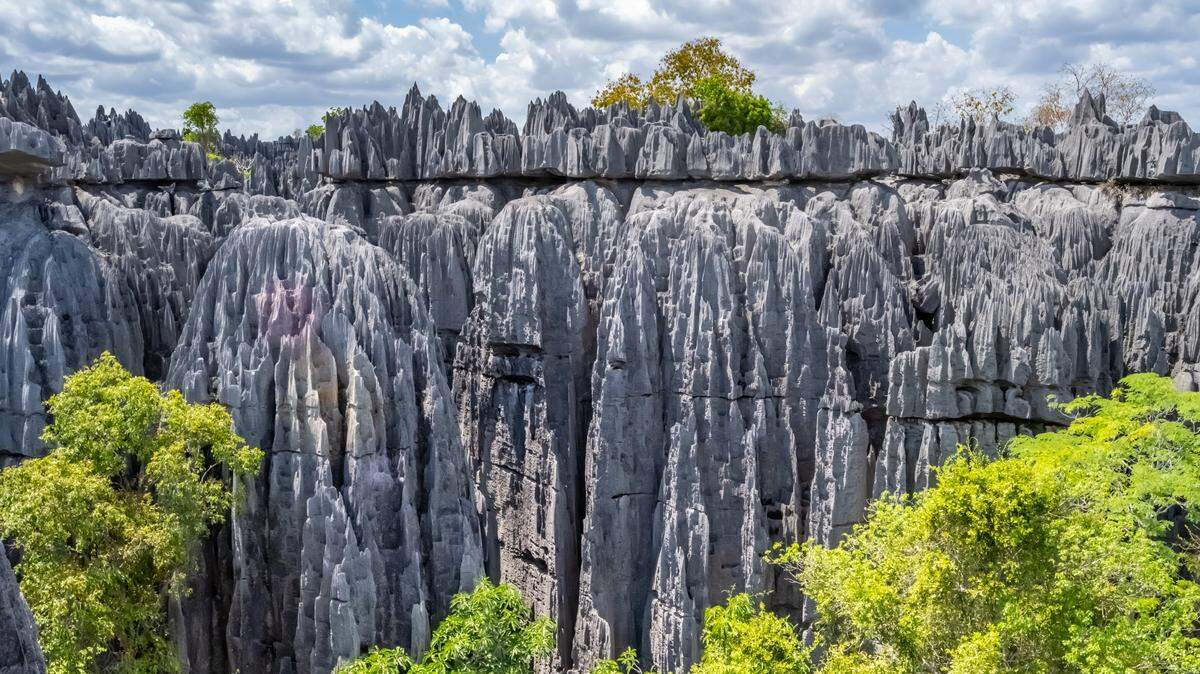
Tsingy de Bemaraha National Park, in northwestern Madagascar, is filled with breathtaking shards of karst limestone.
Creating a landscape of sharp, jutting rock, centuries of erosion have eaten away at the soft stone, and walls of rock are pocketed by nooks and caves.
When it rains in the park, the males of a tiny amphibious species emerge from the rocky caves, searching for an elevated log or ledge. They make their way to the top, then let out a call.
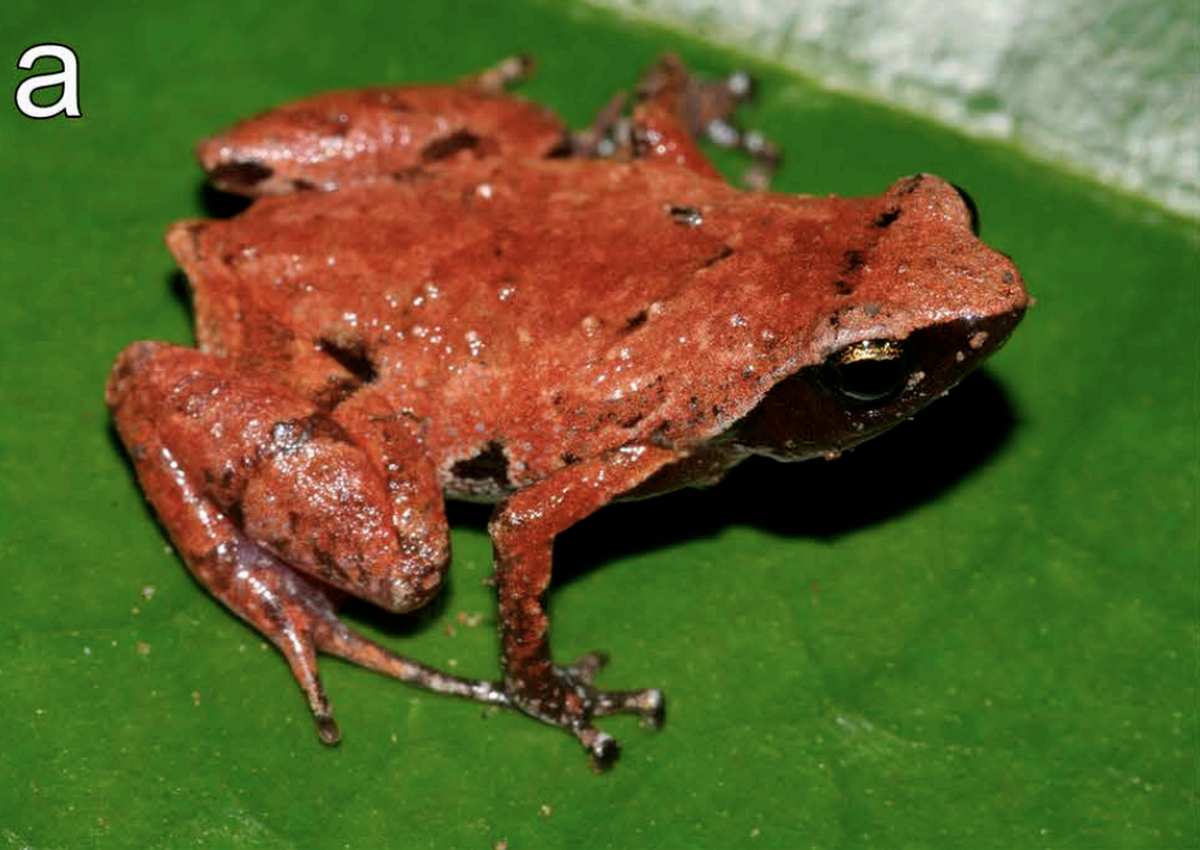
The sound comes from Anilany karsticola, a newly discovered species of microhylid frog, barely longer than a fingernail, according to a Feb. 15 study published in the peer-reviewed journal Salamandra.
Researchers first discovered the frog in an expedition to the park in 2006 but identified it as another similar species found in the central highlands of Madagascar, herpetologist and evolutionary biologist Mark Scherz wrote in a Feb. 14 post on his website.
The frog had identifiable toe pads on only two of its four fingers, Scherz said, but the geographic isolation between this frog and other related species raised questions.
Researchers then started searching through images posted on iNaturalist, a wildlife website where members can submit and identify photos of animals from around the world.
The photos were tagged with geographic locations, many of which were far from where the identified species were known to live, Scherz said.
“In the end, it became clear that the population from the Tsingy de Bemaraha really is a distinct species, which we have named Anilany karsticola in reference to the karsts in which it dwells,” Scherz wrote.
The frog has a slightly larger body size than related species, between 0.6 and 0.7 inches long, with an elongated body and rounded snout, according to the study.
The frog has a “reddish-brown” back with “small bluish spots” on its sides, according to the study.
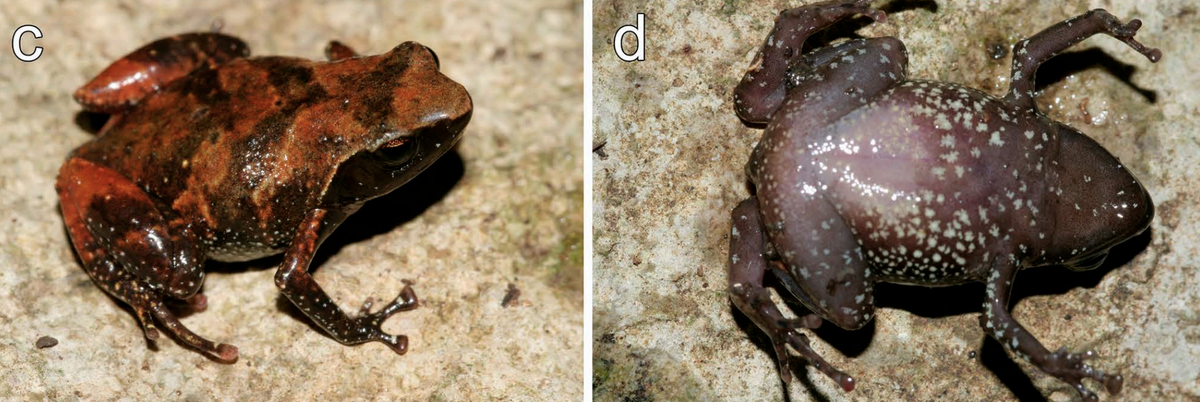
“The species inhabits a karstic limestone environment, with all eleven specimens collected near or within caves at Tsingy de Bemaraha National Park. It is quite common in Bemaraha on both sides of Manambolo river,” researchers said. “This species was very active after rain in late afternoon and in the evening. Males called sitting on logs or on tsingy rocks at 0.5–1 m above forest floor. Individuals were never seen calling from the leaf litter on the forest floor.”
Tsingy is a Malagasy word meaning “where one cannot walk barefoot” and refers to the sharp, tall rock formations found in the karst environment.
Researchers, however, still have a lot of unanswered questions.
“How could such a small frog, which also almost certainly breeds in terrestrial nests, have managed to cover so much distance, most of which is unsuitable habitat, and moreover live under such different conditions as the coastal and highland forests? After all, very few members of the similarly miniaturised genus Stumpffia occur over more than a few dozen kilometres distance, let alone hundreds of kilometres—micro-endemism is generally thought to be the rule in this Madagascar-endemic subfamily of microhylid frogs,” Scherz wrote.
The discovery might also impact the conservation status of related species Anilany helenae, Scherz said, currently listed as a critically endangered species.
“Should we still consider it critically endangered when it might occur over such a large area?” Scherz asked. “A lot more work needs to be done on the populations from the northwest, and exploration needs to be undertaken in areas where these frogs have not yet been sought, in order to give the answers we are looking for.”
Madagascar is an island nation off the east coast of Africa in the Indian Ocean.
The research team includes Scherz, Alice Petzold, Frank Glaw, Katherine E. Mullin, Andolalao Rakotoarison, Achille P. Raselimanana, Angelica Crottini, Pablo Orozco-terWengel, Jörn Köhler, David Prötzel, Miguel Vences and Michael Hofreiter.