‘Fanged’ creatures — discovered in the dark — are new species in Indonesia. See them

Ducking hanging branches and stepping over stones, researchers in the Meratus mountain range of Indonesia walked through small streams on the hunt for frogs.
They moved under the cover of darkness, hoping to spot the hopping creatures along the slippery rocks.
The researchers were conducting field surveys, studies where they collect animals in the wild and take them to a lab for testing and analysis to see what species they belong to — or if they are a new one entirely.
They collected the frogs by hand, and when they took a closer look, they realized they had discovered not one, but two new species of frog, according to a study published Jan. 24 in the peer-reviewed journal Zootaxa.
The frogs belong to a genus called Limonectes, or fanged frogs, according to the study. The animals are identified by two protrusions on their lower jaw that appear like upside-down vampire fangs.
The researchers may have been searching for the frog for science, but local communities collect the frogs as part of their diet, as the new species has “long been well-recognized by the local community for local consumption,” according to the study.
The first new species was collected around the Mekang River and was found on the ground along the edge of the water, according to the study.
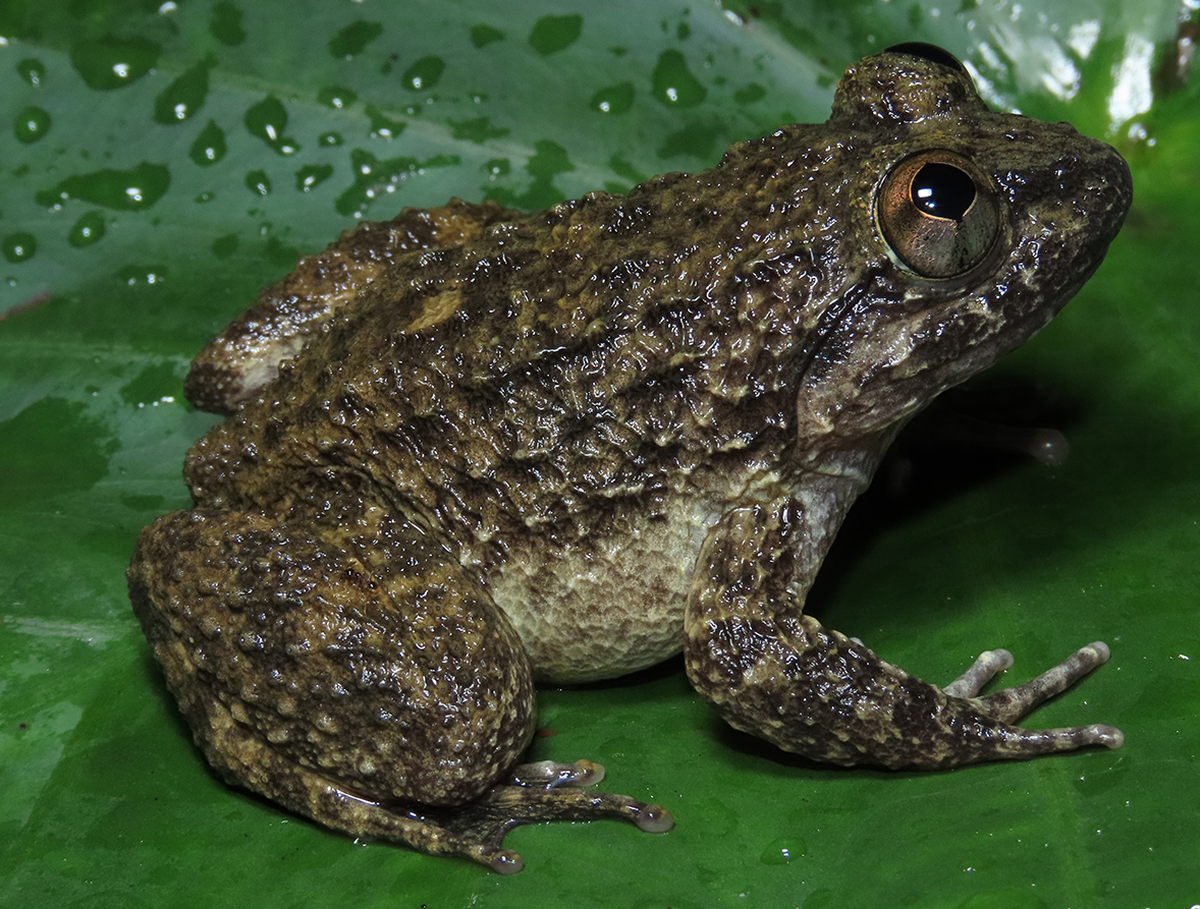
The frog is “stocky” with “stout” and “short” limbs and “slender” fingers, researchers said.
Its body is about 2.2 inches long and covered with mottled bumps, according to the study. The rest of its skin is “wrinkled” and rough.
The frog’s back is “greenish-brown” with irregular dark spots, and its underside is mainly white and gray, except for its groin, which is “nearly translucent with thin yellowish blotches,” according to the study.
The species was named Limnonectes maanyanorum, referencing the Dayak Maanyan ethnic group that lives in the region, researchers said.
In the local culture, they call the frog “Senteleng Watu,” which translates to “rock frog” in English. Scientists gave the frog the common name the Maanyan creek frog.
The second new species is slightly lighter in color compared to the Maanyan creek frog.
Limnonectes nusantara was named after Nusantara, the “proposed new capital of Indonesia,” according to the study. The local people call it “Lampinik,” and researchers gave it a common name of the Nusantara creek frog.
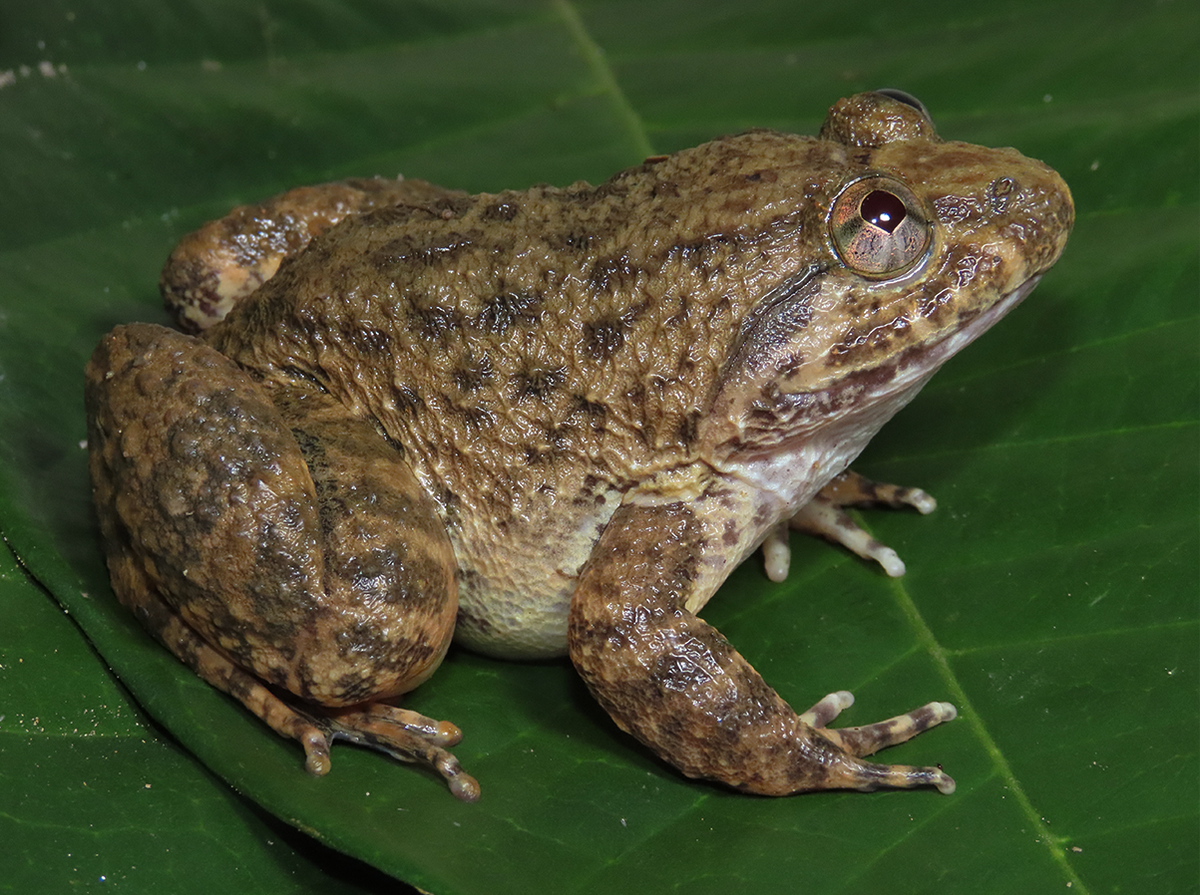
The new species was found along a rocky stream above the water and on the ground, and the frogs are “rarely seen in the water,” researchers said.
The frogs are considered “medium-sized” at 2.5 inches, according to the study, and the skin of their legs is “densely covered by small warts and scattered with low large warts.”
They are also “stocky” with “stout” limbs, but their fingers aren’t as slender as the Maanyan creek frog.
The Nusantara creek frog is “yellowish-brown” in color, with dark spots and brown bands. Their throat is white but their abdomen has a yellowish tint, according to the study.
“Meratus Mountain Range in southeastern Borneo is critical habitat for numerous endemic herpetofauna species,” researchers said. “However, this mountain range faces high pressures from habitat degradation due to factors such as deforestation, agricultural expansion and mining activities. The relocation of Indonesia’s new capital near this region presents additional challenges, as urbanization may lead to a reduction in the natural habitat of many species.”
Both new species were found along the southeastern mountains of the island of Borneo, in central Indonesia.
The research team includes Ade Damara Gonggoli, Tomohiko Shimada, Masafumi Matsui, Kanto Nishikawa, Irvan Sidik, Ahmad Muammar Kadafi Achmad Farajallah and Amir Hamidy.
This story was originally published January 31, 2025 at 1:15 PM.