‘Shy’ creature peaks out from safety of coral reef in the Maldives. It’s a new species

Off the coast of the Maldives, the coral reef “twilight zone” is buzzing with life.
This section of reef — categorized as coral reefs at depths between 100 and 500 feet — provides safety and refuge to creatures not found closer to the surface, and holds a wealth of undiscovered biodiversity.
Now, researchers armed with dive tanks and hand nets studying reef twilight zones around the world have discovered a new species, according to a study published Jan. 16 in the peer-reviewed journal ZooKeys.
When divers reached 387 feet deep off a Maldives atoll, they saw a small fish try to hide from them, according to the study.
It was then “seen inhabiting small holes of reef walls at several locations between Rasdhoo and Dhaalu atolls at approximately (328 to 410 feet deep),” researchers said.
Researchers caught the fish and brought it to the surface to test its DNA and confirmed it was a species new to science, according to the study.
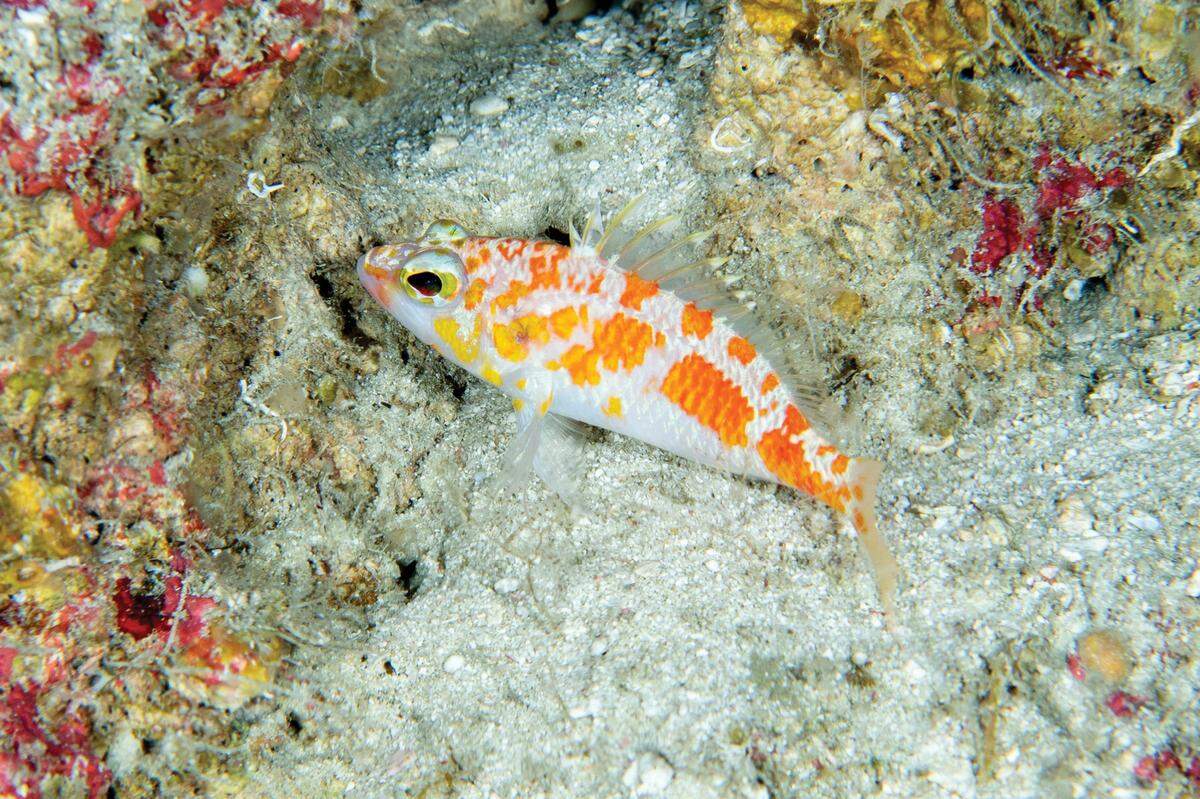
Plectranthias raki, or the shy perchlet, was named after the Dhivehi language word “raki” meaning “feeling shy to confront people,” according to the study.
“This was chosen because Plectranthias are shy by nature and typically hide from us when we are conducting surveys,” researchers said.
The fish is “pinkish-white” with irregular “red-orange” patches on the back two-thirds of its body, according to the study. The patches become lighter toward the fish’s stomach, and there is more yellow around the fish’s mouth.
The holotype, or specimen used to describe the species, is 2.6 inches long, but other fish of the same species found in similar areas were a bit larger, researchers said.
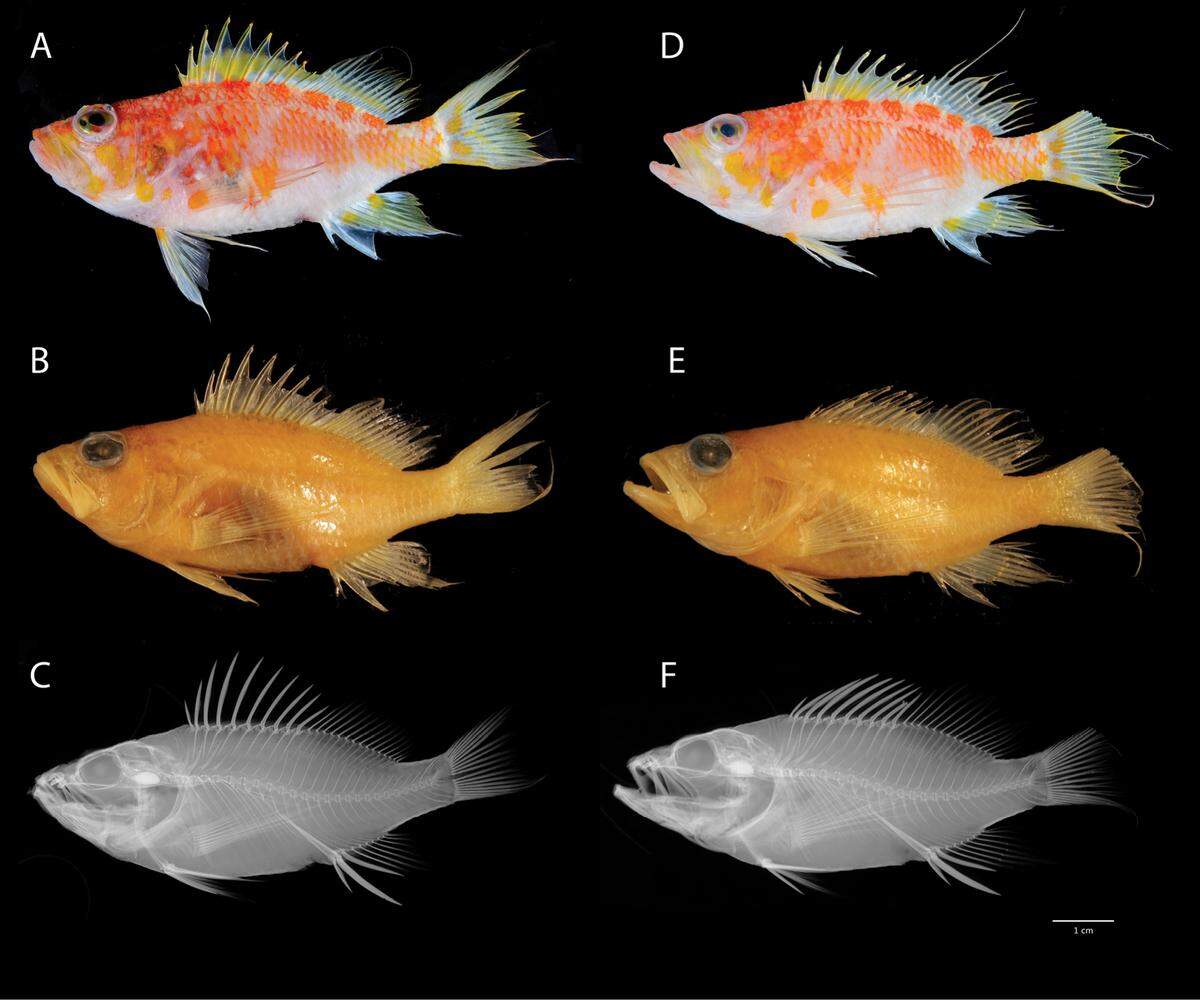
The fish’s color sets it apart from other known species, but it also has fewer rays in its back fins as well as a yellow stripe not found on other related species, according to the study.
There are 66 known species of Plectranthias found in the Atlantic, Pacific and Indian oceans, according to the study.
“In general, they are small ((8 inches) maximum length, but most in the (2-4 inch) range), benthic, feed on small mobile invertebrates, and hide in crevices and holes in relatively deep habitats with complex rocky formations,” researchers said. “Due to their small size and cryptic habits, they are poorly represented in museum collections, and many species have been described based on a small number of specimens or single individuals.”
The fish were found between two atolls, or ring-shaped reef island, in the central Maldives, an archipelago off the southeastern coast of India and Sri Lanka in the Indian Ocean.
The research team includes Bart Shepherd, Hudson T. Pinheiro, Ahmed Najeeb, Claudia R. Rocha and Luiz A. Rocha.