Children discovered buried together may have been victims of ancient epidemic in France
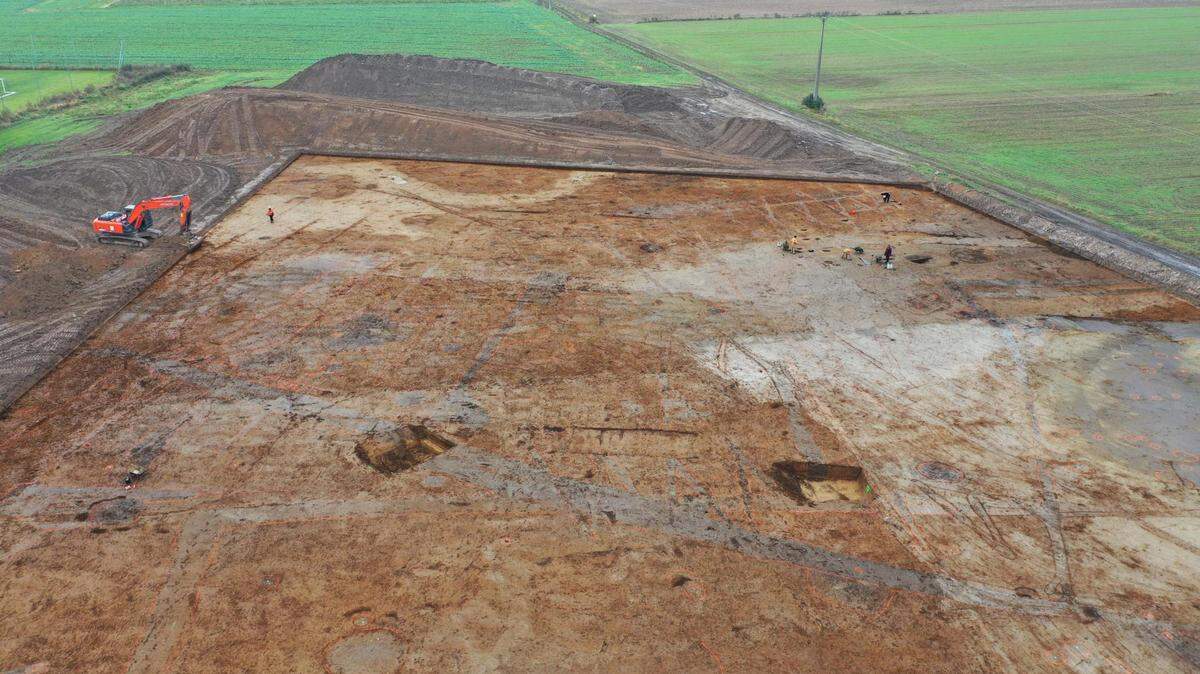
Prior to the development of a subdivision in northern France, archaeologists unearthed a site with ancient weapons and peculiar burials.
In a 7-acre area of Douvrin, the land was covered with mounds and ridges for centuries before it was stripped and leveled for agriculture, according to a Jan. 3 news release from the French National Institute for Preventive Archaeological Research.
The flattening left depressions in the land, researchers said, revealing sediment and soil from thousands of years ago — and their contents.
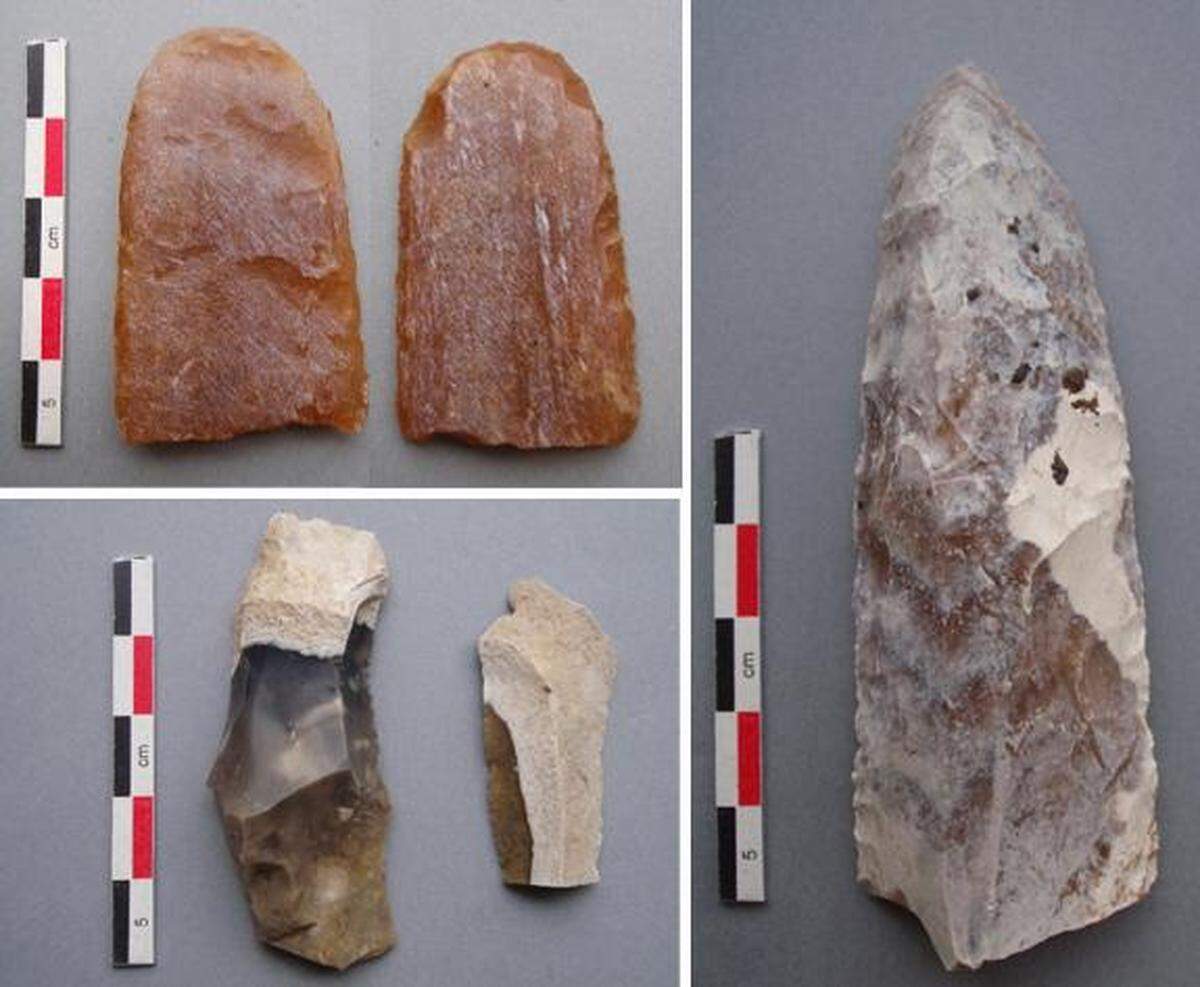
The oldest section of the site dates to the late Neolithic period, around 3,000 years ago, researchers said. In this area, archaeologists found shards of pottery and shaped flint.
The pieces were indicative of the people living in the area at the time, with the elements carefully carved into scrapers, axes and dagger blades, according to the release.
Beginning in the fifth century B.C., the Gauls lived in France, and archaeologists discovered residential areas and a farm likely belonging to the group dating to the Iron Age.
They found ceramics and animal bones, along with furniture in hearths, wells, post holes and waste pits, according to the release.
Ditches surrounded the residential and agricultural areas, researchers said.
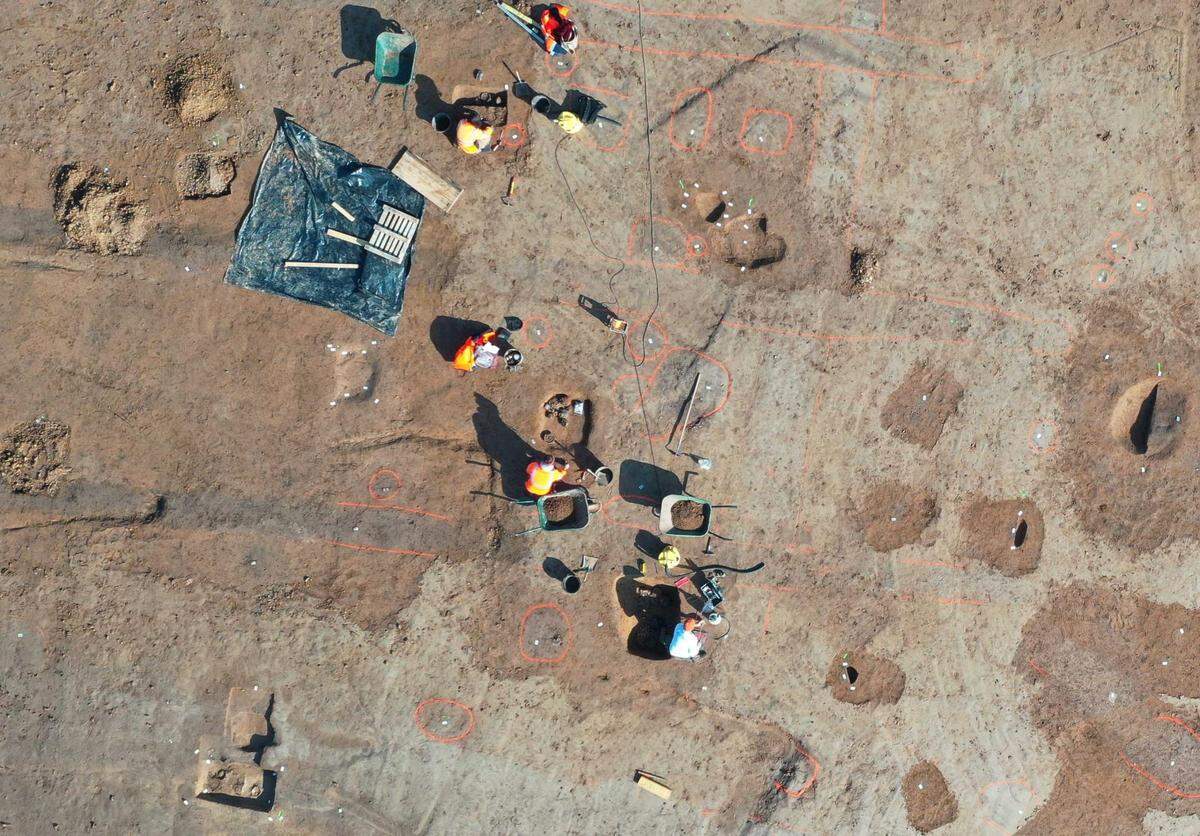
In a newer section of the site, archaeologists found a necropolis from the first century A.D. situated by what would have been an ancient road, according to the release.
There, about 30 graves with cremated remains and bones in chests were found, a typical style for the first two centuries A.D, researchers said.
Most of the groupings of bones belonged to a single person, but six graves held remains of multiple people, including one that was different from the others.
One grave contained the remains of three children all under the age of 3, researchers said. Their combined burial suggests they died at the same time, and archaeologists believe the young children may have been victims of an epidemic resulting in larger casualties.
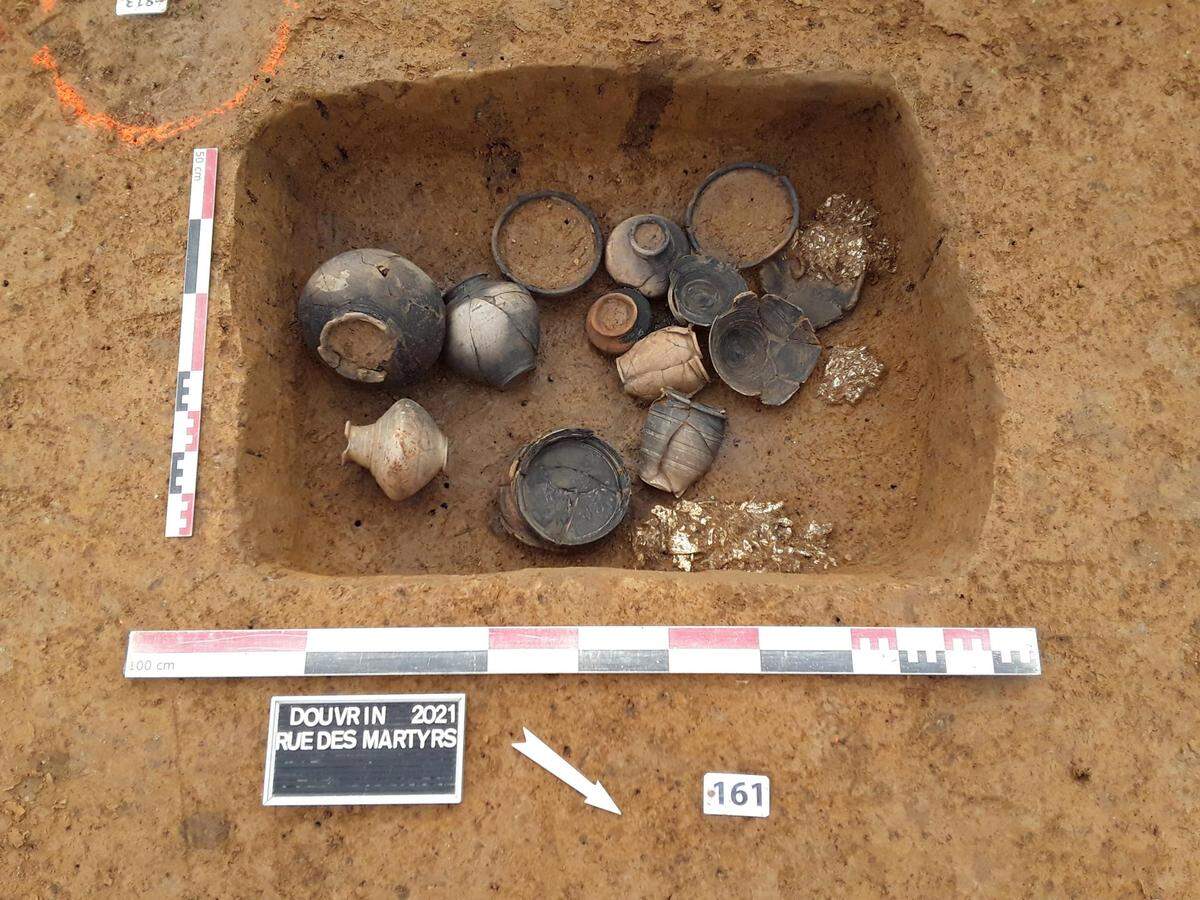
Lots of pottery pieces were found intact, researchers said, and analysis of the remains and their containers will allow the archaeology team to better narrow down the timeline for when the Gallo-Roman farm was occupied and then otherwise abandoned.
Douvrin is in northern France near the western border of Belgium.
Google Translate was used to translate the news release from the French National Institute for Preventive Archaeological Research.