‘Aggressive’ highland creature — infected with parasites — discovered as new species

In the highlands of southern Brazil sat an “aggressive” creature covered in scars and visibly infected by parasites. Something about the animal caught the attention of visiting scientists — and for good reason.
It turned out to be a new species.
Researchers hiked up Serra do Quiriri in 2013 to survey wildlife and stumbled on a “noisy” stream with some vaguely familiar frogs, according to a study published Dec. 31 in the peer-reviewed South American Journal of Herpetology.
The frogs sounded “very similar” to a known species, “but given its coloration and the environment where it was found,” the team “immediately” suspected it could be a new species, co-author Paulo Pinheiro told McClatchy News via email.
Intrigued, researchers caught several of these frogs, analyzed their DNA and studied their physical features, the study said. A pattern began to emerge: The Serra do Quiriri frogs were subtly but consistently different.
Researchers realized they’d discovered a new species: Boana quiriri, or the Quiriri gladiator frog.
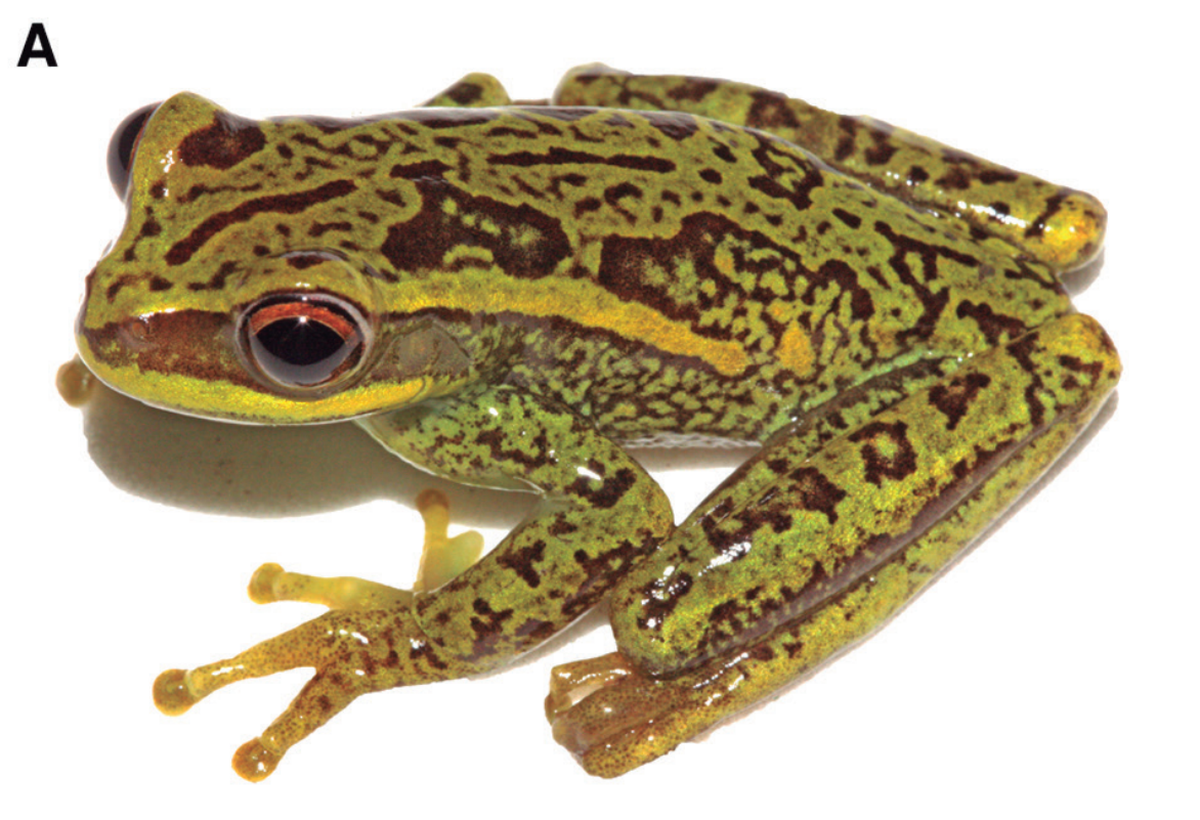
Quiriri gladiator frogs can reach about 1.5 inches in length, the study said. They have “robust” bodies with muscular forearms, “slender” hindlimbs and “long” fingers. Their heads have “large” copper eyes and “thin” lips.
Photos show the “moss” green coloring of the new species. Brown blotches and yellow patches dot its back and limbs. Seen from below, its belly, hands and feet have a “pale green” hue.
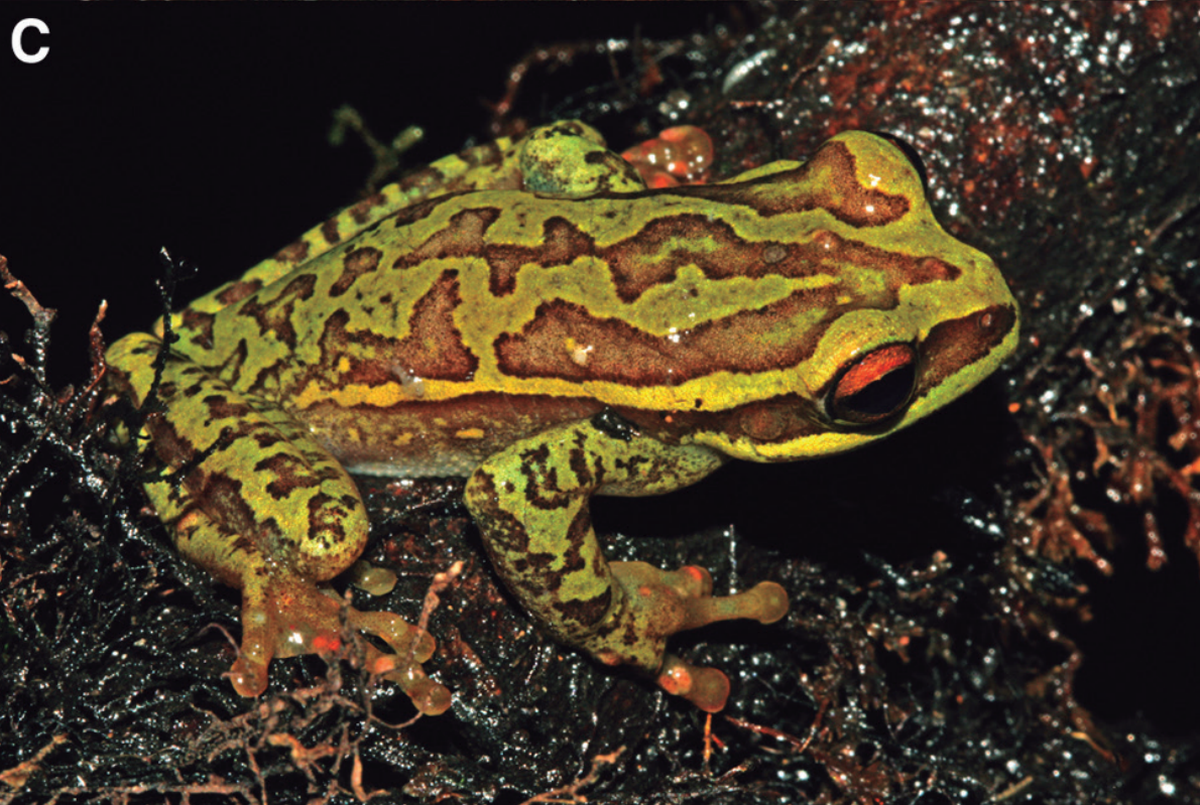
Quiriri gladiator frogs were found “perched on small branches” near a “noisy” stream at an elevation of roughly 4,375 feet, researchers said. Males were heard calling and made three different types of sounds, the meanings of which are unknown.
“Many” of the frogs had parasitic mites “under their skin,” the study said. The infections were externally visible and looked like “orange” spots, a photo shows.
Some of the male frogs also had “several scars” on their backs, a sign of “aggressive behavior” or “combat” between males, the study said.
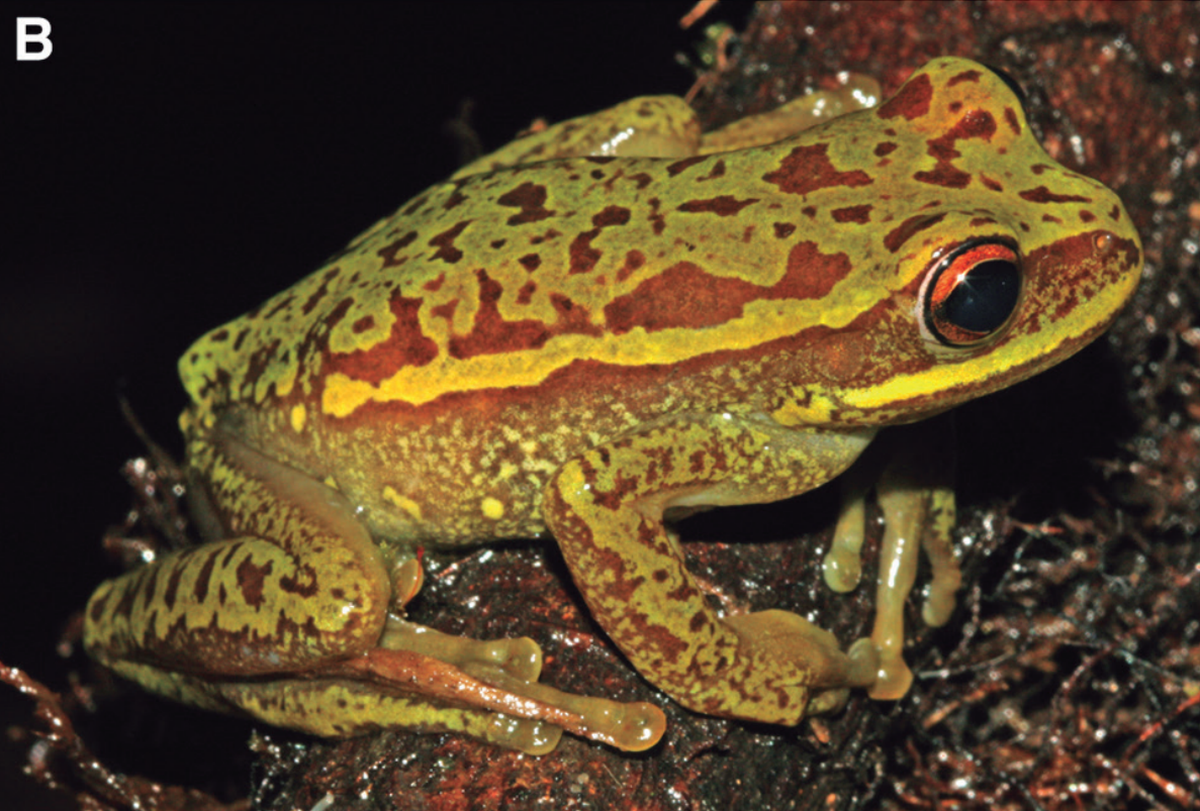
Researchers said they named the new species after Serra do Quiriri where it was discovered and, so far, the only area where it has been found. The mountain is in southern Brazil, near the Atlantic coast and a roughly 600-mile drive southwest from Rio de Janeiro.
A YouTube video shared by Júlio Ettore Hiking in April shows a campsite in the Quiriri highlands.
Serra do Quiriri sits within a protected area, but the new species is “highly vulnerable” due to threats of habitat loss and other human activities, researchers said.
The new species was primarily identified by its DNA, the study said. DNA analysis found the new species had at least 2% genetic divergence from other related frogs.
The research team included Paulo Durães Pereira Pinheiro, Fabiana Dallacorte, Julia Thompson, Estevão Jasper Comitti, Daniel Yudi Miyahara Nakamura and Paulo Christiano de Anchietta Garcia.
The team also discovered a second new species of gladiator frog.