‘Disco toupee’ spotted scurrying on seafloor off Chile. Watch the dazzling creature
Deep below the surface of the ocean, light disappears and colors lose their vibrancy.
In this desolate environment, one creature brings the pizzazz.
An international team of researchers organized through the Schmidt Ocean Institute is studying the Chilean margin, an area off the western coast of Chile where two tectonic plates collide and nutrients from below the Earth’s crust explode into the water.
“The confluence of tectonic plates and terrestrial influences make this margin a natural laboratory for investing chemosynthetic and deep-sea environments,” the institute said in a Nov. 4 Facebook post.
Using a remote operated vehicle, researchers can get an up-close view of the animals that call the margin home. Then, on a recent expedition, they spotted a dazzling creature.
“To describe this polychaete, one simply must use jazz hands — it is the only way to capture this deep-sea worm’s dazzle!” researchers said. A video of the marine worm was posted on social media.
The worm is covered in parapodia, fleshy protrusions from the body, that are in turn covered with bristles known as chaetae, the institute said.
“Some worms are bioluminescent, but this sassy sparkler has protein structures in the bristles that make them iridescent,” according to the institute.
They belong to a family of marine worms called polychaete, meaning “many bristles,” which can be found in nearly every ocean environment around the world, according to Natural World Facts.
The worms can be as small as 0.04 inches or as large as 10 feet long, Natural World Facts says.
Polychaete worms feed on a variety of creatures, and as the bedazzled worm made its way across the seafloor, it sent sea stars scurrying.
Although the worm found off Chile may look like it is off to a party, the jury was split on whether to consider the animal beautiful or terrifying.
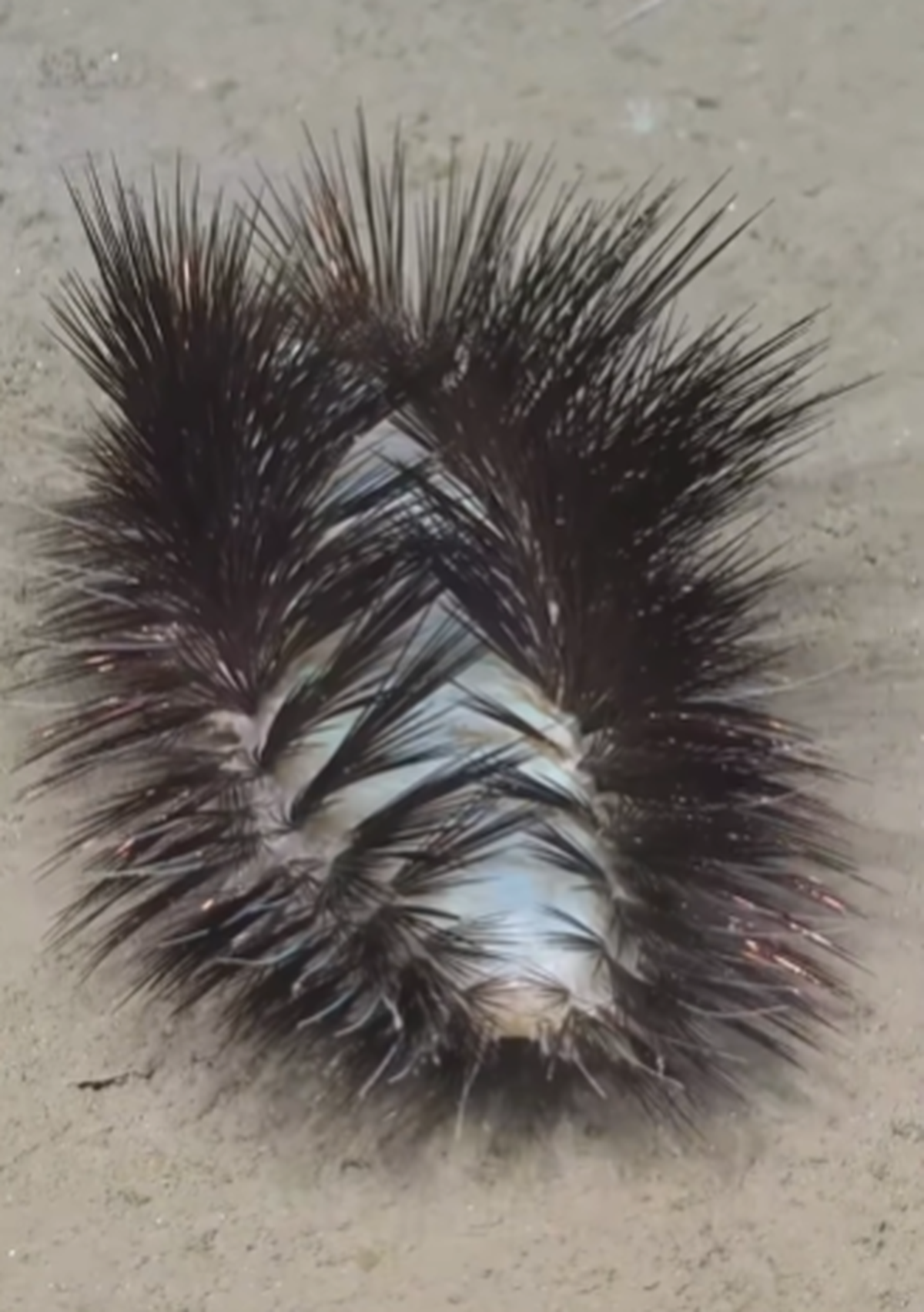
“That thing is hideously gorgeous, or gorgeously hideous,” one person commented on Facebook.
“It looks like a disco toupee trying to escape,” another said.
“Somebody’s fake lashes (are) about to eat that sea star,” another person commented.
“H-to-the-ell no,” another concluded.
The Chilean margin runs the length of South America in the southeastern Pacific Ocean.