Deep-sea creatures — with spiny bodies — discovered in Pacific. See the new species
.jpg "Deep off the Pacific coast of Costa Rica and Mexico, fallen wood provides a home and food to three new species.")
When a tree falls along the coastline or driftwood flows down a river and into the sea, the tree’s trunk and branches haven’t met their final resting place.
Over time, slowly, the wood makes its way to the seafloor, where it has a chance to once again provide a home and life for creatures of the deep.
On the Pacific coast of Costa Rica and Mexico, these wooden oases may appear to be dotted by white flowers. Instead, the little white spots belong to members of sea stars — and newly discovered species.
Three species of wood-associated sea stars were found thousands of feet below the surface by remote controlled vehicles during surveys between 2003 and 2018, according to a study published Nov. 5 in the peer-reviewed journal Zootaxa.
In Costa Rica, the sea stars were found around methane and non-methane seeps on seamounts, an underwater mountain, according to the study.
Other sea stars were found in the Gulf of California in a fracture zone, or valleys that allow cold water to flow from one ocean basin to another, researchers said.
The sea stars were compared to other known species morphologically, or through their physical appearance, and genetically by sequencing their DNA, according to the study. The results proved researchers had three new species in their hands.
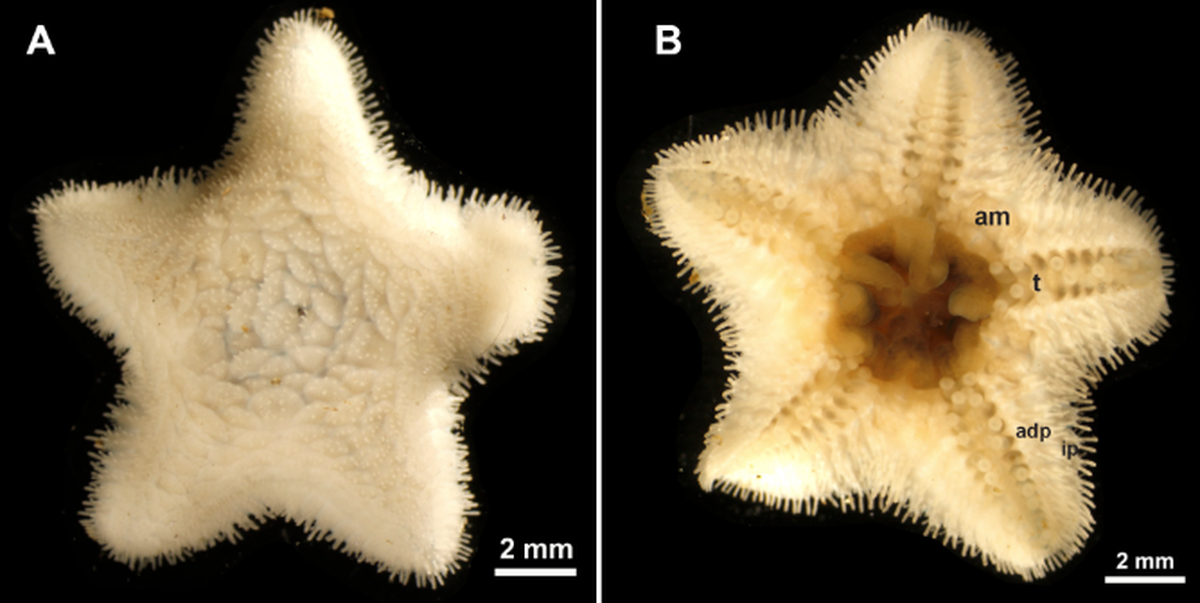
Caymanostella scrippscognaticausa, named after the Scripps family group that helped fund the study, has a pentagonal body and “sparsely distributed” spines, according to the study.
Small plates in various sizes are arranged irregularly on the star’s top, creating what looks like the top view of a flower.
On the star’s back side, tube feet extend down each arm of its body, allowing the creature to move along the wood and seafloor, researchers said.
“Specimens of Caymanostella scrippscognaticausa sp. Nov. vary greatly in size, likely representing different life stages,” according to the study.
The new species was found off the coast of Costa Rica at a depth of around 3,200 feet, though researchers believe it may live in even deeper waters.
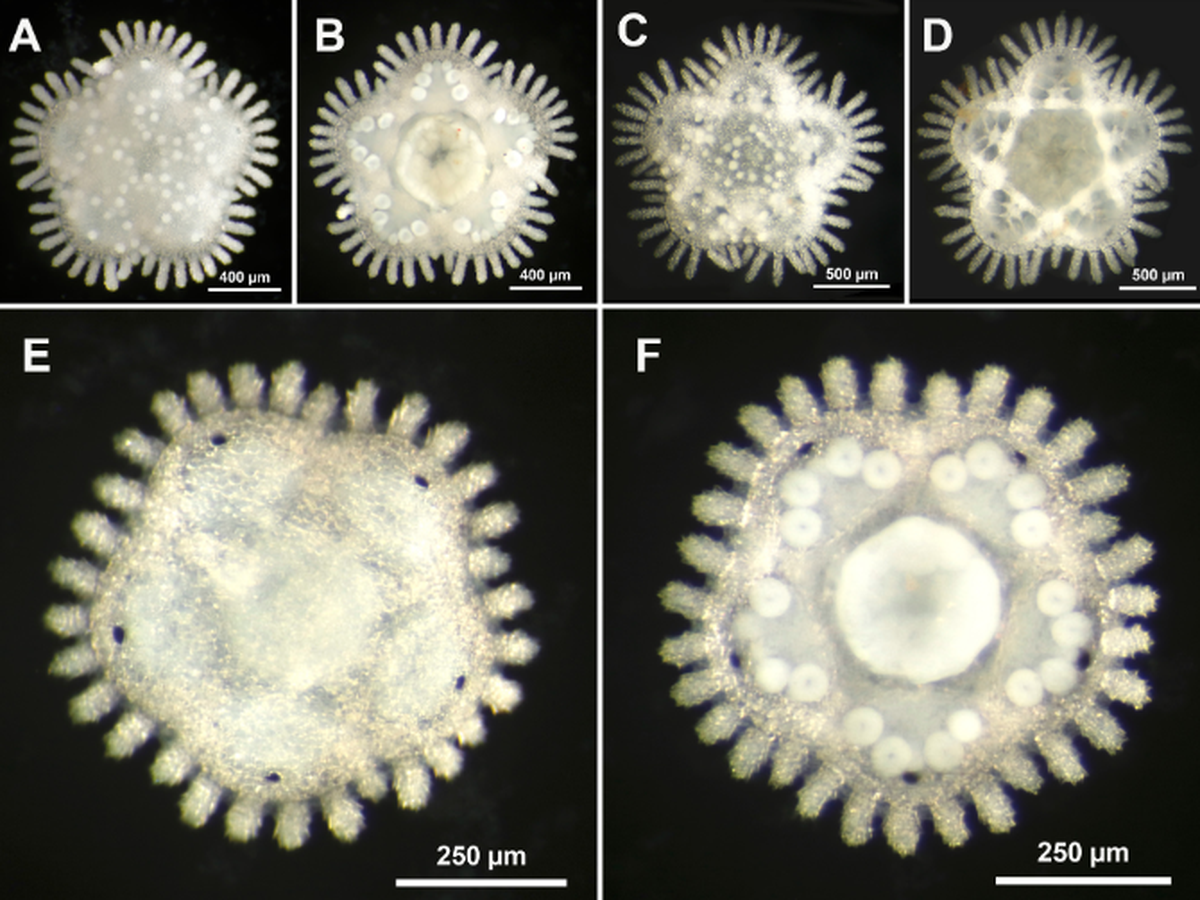
Caymanostella davidalani, named after researcher David Alan Lewis, looks similar to C. scrippscognaticausa, but it has small spines lining the edge of its body.
Compared to the other species, the spines are “thorny, narrow and elongated,” researchers said.
The sea star has “broad” arms with “tightly overlapping” plates, according to the study.
Researchers said the “tube feet can be transparent in live specimens,” and the feet found on the smallest sea star formed “almost a circle outlining the body (edge).”
The sea star was found off the Pacific coast of Costa Rica at a depth between 3,200 feet and 6,200 feet, according to the study.
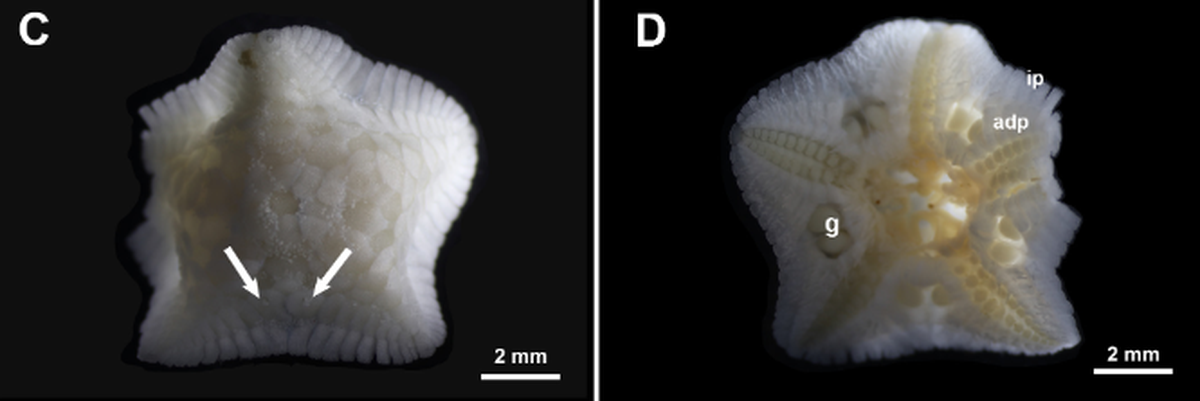
Compared to the other two new species, Caymanostella loresae has “short” spines that are covered with a “thick” skin along the edge of its body, researchers said.
The species is named after Lores López Gómez for her “unwavering commitment to advancing gender equality and her compassionate sense of justice,” according to the study.
This species also has limited variation, compared to the other two, and all of the fully mature animals looked physically the same, researchers said.
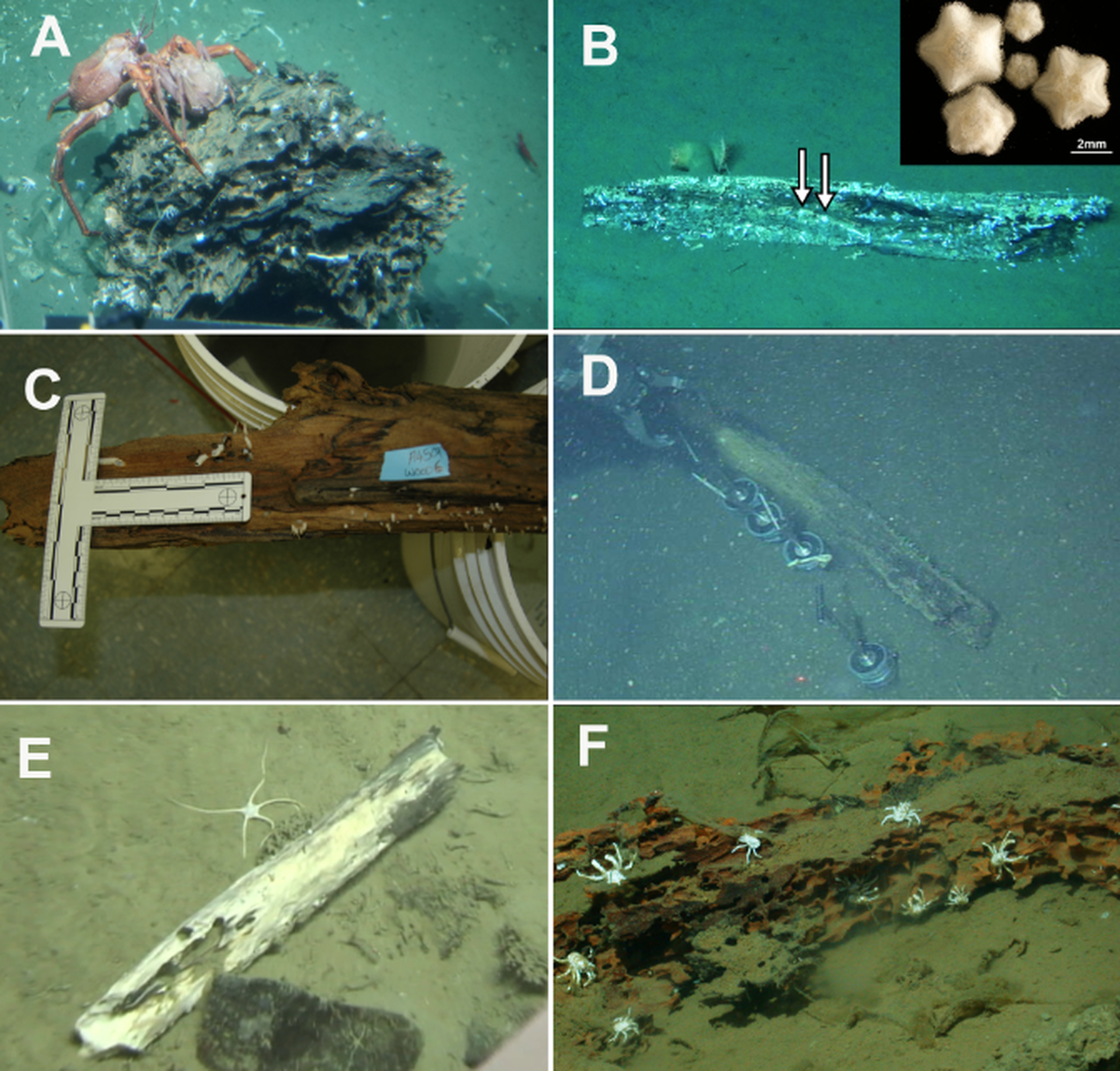
“Large organic falls, such as wood falls, provide habitats for various organisms in the deep sea,” researchers said. “By establishing energy-rich environments in the otherwise nutrient-limited sea floor, they can sustain productive communities of both specialist and opportunistic organisms for relatively long periods, spanning years and even decades.”
While some species rely on the wood for both shelter and food, researchers are unsure if the sea stars also have another source of food aside from the fallen wood, according to the study.
The research team includes Zihui Shen, Nicolas Mongiardino Koch, Charlotte A. Seid, Ekin Tilic and Greg W. Rouse.