Big-headed flying creatures — with spotted bodies — found in East Asia. See new species

What do you do if you see a spotted lanternfly in the United States? Wildlife experts will tell you to kill it, without hesitation or remorse.
The invasive insect can be found in 17 states after it was likely shipped from its natural habitat in Asia to Pennsylvania in 2014, according to the U.S. Department of Agriculture. Spotted lanternflies can wreak havoc on plants when they eat the leaves and deposit a trail of sticky, mold-causing fluid.
Now, some of their relatives have been discovered as new species in their original East Asia home.
In Vietnam and Cambodia, researchers scanned the edges of grassy clearings on the hunt for lanternflies, according to a study published Sept. 25 in the peer-reviewed European Journal of Taxonomy.
They found them sitting on leaves and stems, feeding on plants and “leaving some characteristic white wax deposits on the stems,” researchers said.
The lanternflies belong to the Zanna genus, and each has neutral coloring on their bodies with black spots on the upper wings and body, according to the study. But the four new species also have unique features.
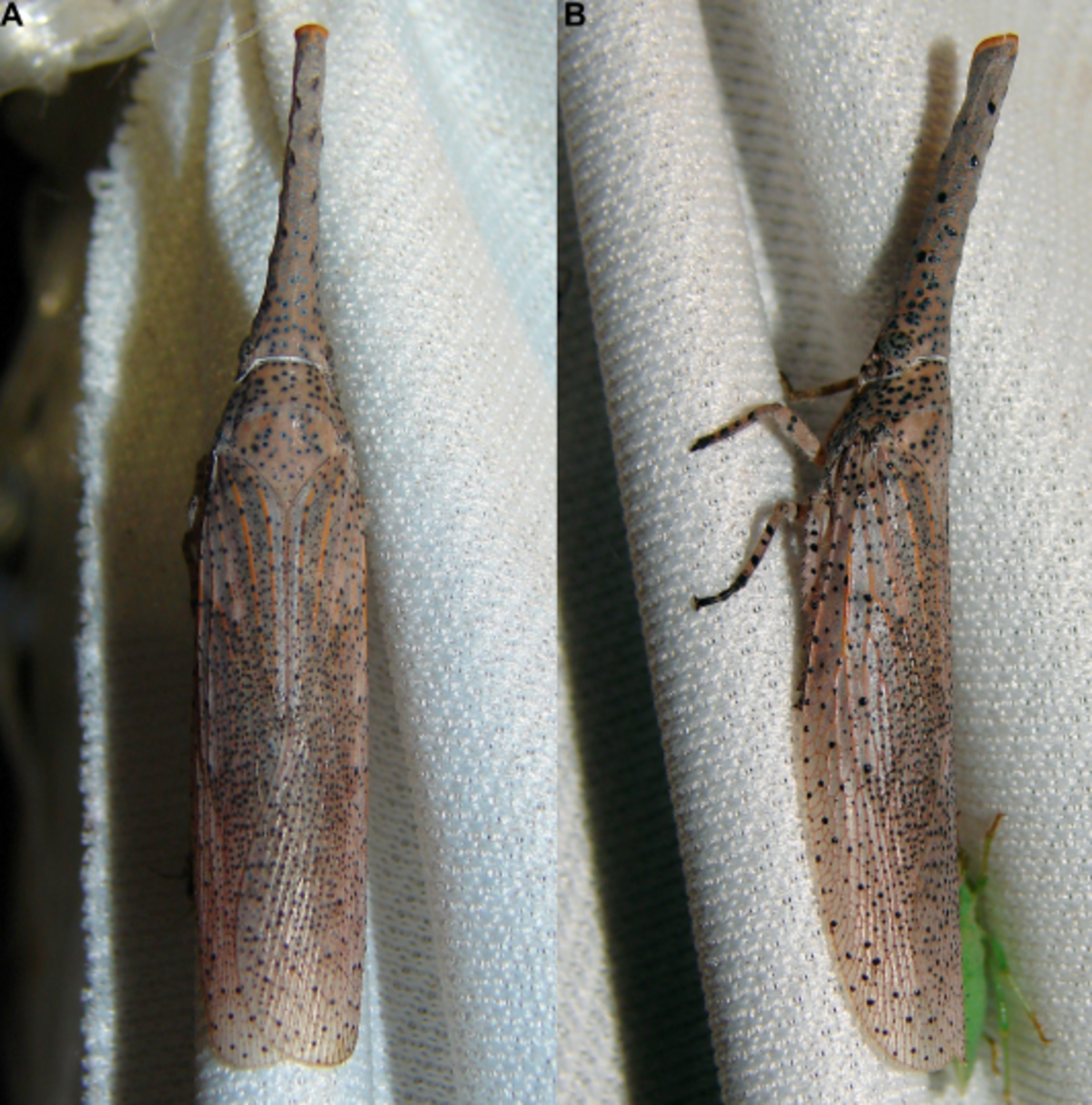
Zanna bidoupana was discovered in Bidoup-Nui Ba National Park in the highlands of Vietnam, researchers said, and was caught near the grassy clearing of a field station using a vapor light trap.
The insect has the elongated head that identifies the Zanna genus, with its head making up 35% of its total body length, according to the study.
Its body is a light brown color, and its legs are a “pale pinkish brown,” researchers said. The hindwings, or smaller wings underneath the spotted wings, are a “milky white” with darkened veins.
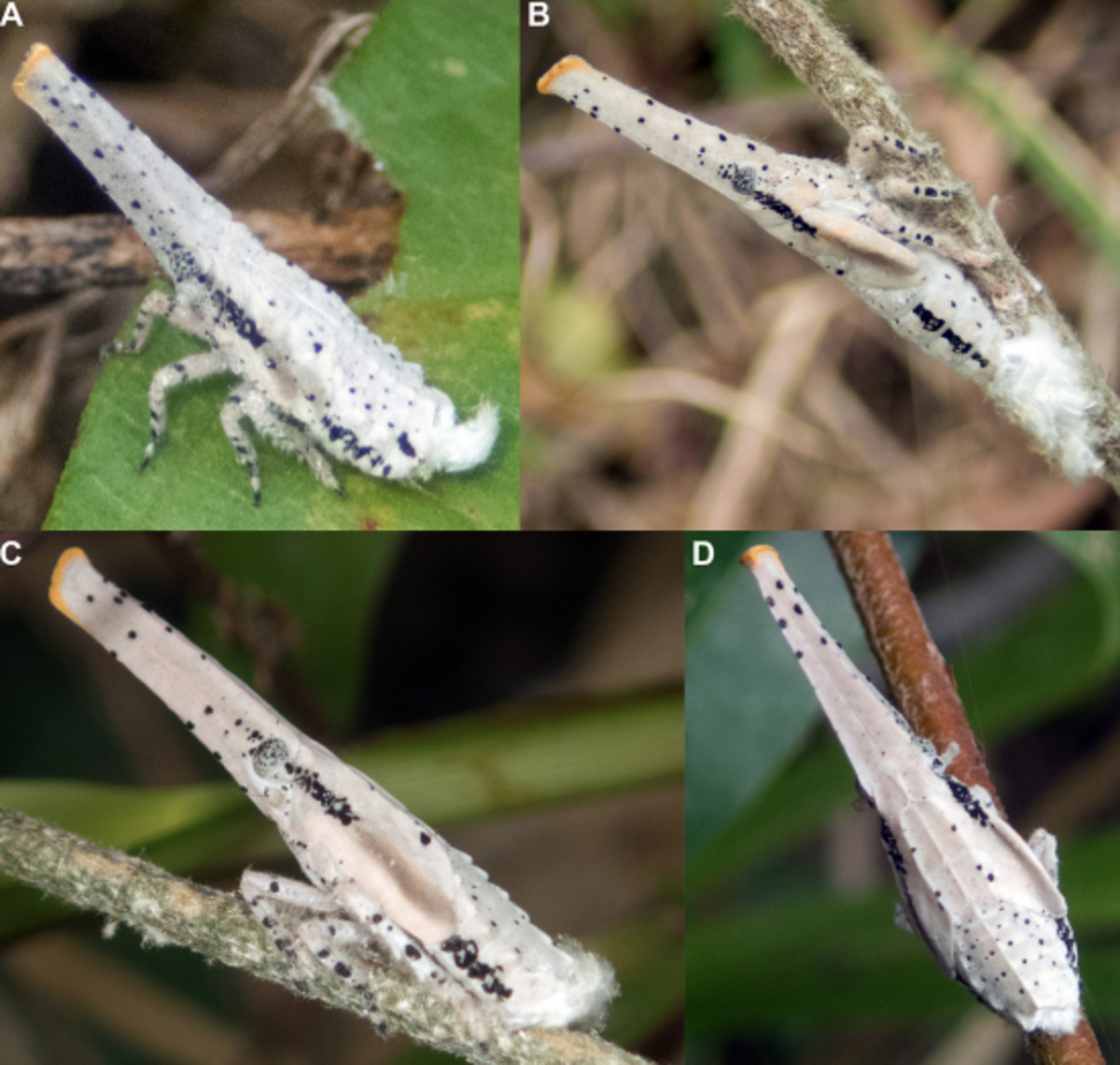
Zanna chartieri was named after Gerard Chartier of Cambodia, for “his enthusiastic involvement” in collecting the specimens and documenting their biology, researchers said.
They were found by Chartier on the grass and plants surrounding the Rainbow Lodge in Tatai, Cambodia, and in significant numbers.
“They were present in high density, with up to 40 nymphs (non-adult) at different stages, four emerging adults and two adults, counted in an area approximately (3 feet by 5 feet),” researchers said.
Z. chartieri has a bigger head than Z. bidoupana, constituting 41% of the insects’ total body length. The long, trunk-like head also has larger black spots, some that create bumps along the end of the head, according to the study.
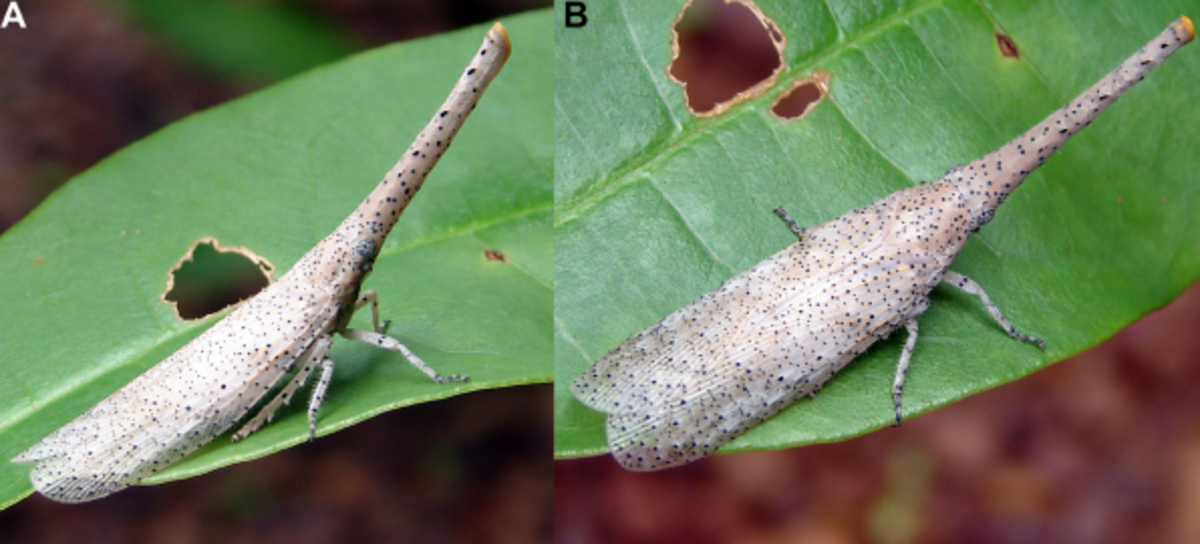
Zanna kusamae has similar protruding dots and black pitting on its head, researchers said.
The pattern earned the species its name, honoring Japanese artist Yayoi Kusama “whose artwork, extensively covered in dots, is reminiscent of the pattern on the body,” researchers said.
This species’ head is 39% of its total body length, and it has slightly darker hindwings.
The insect was discovered “sitting on a leaf of a short plant along a gravel road near the clearing around” a field station in Dong Nai, Vietnam, according to the study.
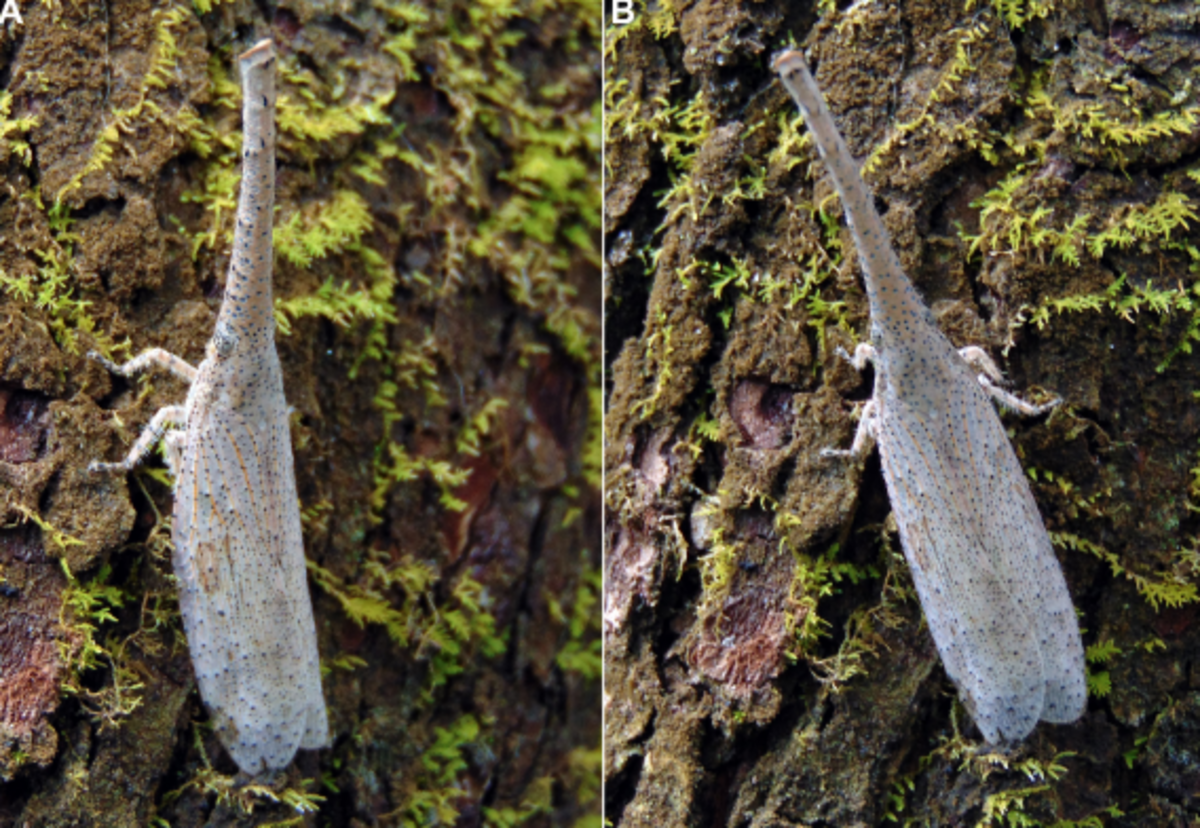
The last species described by researchers, Zanna limbourgi, was named after the authors’ “great (although still a bit fat…) colleague Pol Limbourg who spotted the type specimens on a tree trunk in Phnom Aural Wildlife Sanctuary,” in Cambodia.
This species has the largest head of the four, making up 43% of the insects’ total body length, according to the study.
The black dots on its body are smaller and more densely packed, and the insects’ entire body can be lighter in color, researchers said.
The area where the species was found had lots of human activity, according to the study, and was heavily disturbed when the insect clung to a tree trunk.
The four new species were found in southern Vietnam and western Cambodia.
While not part of the same genus, all four new species are in the same family as the spotted lanternfly called Fulgorida, or planthoppers.
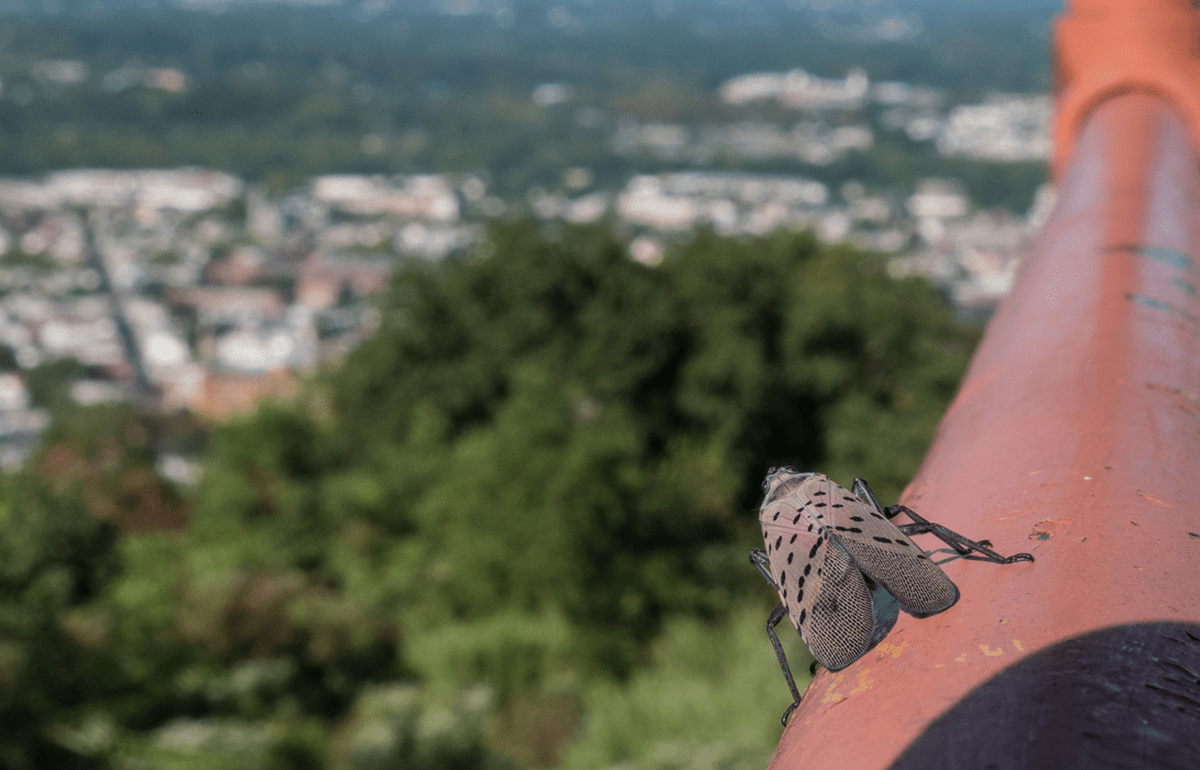
Spotted lanternflies are about 1 inch long with gray forewings and the identifiable black spots, McClatchy News reported.
In the years since their introduction to the U.S., they have posed a threat to crops, particularly grapes, cherries, almonds, apples and certain species of trees, according to the United States Department of Agriculture.
In the northeast, wildlife officials placed glue tape traps, but instead caught birds with deadly consequences, The Raptor Trust told McClatchy News in 2022.
The spread of the insect is expected to continue and threaten new regions and plants of the U.S.
In March, spotted lanternfly eggs were attached to an art piece being shipped from New York to California, just as the insects arrived in the U.S., according to the California Association of Winegrape Growers.
The lanternflies would pose a serious threat to the massive wine industry in California, the association warned, and the shipment was denied entry into California and was rerouted to Nevada, where dozens more egg masses were found.