
Scientists intend to crash a satellite to record its ‘fiery last moments,’ agency says
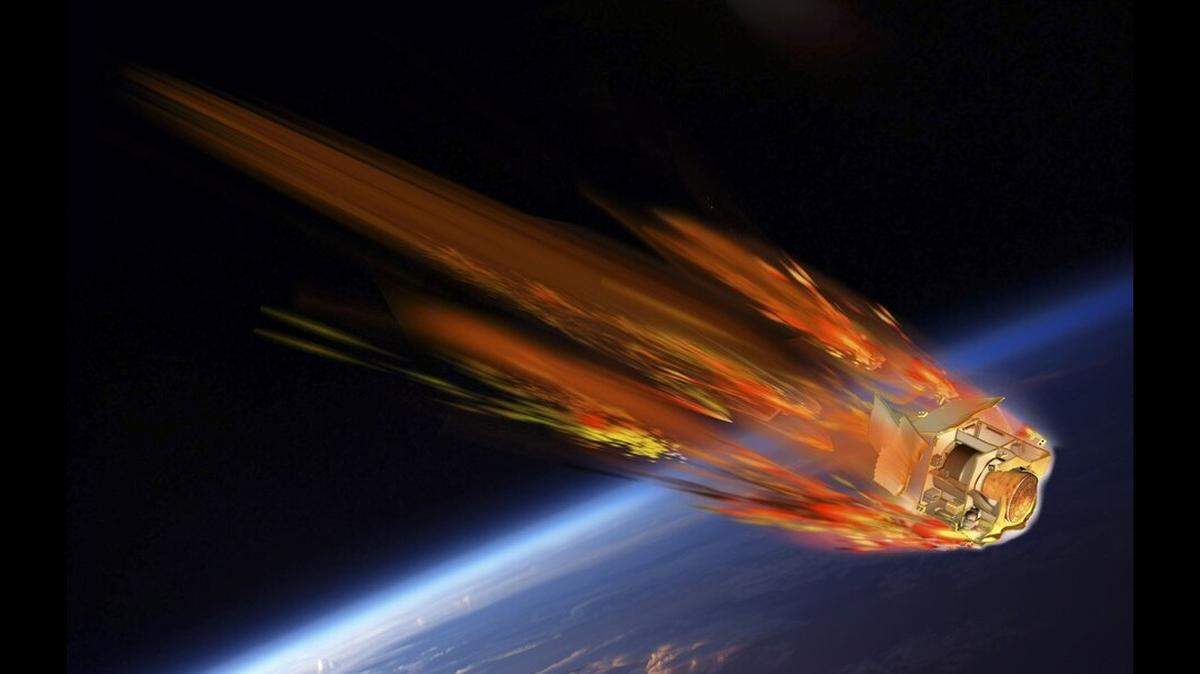
A 440-pound satellite the size of a washing machine will intentionally crash into Earth in dramatic fashion, according to the European Space Agency.
The exact cost of this colossal act of self-destruction will be in the millions, but scientists insist it’s for the good of mankind.
To put it simply, they want to know what it’s like to be in free fall from space ... tumbling, spinning and on fire.
“Over the nearly 70 years of spaceflight, about 10 000 intact satellites and rocket bodies have reentered the atmosphere with many more to follow. Yet for such a ubiquitous event, we still lack a clear view on what actually happens to a satellite during its fiery last moments,” the agency said in a news release.
“ESA is preparing the Destructive Reentry Assessment Container Object (Draco) mission that will collect unique measurements during an actual reentry and breakup of a satellite from the inside. A capsule especially designed to survive the destruction will transmit the valuable telemetry shortly after.”
A total cost has not been released, but an initial check for $3.3 million has been cut to start development of the satellite, officials said.
The launch will be in 2027 and the goal is for the rocket to reach a maximum altitude of 621 miles, then fall back to Earth and land in the ocean.
Two hundred sensors and four cameras will record the satellite’s destruction. Among the challenges is creating an “indestructible pod” for data collection that will parachute to the surface, officials said.
The crash-and-burn mission is crucial because labs have been unable to “faithfully mimic the incredible velocity, amount of force ... and motions of an uncontrolled reentry,” the agency said.
Data collected by the satellite is needed for the agency’s ambitious goal to eliminate the space-bound garbage dump surrounding Earth by 2030.
“Satellites can be built for controlled reentries, or with extra effort some may go through assisted reentries or targeted reentries,” the agency said. “We need to gain more insight into what happens when satellites burn up in the atmosphere as well as validate our re-entry models.”
Scientists launched a similar mission in 2013, but the Draco project is more comprehensive. Its sensors will measure “temperatures, gauging the strain on the various parts of the satellite itself, and register the surrounding pressure,” the agency said.
“Four additional cameras will be pointing at the spacecraft to watch the destruction and collect contextual information,” officials said.