Ancient culture — isolated and violent — also had deadly infectious disease in Spain
During the medieval period, the Iberian peninsula was swirling with political, social and religious ideas, a true “melting pot” of culture.
Distinct communities grew from this confluence, including the settlement of Las Gobas.
“Situated in northern Spain, the rural necropolis of Las Gobas spans a time transect from the 7th to 11th centuries, encompassing individuals who lived both before and during the Islamic control of most of Iberia,” researchers said in an Aug. 28 study published in the peer-reviewed journal Science Advances.
The community built their home into caves, carving not only their living spaces but a church into the stone, according to an Aug. 28 news release from Stockholm University.
Now, excavations and analysis of the dozens of burials found at the site give an inside look into the group.
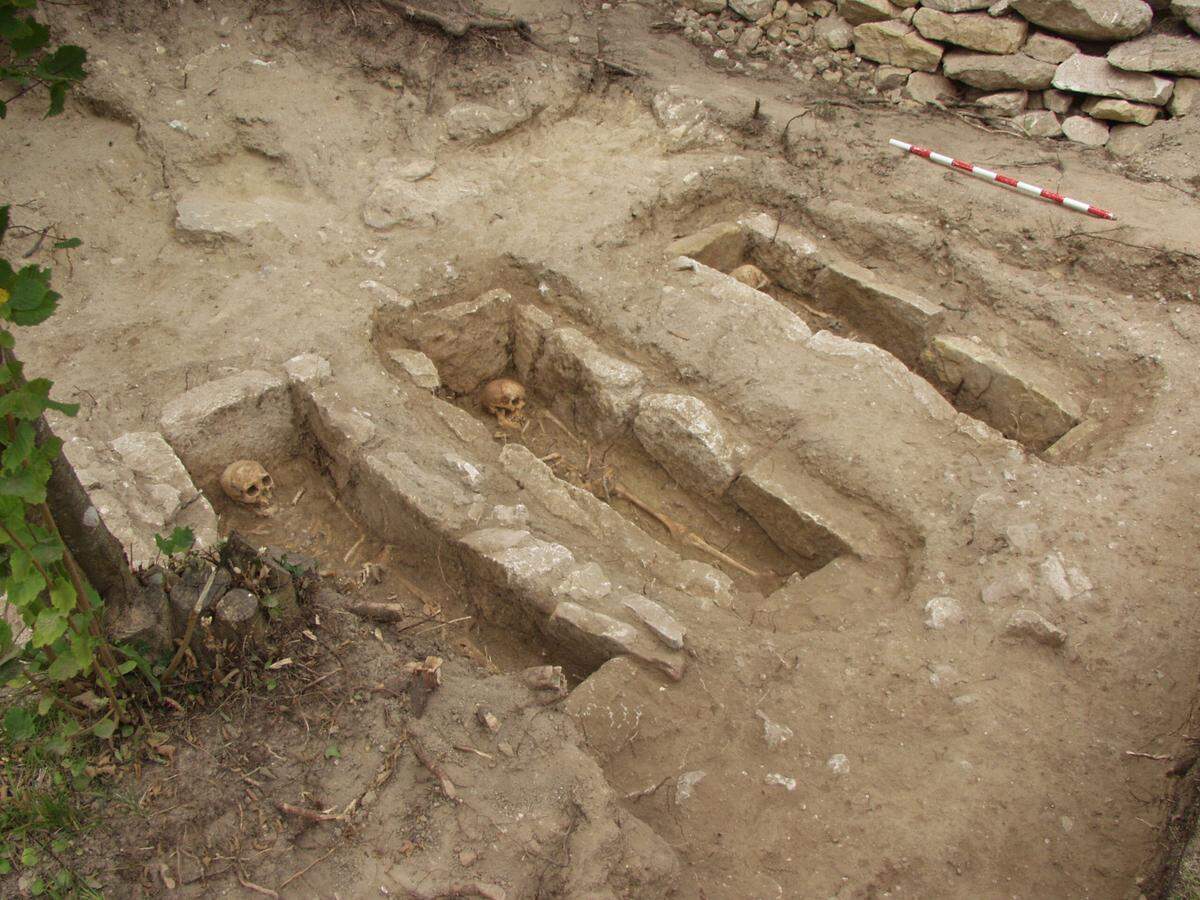
In the first phase of the analysis, representing the oldest burials, researchers recovered 21 graves dated between the years 610 and 907, including 14 males, 5 females and 2 infants, according to the study.
When researchers analyzed their DNA, they found all but six were related. Two men were of first-degree relation, likely full siblings, and both were related to another individual by a third-degree relationship, which can include cousins or great-grandparents, according to the study.
There were also a set of paternal cousins and a family trio in which the parents had a son who was later buried in another part of the necropolis, representing phase two, researchers said.
As the researchers moved from the older graves to the newer ones, dated from the years 979 to 1036, they found that there was an “increase of genetically related individuals,” suggesting the group was reproducing almost exclusively among themselves.
“Our findings indicate that this community stayed relatively isolated for at least five centuries,” study author Ricardo Rodríguez-Varela said in the release.
The site is located just north of where the Islamic rule of Iberia stopped, but researchers “found relatively low levels of North African and Middle Eastern ancestry compared to other medieval individuals from the Iberian peninsula, and (researchers) did not observe a significant increase in these ancestries after the Islamic conquest of Iberia,” Varela said.
And, like any family, there was conflict.
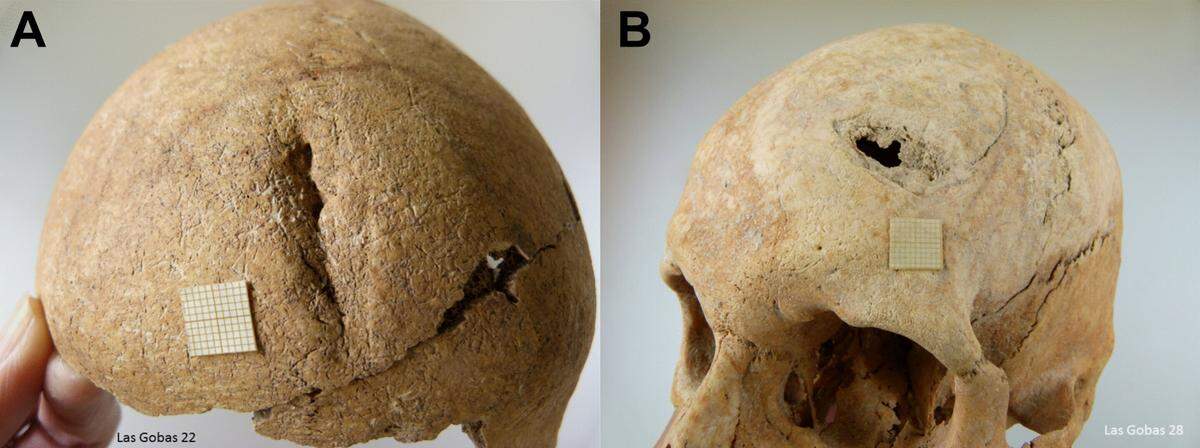
Two related individuals, called 22 and 28, lived at the beginning of the group’s occupation of the cave space, according to the study. Both skulls of these individuals “present several traumas caused by sword(s) on their skulls,” researchers said.
At least one of the individuals died from their massive head wound, according to the study.
The evidence of violence was restricted mostly to the older graves, suggesting that while the community may have been started by a small group of elite members with military experience, it later grew to be a rural farming community, researchers said.
This group may have also played a key role in the spread of smallpox into the Iberian peninsula, according to the study.
One individual from the more recent burials had the variola virus, which causes smallpox, according to the study. The strain of virus matched others found during the Middle Ages in Scandinavia, Germany and Russia.
“It is amazing how much information we were able to gather on this group of people through our archaeogenetic investigation. An endogamous group, familiar with violence, appears to have established itself in Las Gobas during the 6th or 7th century,” study author Anders Götherström said. “By the 10th century, smallpox seems to have affected Las Gobas, likely spreading through Europe rather than via Islamic routes, as was previously theorized for how smallpox entered Iberia.”
The research team also included Reyhan Yaka, Zoé Pochon, Iban Sanchez-Pinto, José Luis Solaun, Thijessen Naidoo, Benjamin Guinet, Patxi Pérez-Ramallo, Vendela Kempe Lagerholm, Violeta de Anca Prado, Cristina Valdiosera, Maja Krzewińska, Lourdes Herrasti and Agustín Azkarate.
Las Gobas is in northeastern Spain, southwest of the modern-day border with France.