2,400-year-old pebbled floor — depicting naked figures — discovered in Greece. See it

When archaeologists discover buildings from centuries past, it can sometimes be hard to tell what purpose they might have served. Crumbled walls and shattered floors mean researchers have to put it back together piece by piece, hoping to get a glimpse into the past.
Other times, it’s a little more obvious.
During the installation work of a new water pipeline system in Eretria, Greece, the floor of an ancient house was discovered along a municipal road, according to an Aug. 3 news release from the Ministry of Culture.
In the center of the floor, a pebbled mosaic was still inlaid with the stone depicting two figures, the release said.
With pointed ears and tails, the figures were satyrs, naked and dancing. This building was a place to party.
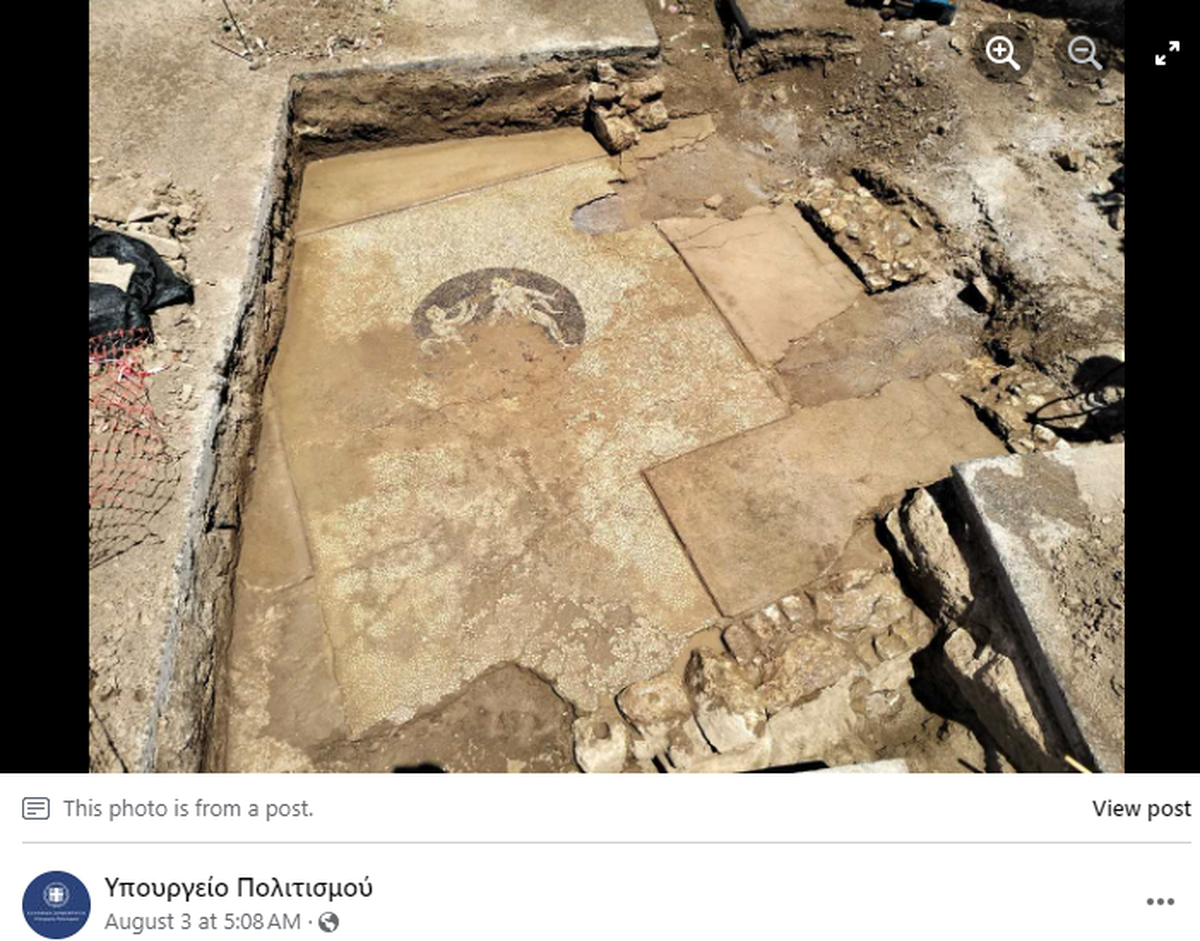
The home was likely built during the fourth century B.C. in what would have been the social core of an urban ancient city, according to the release.
Nearby, a sanctuary for the god Apollo and a house of mosaics had previously been excavated, officials said, and the building exhibited similar architectural features.
A raised mortar floor along three sides of the room would have been used to place beds or recliners, and suggest the room was used for large gatherings of men and banquets, according to the release.
The images of the dancing satyrs connect figuratively to how the space was used, officials said, and suggest the home was used for celebrations.
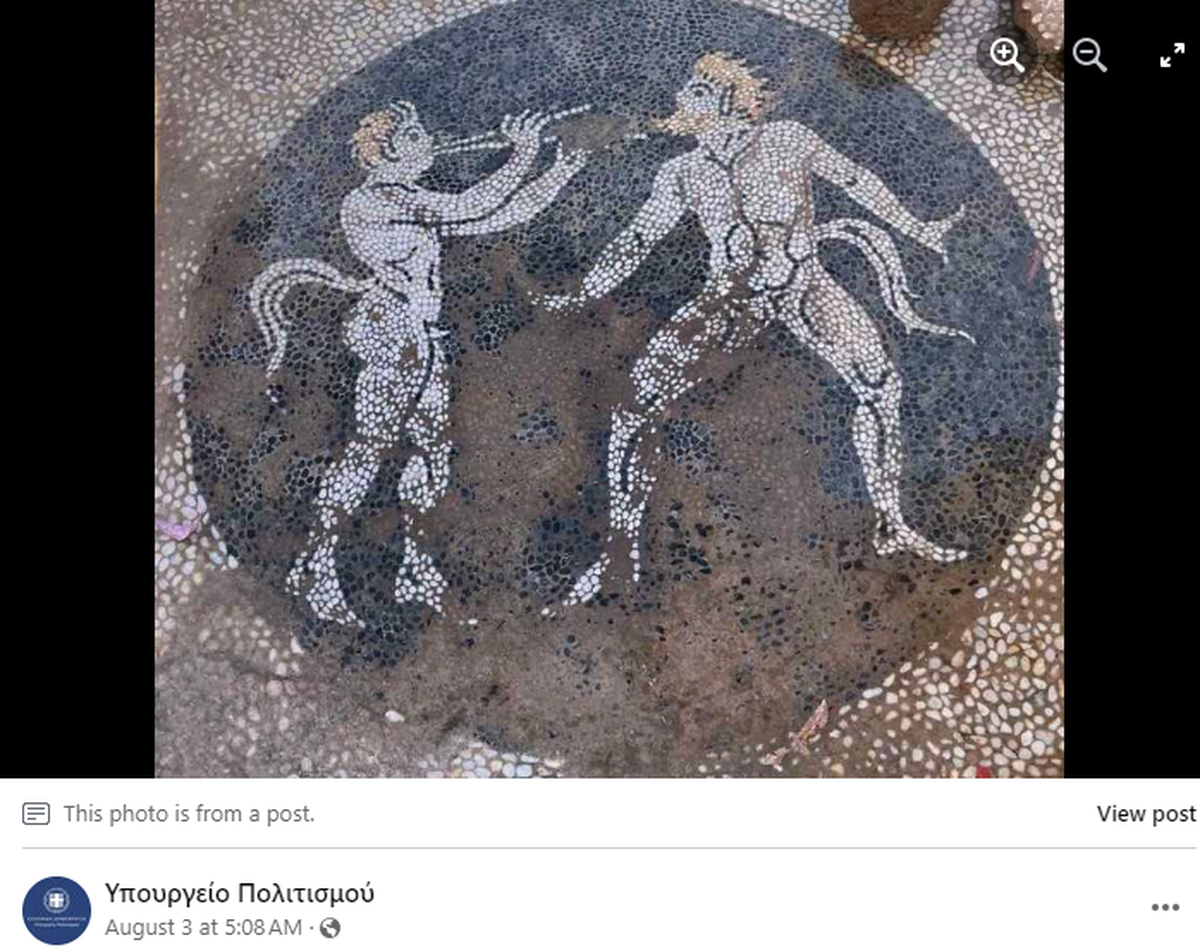
The mosaic figures themselves are in excellent condition, according to the release, and show a young satyr playing an instrument for the older, bearded satyr to dance.
The image uses white, black, red and yellow pebbles, lending realism and vitality, officials said.
Built around 2,400 years ago, the building was used until around the fifth or sixth century A.D. before it was abandoned, the release said. It was then later used as a cemetery.
Five tombs were dug into the embankment of the room, some with ceramic-tiled roofs, and five others were found on the outside of the room.
Officials said the water line has been rerouted and conservation efforts have begun to preserve the mosaic.
Eretria is a coastal town facing Attica across the South Euboean Gulf, about a 60-mile drive north from Athens.
Google Translate was used to translate the news release from the Ministry of Culture.