Oldest manuscript of Jesus’ youth decoded for first time in Germany. What does it say?

At the Hamburg Carl von Ossietzky State and University Library in Germany, a small fragment of papyrus sat untouched for decades.
Just about 4 inches long and 2 inches across, the fragment is tattered, weathered and brown.
Across the page, ancient Greek symbols are written messily in uneven lines.
Now, it’s been translated for the first time — and is a monumental discovery.
The piece belongs to the oldest known manuscript of the Infancy Gospel of Thomas and depicts the early life of Jesus Christ, according to a June 4 news release from Humboldt University of Berlin.
The papyrus has 13 lines of Greek letters, 10 letters per line, and originates from Egypt, researchers said. It was left untouched when previous researchers thought it was a piece of mundane writing.
“It was thought to be part of an everyday document, such as a private letter or a shopping list, because the handwriting seems so clumsy,” researcher Lajos Berkes said in the release. “We first noticed the word Jesus in the text. Then, by comparing it with numerous other digitized papyri, we deciphered it letter by letter and quickly realized that it could not be an everyday document.”
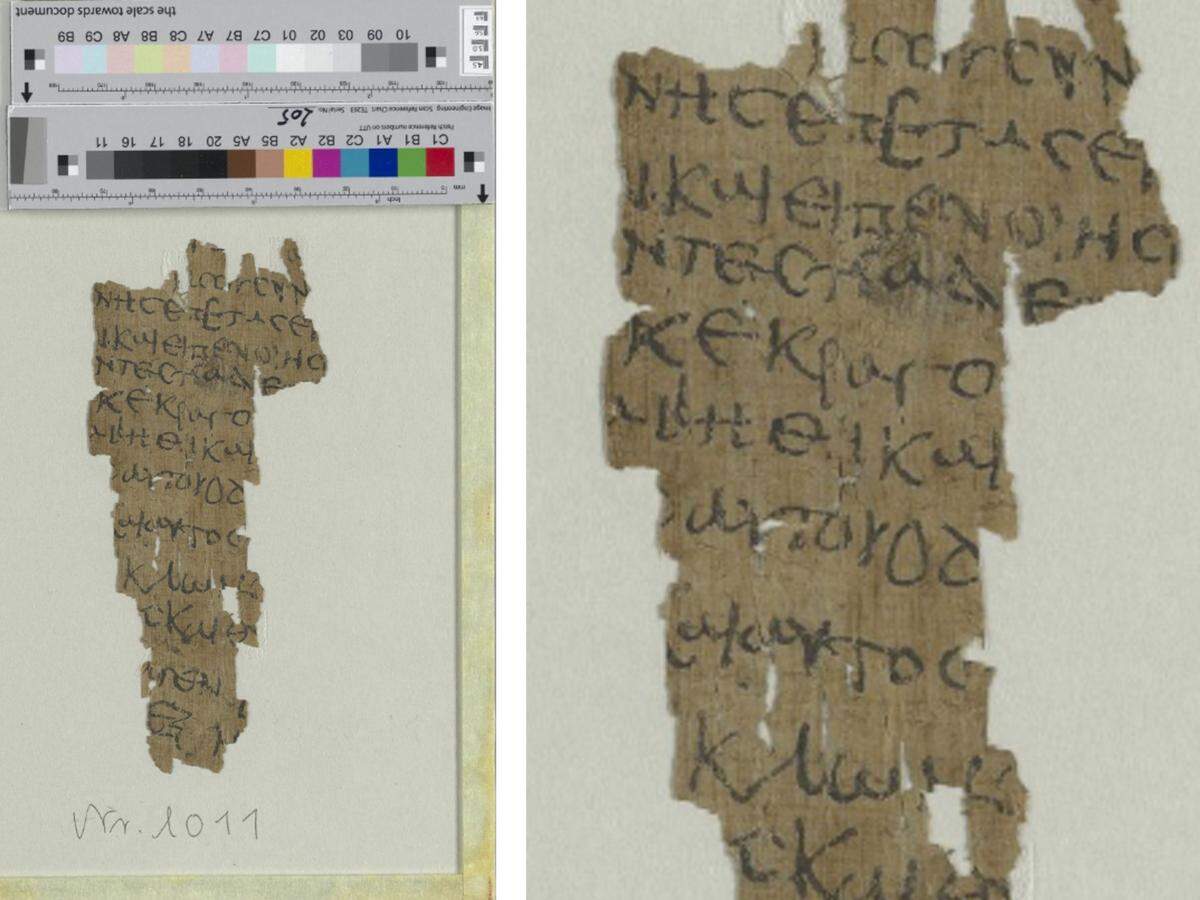
The writing was dated to the 4th or 5th century A.D., a few hundred years after the original Infancy Gospel of Thomas was thought to be written but centuries earlier than other manuscripts, researchers said.
The codex, previously thought to be the oldest in ancient Greek, was dated to the 11th century, and it wasn’t included in the Bible, according to the release.
The gospel tells stories of Jesus as a child, younger than the stories written in the four gospels of the Bible, and was not generally accepted with the other teachings. However, the tales were still widespread during ancient times and the Middle Ages, according to the release.
Because of the poor handwriting, researchers believe it may have been written as part of an exercise at a school or monastery.
What does it say?
“The few words on the fragment show that the text describes the beginning of the ‘vivification of the sparrows,’ an episode from Jesus’ childhood that is considered the ‘second miracle’ in the apocryphal Gospel of Thomas,” researchers said.
In the story, a 5-year-old Jesus plays along a rushing stream and molds 12 sparrows out of clay down by the water. When his father, Joseph, tells him to stop since it’s the day of the holy Sabbath, Jesus claps and the birds come to life, according to the release.
“The fragment is of extraordinary interest for research,” Berkes said, not only because of its age but because it gives “new insights into the transmission of the text.”
A full analysis of the papyrus was published in the Journal of Papyrology and Epigraphy.