Rare 1,000-year-old coin — with depiction of Jesus — unearthed by metal detectorist
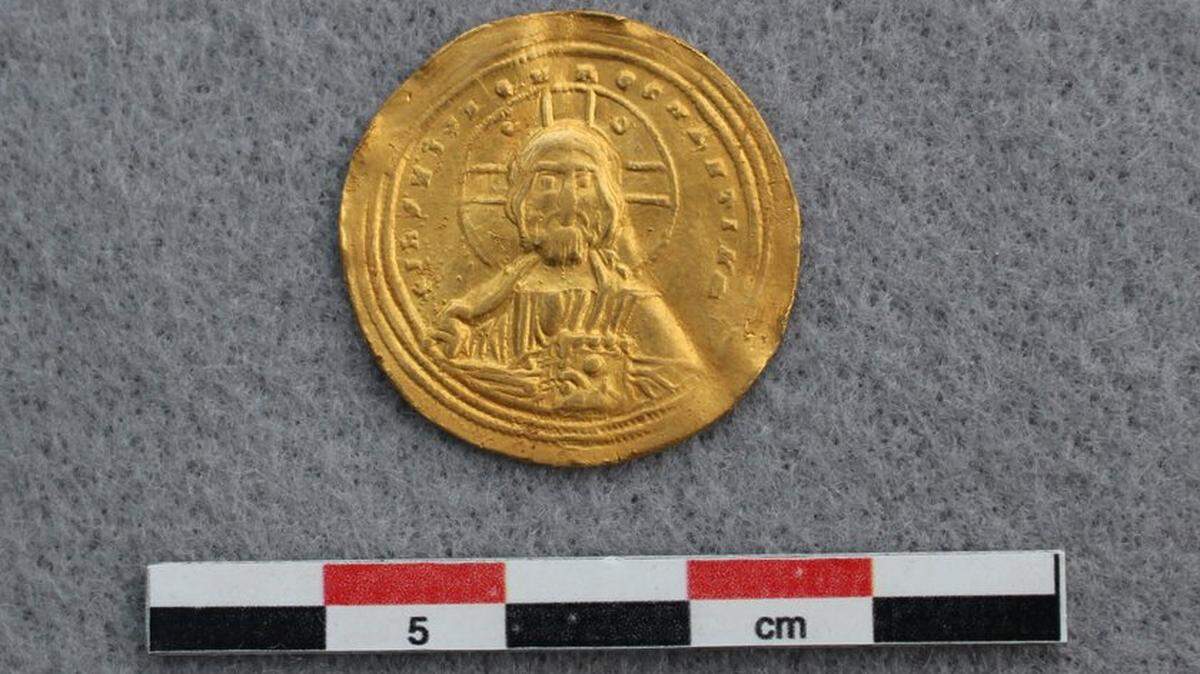
Approximately 1,000 years ago in Constantinople — the bustling capital of the Byzantine Empire — a small gold coin was minted.
Now, about a millennia later, the tiny treasure has been unearthed more than 1,600 miles away from its origin, according to a Nov. 30 news release from the Inlandet County Municipality.
Officials said a metal detectorist stumbled upon the artifact among the mountains in Vestre Slidre, Norway. It’s a rare discovery for Norway, and the seemingly out-of-place artifact appears to be in great condition, especially given its age.
Photos of the coin show each side’s intricate carvings. One side depicts Jesus Christ holding a Bible, while the other shows Byzantine emperors Basil II and Constantine VII, brothers who ruled together, officials said.
.jpg "imageshop (1).jpg")
Each side also has an inscription. The side showing Jesus has a Latin inscription, which translates to “Jesus Christ, King of those who reign,” according to experts. The side depicting the emperors has a Greek inscription, which translates to “Basil and Constantine, emperors of the Romans.”
Experts said the coin was minted during Basil and Constantine’s reign, likely sometime between 977 and 1025. The dotted circles bordering the coin indicate its age.
How did the coin make it from Constantinople to Norway?
Experts have tried to determine how the coin ended up in Norway.
One hypothesis is that the artifact belonged to Harald the Ruthless — the king of Norway from 1045 until 1066, according to Britannica.
Before he was king, Harald the Ruthless, also known as Harald Hardråde, served as part of the Byzantine emperor’s guard, experts said. It was customary for guards to loot the palace after an emperor’s death, and three emperors died during Hardråde’s time as a guard.
Once the coin made it back to Norway, it could have been lost along a trade or transportation route, according to experts.
Archaeologists have not had a chance to fully examine the site where the coin was found, but they are planning a broader excavation in 2024, officials said.
Google Translate was used to translate a news release from the Inlandet County Municipality.