Penguin dies after swallowing entire face mask on Brazilian beach, biologists say
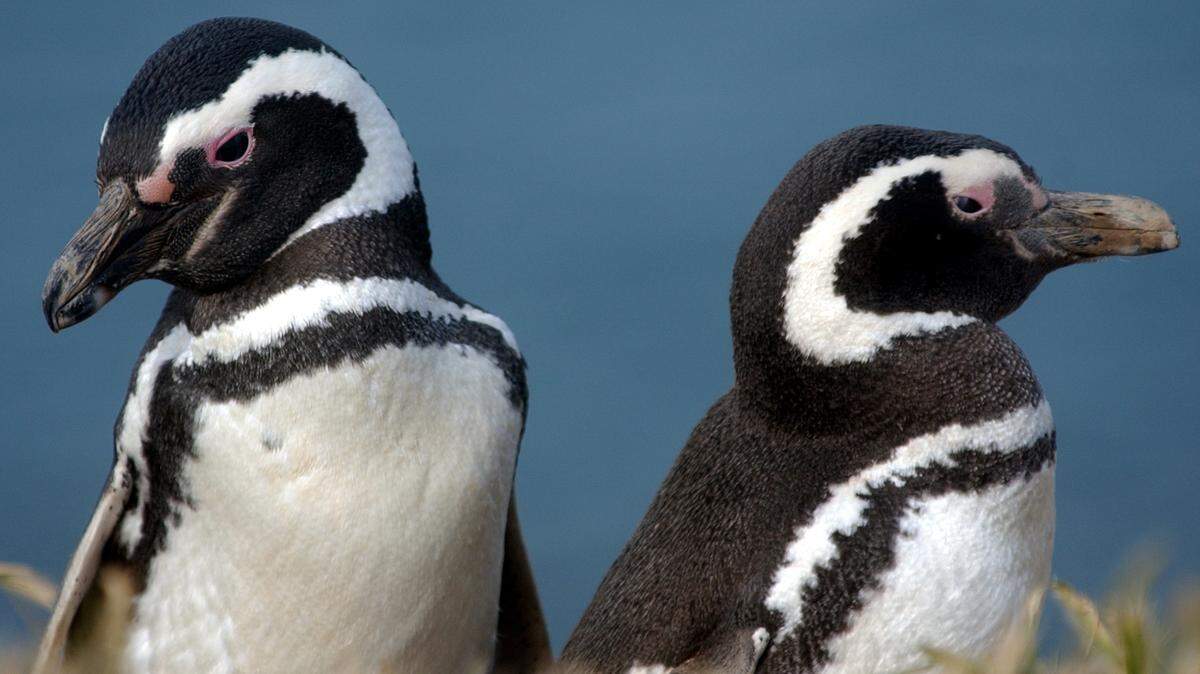
When it’s not reproductive season, Magellanic penguins venture long distances to search for food across South America, including the Brazilian coast. A few stragglers get lost and are often found weak and in need of help.
One such penguin succumbed to complications from the long journey at Juquehy Beach in São Sebastião, Brazil, but not from exhaustion or malnutrition.
Instead, the penguin died because it consumed a black face mask added likely //used by Labor Day beach goers as protection against the coronavirus. A team of biologists from the Santos Basin Beach Monitoring Project from the Argonauta Institute for Coastal and Marine Conservation performed a necropsy and found that the entire mask was tangled in its stomach, according to a statement from the institute.
The penguin’s passing is the latest consequence of pandemic-related pollution that has been plaguing oceans and streets since March, when health officials started urging the public to protect themselves and others with personal protective equipment.
“This case is unequivocal proof that this type of waste causes harm and mortality in marine fauna, in addition to the irresponsibility of the person who dispenses a mask in an inappropriate place,” Hugo Gallo Neto, oceanographer and president of the Argonauta Institute, said in the statement. “We feel that the lack of education of the population that frequents the north coast regarding the issue of waste needs to be addressed efficiently at all levels, from children in schools, even with the creation of stricter legislation, to prevent people from placing trash anywhere.”
The biologists blamed the “large number of people” who visited the beaches during Labor Day weekend for the animal’s death. Because surgical masks and gloves are single-use items, many are thrown on the ground, eventually making their way to the ocean where animals become trapped in or confuse them for food.
Between April 16 and Sept. 13, the Brazilian biologists found 113 face masks “incorrectly discarded” on the beaches of São Paulo, according to the statement.
Officials in Europe, China and the U.S. have also reported cases of coronavirus-related pollution. A diver and founder of the nonprofit Operation Clean Sea in France has found hand sanitizer bottles, masks and other discarded PPE in the ocean.
“Soon there may be more masks than jellyfish” in the Mediterranean sea, Laurent Lombard told CNN in June.
Nick Mallos, a senior director with the nonprofit organization Ocean Conservancy, told the outlet that “in many places around the world the basic waste collection does not exist to manage [this] volume of waste, so unfortunately we are likely to see [this] waste finding its way downstream on beaches and in the ocean.”
“Even here in the United States, in the EU, in other places around the world that have robust and sophisticated waste systems, we’re still seeing PPE littering roadways, washing down waterways ... unfortunately, trash travels,” Mallos added.