First complete dinosaur skeleton ever identified finally revealed — 162 years later
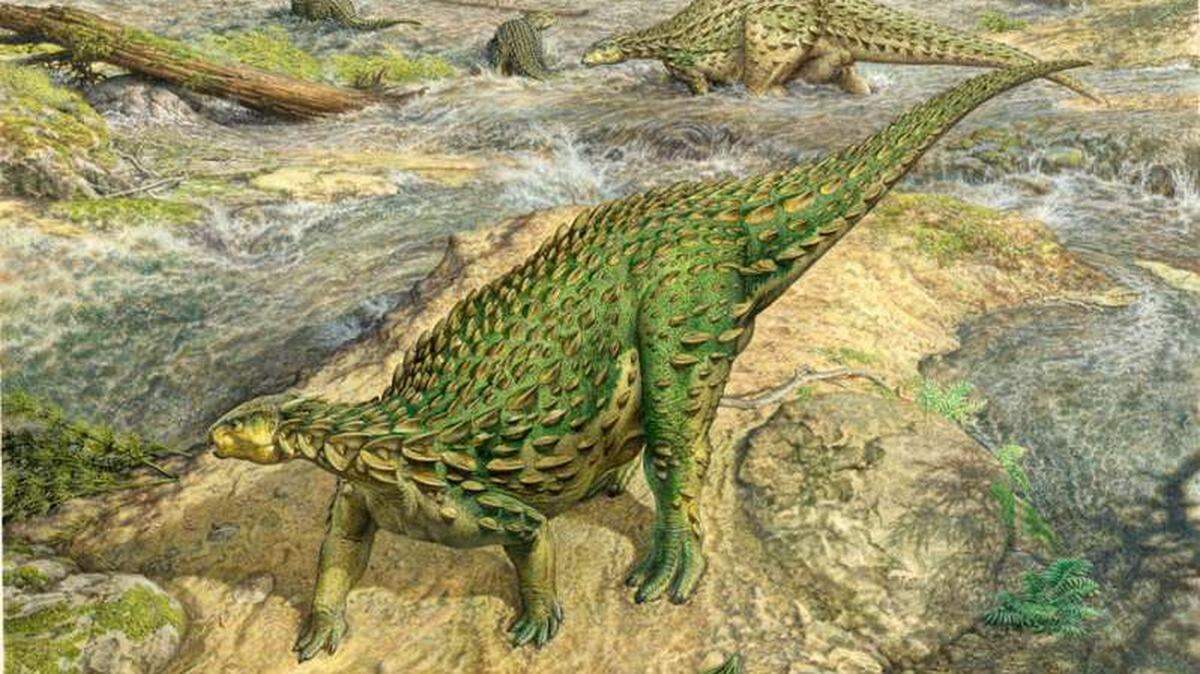
Almost two centuries ago, a pile of bones was found buried in an England sea cliff. It was later brought to fossil expert, and inventor of the word dinosaur, Richard Owen to discover what creature they once supported.
At a time when dinosaurs had only been known from teeth and a few pieces of bones, Owen learned he was looking at the first complete dinosaur skeleton ever identified with the help of its finder, James Harrison.
But the bones remained just that. Owen didn’t try to reconstruct the animal or understand its relationship to other dinos at the time. Now, 162 years later, detailed studies on the specimen have finally been completed, giving the public a glimpse into how the prehistoric creatures evolved.
“It is unfortunate that such an important dinosaur, discovered at such a critical time in the early study of dinosaurs, was never properly described,” Dr. David Norman from the University of Cambridge’s Department of Earth Sciences, who has been studying the bones for the past three years, said in a news release.
“It has now - at last! - been described in detail and provides many new and unexpected insights concerning the biology of early dinosaurs and their underlying relationships. It seems a shame that the work was not done earlier but, as they say, better late than never.”
The dinosaur in question was a Scelidosaurus. It was found on the shore beneath a cliff called Black Ven at the Charmouth village in England. The rocks surrounding its bones are about 193 million years old, “close to the dawn of the Age of the Dinosaurs,” according to the release.
Norman learned the dinosaur’s skull had horns growing out of its back edge, which no one had known, he said. There were also several other bones never before seen in any other dinosaur.
“It is also clear from the rough texturing of the skull bones that it was, in life, covered by hardened horny scutes — a little bit like the scutes plastered over the surface of the skulls of living turtles,” Norman said. The dino’s body was also protected by a layer of skin that sported “stud-like bony spikes and plates.”
For decades, it was thought that the Scelidosaurus was related to both stegosaurs and ankylosaurs because of their similarities in armored skin, but Norman learned the complete skeleton was only an ancestor of the latter.
His research was published in a four-part series in the Zoological Journal of the Linnean Society of London.
“This dinosaur lived at a time when most of the continents of the world were clumped together in a world we now call Pangea,” Norman said in the release. “So, logically, animals in ‘Dorset’ would have been able to roam the globe and their fossil remains should crop up elsewhere. But for the moment we only know this dinosaur from this one location.”