Venezuela says oil output unharmed as quake recovery drives economic push
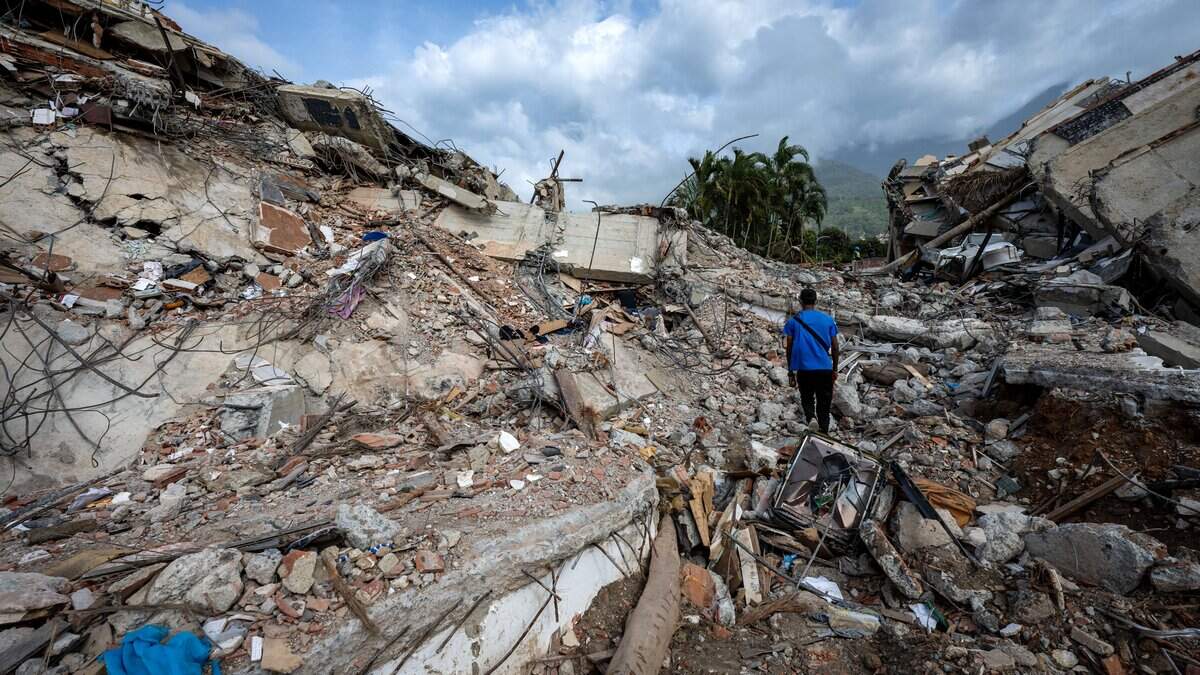
Venezuela’s oil production has not been disrupted by the devastating earthquakes that struck nearly three weeks ago, the interim government said Monday, seeking to reassure investors as it embarks on a multibillion-dollar reconstruction effort expected to depend heavily on the country’s energy revenues.
Interim President Delcy Rodríguez told business leaders that crude output remains at 1.203 million barrels per day, insisting the twin 7.2- and 7.5-magnitude earthquakes that struck north-central Venezuela on June 24 caused no disruption to the country’s most important industry despite leaving 4,561 people dead and 16,740 injured, according to the latest official figures.
“Oil production has not been affected at all,” Rodríguez said during a meeting of the National Economic Council broadcast on state television.
The government also reiterated its goal of increasing oil production this year, arguing that higher energy revenues will be critical to financing reconstruction while supporting Venezuela’s broader economic recovery.
The announcement comes as Caracas seeks to reassure international markets that the disaster has not derailed either its economic recovery or the Trump administration-backed effort to reopen strategic sectors of the economy to foreign investment.
Although the earthquakes caused widespread destruction across La Guaira, Caracas and neighboring states, Venezuela’s principal oil-producing regions—including Lake Maracaibo in the west and the Orinoco Belt in the east—escaped significant damage because they are located hundreds of miles from the areas that were hardest hit.
Since the January removal of former strongman Nicolás Maduro by the U.S. military, oil production has become the cornerstone of the interim government’s economic strategy. The Trump administration has repeatedly described the expansion of Venezuela’s energy sector as the principal source of revenue needed to finance reconstruction, stabilize the economy and eventually support the country’s democratic transition.
Monday’s meeting also underscored the government’s determination to continue restructuring Venezuela’s massive external debt despite the disaster.
Vice President for Economic Affairs Calixto Ortega said discussions with international financial institutions and other partners have continued in recent weeks as authorities incorporate the earthquakes’ economic impact into updated macroeconomic projections and debt-sustainability analyses.
“We expect to publish these studies in the coming weeks,” Ortega said. “They will constitute a solid basis for advancing an orderly, transparent and credible debt restructuring process that will create the fiscal space necessary for the country’s reconstruction.”
He said rebuilding Venezuela would require substantial new financing, making the normalization of relations with international creditors a priority.
“In this regard, debt restructuring is an indispensable condition for restoring the country’s access to financing,” Ortega said.
The interim government formally launched its external debt restructuring process in May, describing it as a key step toward restoring access to international capital markets, attracting investment and stabilizing the economy after years of financial isolation.
Although officials have not disclosed the amount subject to restructuring, anti-corruption organization Transparencia Venezuela estimates the country’s combined government and state-oil company debt exceeds $170 billion.
The government’s effort to project economic stability came the same day the Central Bank of Venezuela reported that inflation accelerated sharply during the month the earthquakes struck.
Consumer prices rose 13.8% in June, more than doubling May’s 6.3% monthly rate and marking the third-highest monthly inflation reading this year after January and February.
The central bank did not directly attribute the increase to the earthquakes, but the acceleration coincided with the June 24 disaster, which disrupted transportation, commerce and public services across northern Venezuela.
Transportation prices increased 16.2% during the month, followed by education costs at 15.2% and housing expenses at 14.9%.
The figures represented a setback after Central Bank President Luis Pérez predicted in May that monthly inflation would remain in single digits for the rest of the year.
The latest official disaster update underscores the scale of the reconstruction challenge.
Authorities said the earthquakes have left 4,561 people dead, 16,740 injured and 17,907 homeless, while 6,462 people have been rescued since the disaster.
Officials also reported that 128,324 families have received government assistance, while 20,231 people remain housed in 107 temporary camps across the affected region.
Emergency authorities said 190 buildings collapsed completely and another 856 sustained significant damage. More than 10,063 metric tons of food and nearly 19.7 million liters of drinking water have been distributed since the earthquakes, while hospitals have treated 33,085 patients.
Authorities also reported 1,254 aftershocks since June 24 as recovery efforts continue across the country’s north-central region.
This story was complemented with el Nuevo Herald’s wire services.