As death toll hits 2,595, Venezuela rejects criticism of its earthquake response
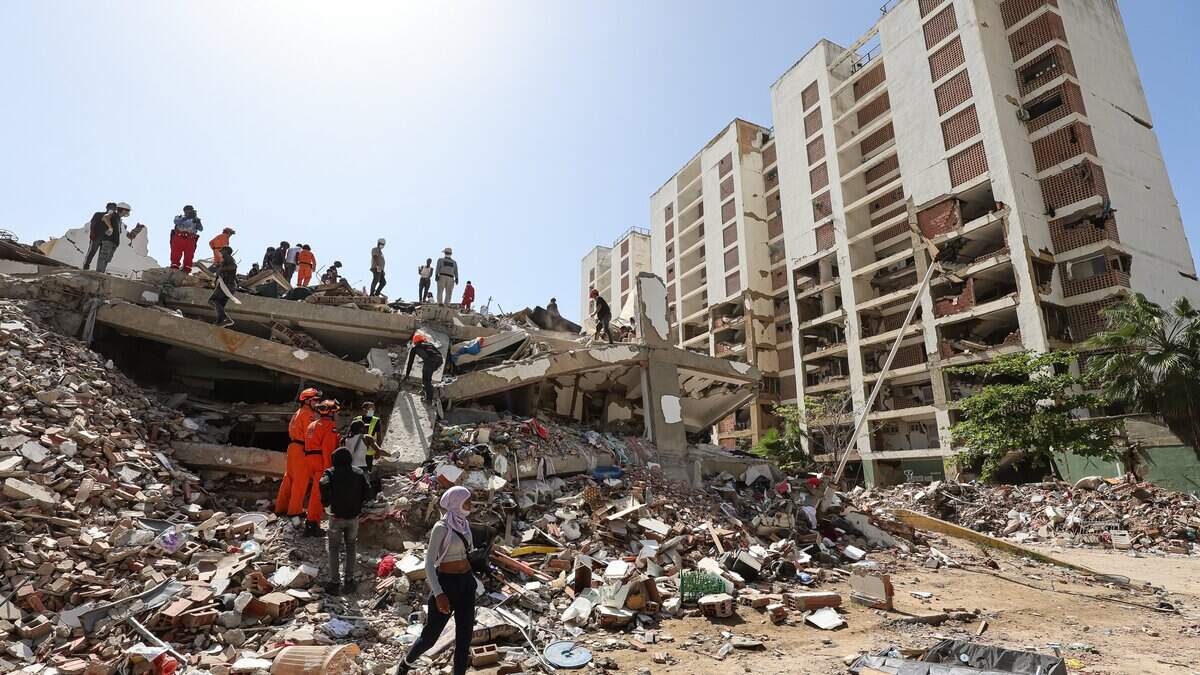
Facing growing criticism over military restrictions in disaster zones, Venezuela’s interim government on Thursday defended its decision to militarize the state of La Guaira as the death toll from last week’s earthquakes climbed to 2,595.
The devastating twin earthquakes of 7.2 and 7.5 magnitude that struck north-central Venezuela on June 24, just seconds apart, have now left more than 12,400 injured, according to interim President Delcy Rodríguez, who pushed back sharply Thursday against mounting criticism of the government’s handling of the disaster.
Rodríguez said authorities have recorded 862 aftershocks since the main quakes and confirmed that 189 buildings collapsed completely nationwide, the vast majority in La Guaira, the coastal state that suffered the worst destruction.
More than a week after the disaster, search-and-rescue operations remain active, though hopes of finding additional survivors are rapidly fading.
“We have not closed the search-and-rescue phase,” Rodríguez said. “As long as there is even one point where there may be someone alive, we will continue.”
The rising death toll comes as criticism of the government’s response continues to intensify.
Survivors, local volunteers and some foreign rescuers have described the first 72 hours after the earthquakes as chaotic and poorly coordinated, citing delayed access to devastated areas, shortages of heavy equipment and excessive military control in disaster zones.
Rodríguez rejected those accusations, insisting authorities mobilized immediately.
She said 4,000 civil and military personnel were deployed within hours of the earthquakes, rising to 14,000 the following day and more than 19,000 currently stationed in La Guaira.
According to Rodríguez, the decision to militarize La Guaira was intended to prevent chaos and preserve access for specialized rescue teams.
“The first media narrative created in laboratories was: ‘Everyone go to La Guaira,’” she said. “That would have created chaos and obstructed rescue operations.”
She accused some media organizations of politicizing the disaster.
“It is miserable and heartless to generate chaos among a population already suffering anguish and pain,” she said.
Her remarks come amid mounting allegations that military restrictions slowed aid deliveries and prevented civilians—and in some cases rescue crews—from getting to critical areas during the early phase of the emergency.
Multiple foreign rescue teams have publicly complained of bureaucratic delays and access restrictions, while residents in several affected communities told journalists they felt abandoned during the most critical hours.
Rodríguez denied those claims, saying some remote areas were difficult to reach because roads were blocked by landslides and debris, forcing authorities to rely on motorcycles, drones and satellite imagery.
She also emphasized the scale of international cooperation, saying 147 countries and 31 international organizations have offered assistance.
Rodríguez singled out the United States for praise, thanking President Donald Trump and Secretary of State Marco Rubio for rapidly supporting rescue efforts.
“The first foreign rescuers to arrive came from the Dominican Republic and the United States,” she said.
The acknowledgment reflects an unusual level of cooperation between Washington and Caracas despite years of intense political confrontation.
Rodríguez said Venezuela also received rescue support from Mexico, Brazil, Spain, Qatar, El Salvador, Colombia, Chile and Argentina, among others.
As rescue efforts continue, authorities are increasingly shifting toward the next phase: housing and reconstruction.
Rodríguez announced the creation of an initial $200 million reconstruction fund, financed through resources she said Venezuela expects to recover from the International Monetary Fund, along with additional support from multilateral institutions including the World Bank and the Inter-American Development Bank.
Authorities have established 46 temporary camps housing 11,546 displaced residents who lost their homes in the earthquake.
Thousands more remain unwilling to return to damaged buildings while engineers inspect structures for hidden instability.
Officials are now using a “traffic light” classification system to determine which buildings are safe, which require repairs and which must be abandoned entirely.
Even in Caracas, where only five buildings collapsed, Rodríguez said at least 30 additional structures have already been classified as unsafe.
Despite government assurances, humanitarian groups warn that the scale of assistance still falls short of the need.
The International Rescue Committee, a global humanitarian aid and relief organization, said medical services at hospitals, health centers and mobile units remain overwhelmed, while shelters in several affected areas are operating at or near full capacity.
The organization warned that as search-and-rescue teams begin to scale back operations, humanitarian needs—particularly food, medical care and protection services—could intensify rather than diminish.
The government is also working with private developers, banks and the real estate sector to accelerate temporary and permanent housing solutions.
Rodríguez said emergency economic measures will include relief funds for victims and temporary waivers on documentation and property registration fees to facilitate housing relocation.
Basic services remain partially disrupted.
Authorities say electrical service in La Guaira has recovered to roughly 90%, while more than 5 million liters of water have been distributed across affected areas.
Aid groups, however, say access to safe drinking water remains one of the most urgent concerns.
The IRC warned that severe disruptions to water systems across multiple affected states have left displaced families in shelters, injured patients in hospitals and even rescue workers without reliable access to potable water.
In some of the hardest-hit communities, families continue standing for hours under intense heat waiting for water and food distributions.
Psychological trauma is also emerging as a major secondary crisis. Humanitarian workers say the emotional toll is becoming increasingly visible inside temporary shelters.
“What we are seeing in the shelters is heartbreaking; women alone with young children, no documents, no medicine, no idea where their partners or relatives are,” said Nicole Kast, the IRC’s Venezuela country director. “Children are not sleeping. Every aftershock sends collective panic through the shelters, and the psychological toll of that will last long after the rubble is cleared.”
Rodríguez described scenes of children hospitalized with amputations and survivors grieving multiple family deaths.
She said psychologists, psychiatrists and trauma specialists are now operating in camps, while music, sports and recreational programs have been introduced to help displaced children cope.
The human toll has extended deeply into state institutions. Rodríguez said numerous public officials died in the disaster, including security personnel, municipal employees and military officers.
She recounted meeting an armed forces commander who had lost his wife, two children and mother in La Guaira but continued helping victims in a temporary shelter.
The disaster is becoming the defining challenge of Rodríguez’s interim presidency.
She assumed power in January after a U.S.-backed operation captured former Venezuelan strongman Nicolás Maduro, inheriting a politically fractured nation already weakened by economic collapse and rampant corruption.