Chaos, collapse and cash: Is Venezuela hampering rescue teams in disaster zone?
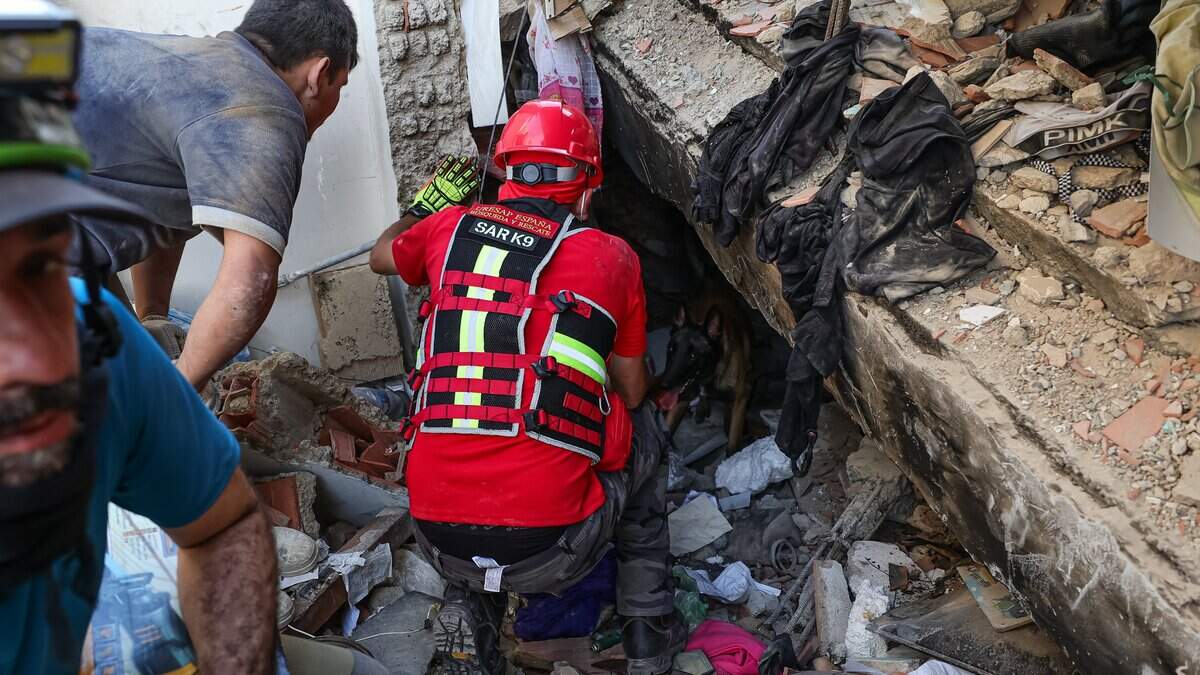
Venezuelan security forces have tightly restricted access to parts of the country’s Caribbean coast following last week’s devastating earthquakes, amid allegations that authorities are protecting hidden caches of gold, weapons and cash, according to people familiar with the situation.
The claims come as multiple foreign rescue teams have publicly complained that authorities delayed or obstructed access to some of the hardest-hit areas in La Guaira state, potentially putting at risk the lives of survivors who may still have been trapped beneath the rubble and raising questions about what may lie inside the sealed zones.
The restrictions come as time is rapidly running out for those still trapped beneath the rubble. According to the latest figures released by National Assembly President Jorge Rodríguez, the death toll has climbed to 2,295, with 11,267 injured.
More than 6,000 people have been pulled alive from collapsed structures, but thousands remain unaccounted for. At least 855 buildings have completely collapsed nationwide, including 158 in La Guaira, one of the areas at the center of the allegations.
One person familiar with the situation told the Miami Herald that members of the Venezuelan National Guard, accompanied by armed personnel and workers, entered affected areas during nighttime operations in the days after the earthquakes to remove what were described as concealed caches.
The account is supported in part by videos provided by a witness who reported seeing suitcases and bags filled with U.S. dollars, as well as heavy wooden crates that required four people to carry. The witness believed the crates contained gold, though their contents could not be confirmed.
The Herald could not independently verify the claims or authenticate the video.
The source also claimed that authorities blocked access to stretches of coastline affected by the quakes between Camurí and Chirimena, including the Toasana area in La Guaira state, preventing civilians and, in some cases rescue crews, from entering.
“They believe something very serious is there because the entire area has been sealed off,” the person said.
According to the source, several senior figures linked to Venezuela’s ruling movement have long owned luxury waterfront properties in the area with direct access to the sea. Some of those properties may now be serving as locations where hidden assets are being safeguarded.
The source also described an incident involving a helicopter pilot who regularly flies to a residence in the restricted zone. According to the account, the pilot received authorization to depart from Caracas but was ordered by air traffic controllers at Simón Bolívar International Airport to turn back before reaching the area, despite informing authorities that he was transporting food and medical supplies.
“The area is completely prohibited. No one is allowed to enter,” the person said officials told the pilot.
In a separate interview, another person familiar with the situation — who has been involved in past intelligence investigations involving Venezuelan officials — offered additional allegations about the restricted zone.
According to that account, authorities are focused on a cluster of nearly 190 residential buildings in La Guaira that he alleged have long been used by networks tied to pro-government colectivos and figures associated with powerful members of the ruling movement.
He claims the buildings served as part of an illicit cash-handling network in which operators bought U.S. dollars with bolívars and stored large sums inside hidden safes. He claimed each building contained one or two safes holding between $100,000 and more than $1 million, depending on the volume of transactions handled there.
He also said that at least five of those safes had already been recovered from earthquake-damaged structures and moved to undisclosed locations.
The same source also said that some of the restricted areas may contain drug storage facilities and hidden compartments connected to maritime trafficking routes, and that some of the most sensitive operations have taken place at night.
According to his account, surveillance during daylight hours is maintained through drones, while after dark military personnel clear civilians and rescue teams from certain locations before trucks enter the area.
The allegations involving hidden cash and trafficking routes come against the backdrop of longstanding accusations that elements of Venezuela’s political and military elite have participated in large-scale narcotics trafficking through the network commonly known as the Cartel de los Soles.
U.S. authorities have for years alleged that the organization, named after the sun insignias worn by Venezuelan generals, operates as a loose criminal structure involving senior military officers, intelligence operatives and political figures who facilitate the movement of cocaine from South America toward the Caribbean, Central America and the United States.
Although former strongman Nicolás Maduro was captured in a U.S.-backed operation earlier this year, several individuals previously accused by Washington of ties to the Cartel de los Soles remain influential within Venezuela’s governing apparatus, now led by interim President Delcy Rodríguez.
Among those who have faced U.S. sanctions or criminal accusations are Interior Minister Diosdado Cabello and former Defense Minister Vladimir Padrino López, both of whom continue to wield significant power over security and military institutions. U.S. officials have long alleged that those networks blurred the line between state authority and organized crime, allowing illicit trafficking and financial operations to function under official protection.
A foreign rescuer working in La Guaira told the Herald’s source he felt intimidated after security personnel inspected phones and monitored the movements of rescue workers. The source also claimed that, at one collapsed building, foreign rescuers were physically pushed back while attempting to enter.
Separate accounts circulating on social media appear to support claims that rescue access has been restricted.
During a YouTube livestream of Bowery Newsroom – Guarimba Digital, Mexican rescuer Salomon Paniagua, a member of the Topos rescue team, said his group had identified possible survivors but had not been allowed to enter.
“Right now, the dog has signaled three locations where there might be life, and we are waiting to see if they can reach an agreement and let us in here,” Paniagua said during the broadcast.
He said his team was fully equipped and prepared to work continuously.
“We are prepared to work around the clock until we fulfill this mission,” he said. “If they let us help, we will help.”
Days earlier, Francisco Lermanda, leader of Topos Chile, also publicly accused Venezuelan authorities of interfering with rescue efforts, saying members of the armed forces repeatedly approached his team demanding identification and documentation while they worked.
Separately, on Tuesday, a Venezuelan reporter posted video on social media showing what she said were members of the CICPC, Venezuela’s investigative police, removing money from the rubble of the Vallarta building in Playa Grande, one of the areas heavily damaged by the quake.
In the footage, reporter Melissa Páez is seen confronting an officer carrying a bag and demanding that he open it. The officer refuses. Moments later, multiple $100 bills appear to fall from the bag as bystanders shout that the money was not evidence and did not belong to the officers.
“I’m not saying I’m going to keep that money,” the officer can be heard saying in the video.
Other people at the scene can be heard yelling that the cash was not evidence and did not belong to the officer. Some bystanders are later seen tearing bills in half amid the confrontation.
Later that day, Venezuelan authorities announced that four CICPC officers — identified as Aguilar Reyes Maya, Fredy Rafael Lugo Oliveros, Roger Andrés Omaña and Josue Jhonatan Burgos Sánchez — had been detained and dismissed from the force over the incident.
The video, while unrelated to the broader allegations of hidden caches, fueled speculation online about the presence of large amounts of cash inside some collapsed structures and intensified scrutiny of security operations in the disaster zone.
U.S. officials involved in the disaster response have publicly downplayed reports of widespread obstruction of aid. John Barrett, the charge d’affaires of the U.S. Embassy in Caracas, said Wednesday that the priority remains rescuing survivors still trapped under collapsed structures.
“We’re absolutely focused, 100% on saving lives,” Barrett said during a joint press briefing with the State Department and U.S. Southern Command.
Barrett said the United States has deployed more than 310 search-and-rescue specialists, including teams from the City of Miami and Miami-Dade County, as part of an international response involving roughly 4,000 foreign rescuers. He added that humanitarian organizations he had spoken with had not reported major problems delivering relief supplies and that Venezuelan authorities had complied with requests to accelerate emergency operations.
Venezuelan authorities have said access to some earthquake-affected areas has been restricted because of safety concerns, ongoing search-and-rescue operations and damage to infrastructure. Officials have not reported discovering caches containing cash, gold or weapons and have not publicly commented on the broader allegations.
Miami Herald staff writer Syra Ortiz Blanes contributed to this story.
This story was originally published July 2, 2026 at 11:59 AM.