Political prisoners moved from feared Venezuelan prison amid questions over closure
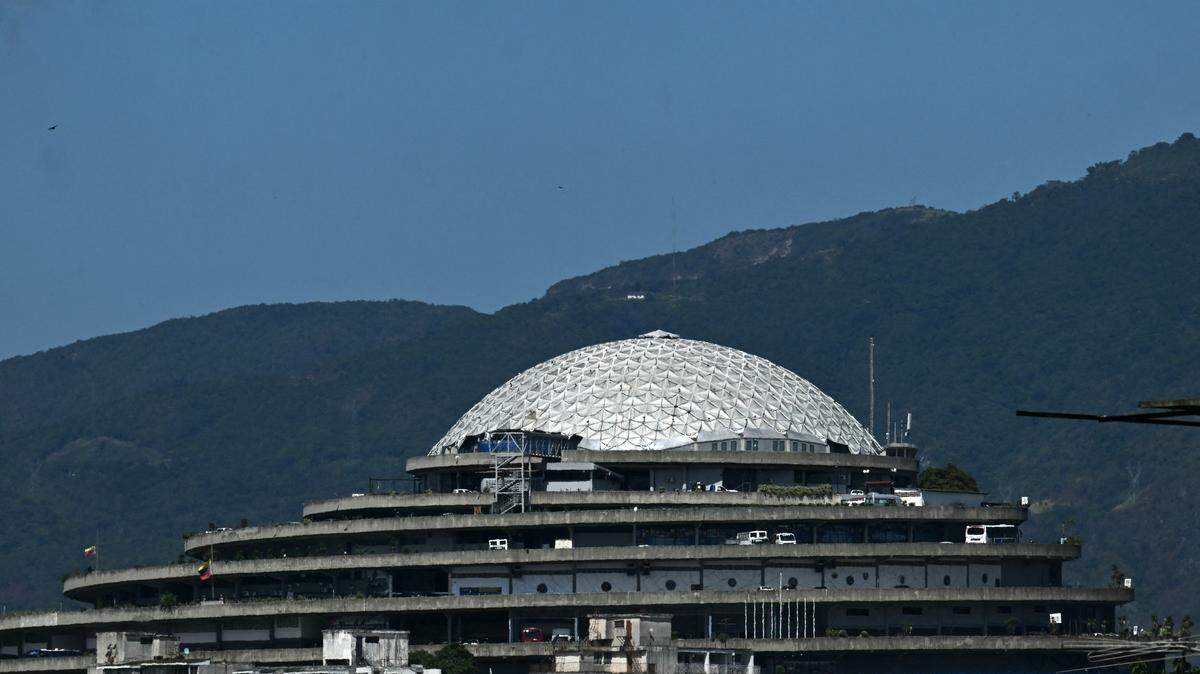
Families and human rights organizations denounced the transfer of an undetermined number of political prisoners from El Helicoide prison to other detention facilities across Venezuela, a move that comes amid growing questions over the purported closure of the facility, long considered one of the most notorious symbols of political repression in the country.
The allegations were made late on Wednesday by the Venezuelan Committee for the Freedom of Political Prisoners, whose member Andreína Baduel said the transfers began Tuesday evening without authorities informing relatives where the detainees were being taken.
“We have information that beginning at 6 p.m. these transfers started taking place. We do not know who was moved or where they were taken, but from a nearby hill overlooking this torture center, we were able to observe the transfer of political prisoners,” Baduel told EFE, Spain’s news agency.
According to the activist, relatives who went to the headquarters of Venezuela’s Bolivarian National Intelligence Service in Caracas received no explanation regarding the situation and were only told that visits had been suspended.
“The regime’s response today is to begin arbitrary transfers, continue human rights violations against the political prisoners held here, and fail to provide timely answers to family members, who have been trying since this morning to find out what is happening,” Baduel said.
The reports came a day after the human rights group Justice, Encounter and Forgiveness publicly challenged claims that El Helicoide had been shut down.
The organization said that despite an announcement made in January by interim President Delcy Rodríguez, at least 25 political prisoners remained detained at the facility.
“While there was an official announcement by authorities following the events of January 3, 2026, our updated records confirm that at least 25 political prisoners remain detained in these facilities,” the organization said in a statement posted on social media.
The group added that “it is not possible to consider a facility closed while citizens remain deprived of liberty inside” and urged international organizations and foreign governments to verify conditions on the ground rather than rely solely on official statements.
The controversy gained additional significance after U.S. Secretary of State Marco Rubio cited the closure of El Helicoide on Tuesday as evidence of reforms being implemented by Venezuela’s interim government following the removal of Nicolás Maduro from power.
During a hearing before the Senate Foreign Relations Committee, Rubio pointed to the release of numerous political prisoners and the closure of the detention center as signs that interim authorities were dismantling structures associated with the authoritarian system that governed Venezuela for more than two decades.
“You’ve seen reforms,” Rubio told senators. “You’ve seen a systemic reform in individuals involved in their government, replaced by new people.”
The secretary of state also noted that hundreds of political prisoners had been released since January, though he acknowledged that roughly 400 people whom Washington still considers political prisoners remain incarcerated.
El Helicoide, a futuristic unfinished structure built in the 1950s and originally conceived as a commercial complex, eventually became the headquarters of the intelligence service and one of the country’s most feared detention centers.
For years, human rights organizations, former political prisoners and opposition leaders alleged that torture and other abuses were carried out inside its walls. The United Nations Independent International Fact-Finding Mission on Venezuela has documented cases of torture and mistreatment there, allegations that Venezuelan authorities have consistently denied.
In January, Rodríguez announced plans to transform El Helicoide into a social and sports center as part of a broader political opening that included an amnesty initiative for political prisoners later approved by the National Assembly. Authorities said renovation work began in February.
The allegations this week, however, suggest that the future of the emblematic prison remains uncertain and raise fresh questions about the true scope of the reforms being promoted by the interim government.